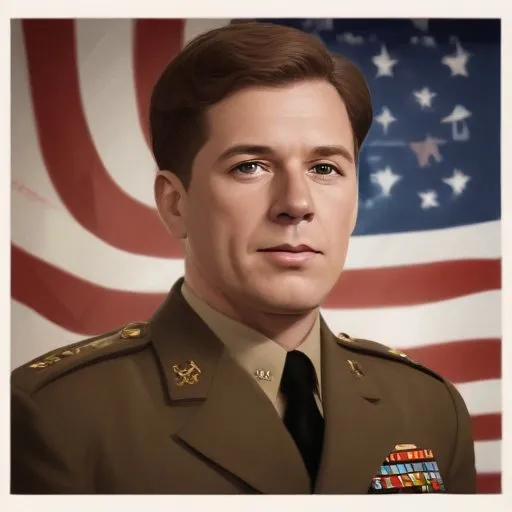
Morris R. Jeppson

Morris R. Jeppson

Morris R. Jeppson was born on June 23rd, 1922

Full Name: Morris Richard Jeppson
Place of Birth: USA
Profession: Lieutenant and Physicist
Notable Work: Part of the Manhattan Project
Years Active: 1940s-1950s
Los Alamos: Worked at Los Alamos Lab
Nuclear Research: Research on nuclear reactions
Military Service: US Army during WWII

Physicist and lieutenant who helped develop the atomic bomb, specifically responsible for arming the "Little Boy" bomb dropped on Hiroshima.

Timeline
1922
Born in Logandale, Nevada
Morris R. Jeppson was born on June 23, 1922, in Logandale, Nevada. He would go on to become an American lieutenant and physicist.
1944
Enlisted in US Army Air Forces
Jeppson enlisted in the US Army Air Forces and served as a lieutenant during World War II.
1945
Participated in Atomic Bombing of Hiroshima
Jeppson was part of the crew on the B-29 bomber that dropped the atomic bomb on Hiroshima, Japan.
1950
Earned Ph.D. in Physics
Jeppson earned his Ph.D. in physics from the University of California, Berkeley.
2003
Passed Away
Morris R. Jeppson passed away on March 30, 2003, at the age of 80.
Morris R. Jeppson

Morris R. Jeppson Quiz

What was Morris R. Jeppson's role in the development of the atomic bomb?

Score: 0/5
FAQ
What was Morris R. Jeppsons role in the Manhattan Project?
Morris R. Jeppson was an American lieutenant and physicist who played a key role in the Manhattan Project, the secret research and development project that produced the atomic bomb during World War II.
What was Morris R. Jeppsons role on the Enola Gay?
Morris R. Jeppson was the weaponeer on the Enola Gay, the B-29 bomber that dropped the atomic bomb on Hiroshima on August 6, 1945. He was responsible for arming and monitoring the bomb during the flight.
How did Morris R. Jeppsons experience in the Manhattan Project influence his views on nuclear weapons?
Morris R. Jeppsons experience in the Manhattan Project had a profound impact on his views on nuclear weapons. He became a strong advocate for nuclear disarmament and was critical of the development and proliferation of nuclear weapons.
What was Morris R. Jeppsons legacy in the history of the atomic bomb?
Morris R. Jeppsons legacy in the history of the atomic bomb is that of a dedicated scientist and military officer who played a crucial role in one of the most significant events of the 20th century. He will be remembered as a pioneer in the field of nuclear physics and a vocal advocate for nuclear disarmament.
How did Morris R. Jeppsons experience on the Enola Gay affect him personally?
Morris R. Jeppsons experience on the Enola Gay had a profound impact on him personally. He was haunted by the memory of the bombs devastating effects and struggled with the moral implications of his role in the mission.

Related People:

J. Robert Oppenheimer

Born in 1904

Leading the development of the atomic bomb during World War II, this brilliant mind made groundbreaking contributions to theoretical physics, pushing the boundaries of human understanding.

Enrico Fermi

Born in 1901

A pioneer in nuclear physics, known for leading the team that developed the first nuclear reactor and playing a crucial role in the development of the atomic bomb.

Ernest Lawrence

Born in 1901

Invented the cyclotron, a type of particle accelerator, revolutionizing nuclear physics and paving the way for major breakthroughs in medicine, energy, and materials science.

Richard Feynman

Born in 1918

A brilliant physicist and engineer who pioneered quantum mechanics and famously explained complex concepts in simple terms, making science accessible to all.

Eugene Wigner

Born in 1902

A Hungarian physicist and mathematician who made groundbreaking contributions to quantum mechanics and nuclear physics, and was awarded the Nobel Prize in Physics in 1963.

Hans Bethe

Born in 1906

A renowned physicist and Nobel laureate who made groundbreaking contributions to our understanding of the universe, particularly in the fields of nuclear physics and astrophysics.