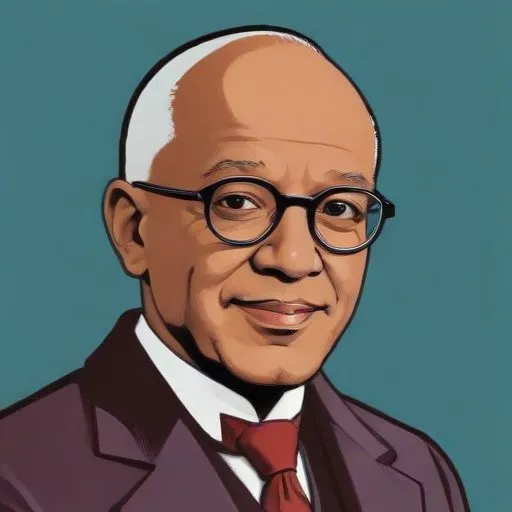
Nicholas C. Handy

Nicholas C. Handy

Nicholas C. Handy was born on June 17th, 1941

Full Name: Nicholas Charles Handy
Place of Birth: Londen, England, UK
Profession: Chemist and academic
Notable Works: Development of quantum chemistry
Awards: Faraday Lectureship Prize
Education: University of Cambridge
Academic Career: University of Cambridge
Honors: Fellow of the Royal Society

Developed computational methods for understanding molecular structures and reactions, making significant contributions to the field of quantum chemistry.

Timeline
1951
Born in London
Nicholas C. Handy was born on October 25, 1951, in London, England.
1970
Academic Career
Handy pursued an academic career, earning his PhD in chemistry and becoming a researcher at Cambridge University.
1990
Theoretical Chemistry
In the 1990s, Handy focused on theoretical chemistry, developing new methods and approaches to understanding molecular structures.
2000
Achievements and Awards
Handy received numerous awards and honors for his contributions to chemistry, including the Marlow Award and the Mulliken Medal.
2012
Passed Away
Nicholas C. Handy passed away on February 2, 2012, leaving behind a legacy of groundbreaking research in theoretical chemistry.
Nicholas C. Handy

Nicholas C. Handy Quiz

What field of chemistry did Nicholas C. Handy make significant contributions to?

Score: 0/5
FAQ
What is Nicholas Handys area of research?
Handy is a renowned theoretical chemist who has made significant contributions to the field of quantum chemistry and computational chemistry.
What awards has Nicholas Handy won?
Handy has received numerous awards for his work, including the Marlow Medal and the Corday-Morgan Prize from the Royal Society of Chemistry.
What is Nicholas Handys most famous contribution?
Handy is perhaps best known for his development of the Handy-Schaefer spin-coupled valence bond method, a powerful tool for understanding the behavior of molecules.
What has Nicholas Handy taught?
Handy has taught at several prominent institutions, including the University of Cambridge, and has supervised numerous Ph.D. students who have gone on to become leading researchers in their own right.
What is Nicholas Handys legacy?
Handys work has had a profound impact on the field of theoretical chemistry, and his contributions have paved the way for new advances in our understanding of molecular behavior.

Related People:

John Pope

Born in 1822

Union general during the American Civil War, known for his disastrous defeat at the Second Battle of Bull Run. He was relieved of his command and later served in the Indian Wars.

Charles Colson

95 Years Old

A former Nixon aide who became a prominent Christian leader and founder of Prison Fellowship, known for his work in prison reform and evangelism.

Robert S. Mulliken

Born in 1896

Developed the molecular orbital method, a fundamental concept in chemistry that explains the structure and behavior of molecules. He was awarded the Nobel Prize in Chemistry in 1966 for his work.

Walter Heitler

Born in 1904

Developed the valence bond theory, a fundamental concept in chemistry that describes the formation of chemical bonds between atoms. This theory revolutionized the field of chemistry and paved the way for modern molecular physics.

Rudolph Pariser

Born in 1923

A Chinese-American soldier and chemist who made significant contributions to the development of quantum chemistry, particularly in the field of molecular orbital theory. His work led to a deeper understanding of molecular structures and chemical reactions.

John Hasbrouck Van Vleck

Born in 1899

Developed quantum mechanics theories, including the concept of magnetism, and was awarded the Nobel Prize in Physics in 1977.