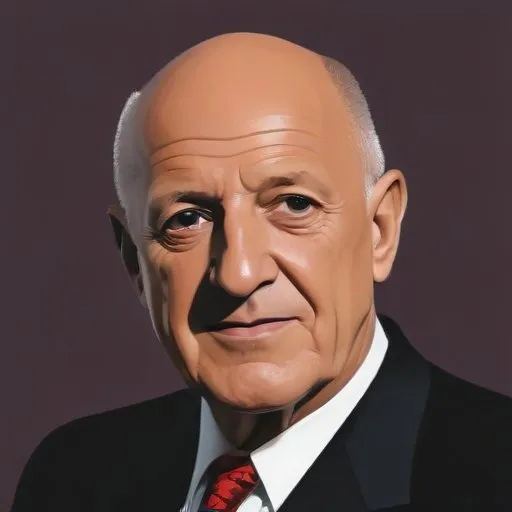
Norman Foster Ramsey Jr.

Norman Foster Ramsey Jr.

Norman Foster Ramsey Jr. was born on August 27th, 1915

Full Name: Norman Foster Ramsey Jr.
Place of Birth: Washington, D.C.
Zodiac Sign: Scorpio
Profession: Physicist and Academic
Nationality: American
Nobel Prize: 1989 Physics Nobel Prize
Research Focus: Atomic and Molecular Physics
Institutions: Harvard University and University of Colorado

Developed the separated oscillatory field method, which enabled the precise measurement of atomic energy levels, leading to significant advances in fields like atomic physics and metrology.

Timeline
1915
Born in Washington D.C.
Norman Foster Ramsey Jr. was born on August 27, 1915, in Washington D.C. He would go on to become a renowned American physicist and academic.
1940
Earned Ph.D.
Ramsey earned his Ph.D. in physics from Columbia University in 1940, marking the beginning of his illustrious academic career.
1947
Developed Molecular Beam Method
Ramsey developed the molecular beam method in 1947, a groundbreaking technique in molecular physics.
1950
Joined Harvard University
Ramsey joined the faculty of Harvard University in 1950, where he continued his research and teaching.
1989
Won Nobel Prize in Physics
Ramsey was awarded the Nobel Prize in Physics in 1989 for his work on the molecular beam method.
Norman Foster Ramsey Jr.

Norman Foster Ramsey Jr. Quiz

Norman Foster Ramsey Jr. made significant contributions to which field of physics?

Score: 0/5
FAQ
What is Norman Foster Ramsey Jr. known for?
Norman Foster Ramsey Jr. is known for his groundbreaking work in the field of physics, particularly in the development of the atomic clock and the discovery of the Ramsey fringe, for which he was awarded the Nobel Prize in Physics in 1989.
What is the significance of the Ramsey fringe?
The Ramsey fringe is a phenomenon discovered by Norman Foster Ramsey Jr. that allows for precise measurement of atomic frequencies, leading to significant advancements in fields such as GPS technology and atomic energy.
Where did Norman Foster Ramsey Jr. receive his education?
Norman Foster Ramsey Jr. received his undergraduate degree from Columbia University and his Ph.D. from Harvard University, where he was heavily influenced by renowned physicists such as Edward Purcell and Isidor Rabi.
What awards and honors has Norman Foster Ramsey Jr. received?
Norman Foster Ramsey Jr. has received numerous awards and honors, including the Nobel Prize in Physics, the National Medal of Science, and the NIST Gallery of Distinguished Alumni.
What is Norman Foster Ramsey Jr.s contribution to the field of physics?
Norman Foster Ramsey Jr.s work has led to significant advancements in the field of physics, including the development of atomic clocks, precision measurements, and the development of new technologies such as GPS and atomic energy.

Related People:

Richard Feynman

Born in 1918

A brilliant physicist and engineer who pioneered quantum mechanics and famously explained complex concepts in simple terms, making science accessible to all.

Murray Gell-Mann

97 Years Old

A pioneer in particle physics, discovering subatomic particles like quarks and gluons, and developing the theory of quantum chromodynamics.

Hans Bethe

Born in 1906

A renowned physicist and Nobel laureate who made groundbreaking contributions to our understanding of the universe, particularly in the fields of nuclear physics and astrophysics.

Enrico Fermi

Born in 1901

A pioneer in nuclear physics, known for leading the team that developed the first nuclear reactor and playing a crucial role in the development of the atomic bomb.

J. Robert Oppenheimer

Born in 1904

Leading the development of the atomic bomb during World War II, this brilliant mind made groundbreaking contributions to theoretical physics, pushing the boundaries of human understanding.

Leon M. Lederman

Born in 1922

A Nobel Prize-winning physicist and mathematician who discovered the muon neutrino, a subatomic particle, and made significant contributions to our understanding of the universe. His work has far-reaching implications for particle physics and beyond.