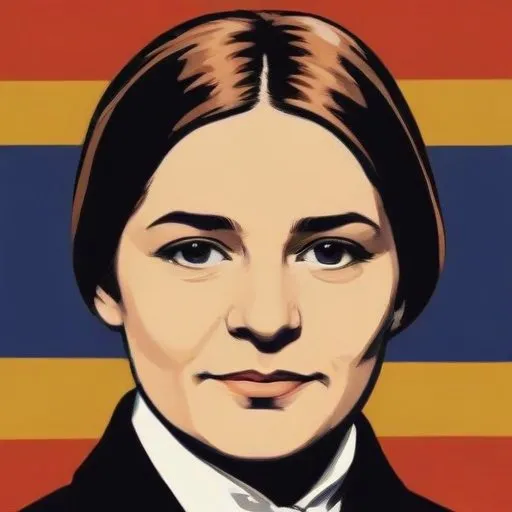
Octavia Hill

Octavia Hill

Octavia Hill was born on December 3rd, 1838

Full Name: Octavia Hill
Place of Birth: Wisbech, Cambridgeshire, England
Profession: English Activist and Author
Nationality: English
Notable Work: Social Reforms
Born: December 3, 1838
Died: August 13, 1912
Occupation: Activist and Author

A pioneering social reformer and writer who championed affordable housing, open spaces, and social justice, leaving a lasting legacy in urban planning and community development.

Timeline
1838
Birth in Wisbech
Octavia Hill was born on December 3, 1838, in Wisbech, Cambridgeshire, England.
1852
Co-founded the Ladies Guild
Hill co-founded the Ladies Guild, an organization that helped poor women and children.
1864
Open-air education
Hill worked to establish open-air education for children, recognizing the importance of fresh air and outdoor exercise.
1884
Co-founded the National Trust
Hill co-founded the National Trust, an organization that preserves historic sites and green spaces in England.
1912
Death in London
Hill died on August 13, 1912, at the age of 73, in London, England.
Octavia Hill

Octavia Hill Quiz

What was Octavia Hill's primary focus in her social reform efforts?

Score: 0/5
FAQ
What were Octavia Hills contributions to the development of social housing in England?
Octavia Hill was a pioneer in the development of social housing in England, and her work led to the establishment of several model housing estates for the working class.
How did Octavia Hills work impact the development of the settlement movement?
Octavia Hills work with the settlements movement helped to establish community centers and social services in urban areas, improving the lives of working-class people and promoting social reform.
What were Octavia Hills views on womens roles in social reform?
Octavia Hill believed that women had a critical role to play in social reform, and she encouraged women to become involved in philanthropic work and community activism.
What was Octavia Hills role in the development of the National Trust?
Octavia Hill was one of the founders of the National Trust, a conservation organization dedicated to preserving historic sites and green spaces in England.
How did Octavia Hills work impact the development of urban planning and design?
Octavia Hills work on social housing and community development helped to shape urban planning and design, emphasizing the importance of green spaces, community facilities, and affordable housing.

Related People:

Florence Nightingale

Born in 1820

Pioneering nurse and statistician who revolutionized healthcare by introducing sanitation practices and data-driven decision making, becoming the founder of modern nursing.

Emmeline Pankhurst

Born in 1858

A leading figure in the British suffragette movement, fighting for women's right to vote through militant tactics and public demonstrations. Her activism led to significant social and political change.

Millicent Fawcett

Born in 1847

A pioneering suffragist and leading figure in the women's suffrage movement, fighting for women's right to vote in the UK. Her tireless efforts led to significant reforms and milestones in gender equality.

Christabel Pankhurst

Born in 1880

Co-founder of the Women's Social and Political Union, a leading figure in the UK suffragette movement, fighting for women's right to vote. She played a crucial role in organizing protests, demonstrations, and hunger strikes to achieve this goal.

Emily Davison

Born in 1872

A pioneering suffragette who fought for women's right to vote, famously sacrificing her life by stepping in front of the King's horse at the 1913 Derby.

Sylvia Pankhurst

Born in 1882

A pioneering figure in the fight for women's right to vote, leading protests, hunger strikes, and advocating for workers' rights and socialism. Her artwork also helped raise awareness for the suffrage movement.

Dorothy L. Sayers

Born in 1893

A renowned author of detective fiction, particularly the Lord Peter Wimsey series, and a translator of Dante's Divine Comedy.

Virginia Woolf

Born in 1882

A pioneering author of modernist literature, known for experimental novels and essays that explored the human experience, blurring the lines between reality and fiction.