


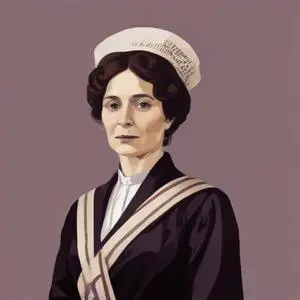
A leading figure in the British suffragette movement, fighting for women's right to vote through militant tactics and public demonstrations. Her activism led to significant social and political change.
Emmeline Pankhurst is revered as a pioneering figure in the struggle for women's suffrage, leading the British suffragette movement to secure the right to vote for women in Great Britain and Ireland in 1918. Her tireless efforts, often marked by controversy and militant tactics, earner her a spot as one of Time magazine's 100 Most Important People of the 20th Century.
Born on July 15, 1858, in Manchester, England, Pankhurst was exposed to politics from a young age. Her parents, both politically active, instilled in her a strong sense of social justice. At 14, she was introduced to the women's suffrage movement, which would become her life's passion.
Pankhurst co-founded the Women's Franchise League in 1889, advocating for suffrage for both married and unmarried women. When the organization disbanded, she attempted to join the Independent Labour Party, but was initially refused membership due to her sex. Undeterred, she continued her work as a Poor Law Guardian, where she witnessed firsthand the harsh conditions faced by women in Manchester's workhouses.
In 1903, Pankhurst founded the Women's Social and Political Union (WSPU), an all-women suffrage advocacy organization dedicated to "deeds, not words." The group identified as independent from and often in opposition to political parties. Its members, including Pankhurst's daughters, were known for their physical confrontations, window-smashing, and hunger strikes in prison.
Pankhurst's activism came at great personal cost. She, her daughters, and fellow WSPU activists were repeatedly imprisoned, where they staged hunger strikes to secure better conditions. Pankhurst herself was force-fed 49 times, a brutal ordeal that took a toll on her health.
Pankhurst believed that women's suffrage was essential to achieving true democracy. She advocated for the use of militant tactics, arguing that women had been too patient and polite for too long. Her philosophy was simple: "Deeds, not words" – a mantra that guided the WSPU's actions.
Emmeline Pankhurst's legacy extends far beyond the UK. She inspired women around the world to fight for their rights, paving the way for future generations of feminists. Her work contributed to the passage of the Representation of the People Act in 1918, granting women over 30 the right to vote.
In a time when women's rights were largely ignored, Pankhurst's unwavering dedication and unrelenting passion for justice helped shape a new pattern for society. Her work continues to inspire generations, solidifying her place as a pioneering figure in the fight for women's suffrage.
Emmeline Pankhurst's remarkable life serves as a testament to the power of determination and courage. Her legacy continues to inspire and empower women around the world, ensuring that her fight for justice will never be forgotten.
Born in 1882
A pioneering figure in the fight for women's right to vote, leading protests, hunger strikes, and advocating for workers' rights and socialism. Her artwork also helped raise awareness for the suffrage movement.
Born in 1880
Co-founder of the Women's Social and Political Union, a leading figure in the UK suffragette movement, fighting for women's right to vote. She played a crucial role in organizing protests, demonstrations, and hunger strikes to achieve this goal.
Born in 1847
A pioneering suffragist and leading figure in the women's suffrage movement, fighting for women's right to vote in the UK. Her tireless efforts led to significant reforms and milestones in gender equality.
Born in 1863
A Welsh lawyer and politician who served as Prime Minister of the United Kingdom, leading the country through World War I and introducing key social reforms. He's known for his charismatic leadership and progressive policies.
Born in 1871
Prolific writer of historical novels and adventure stories, also a talented landscape painter.
Born in 1856
A renowned Irish playwright and critic, known for his witty, thought-provoking plays that often challenged social norms and conventions. His works include Pygmalion and My Fair Lady.
Born in 1856
A pioneering figure in the UK labor movement, fighting for workers' rights and social justice, and instrumental in founding the Labour Party.
Born in 1759
A pioneering advocate for women's rights and education, this 18th-century thinker wrote influential works that shaped feminist philosophy and literature.
