


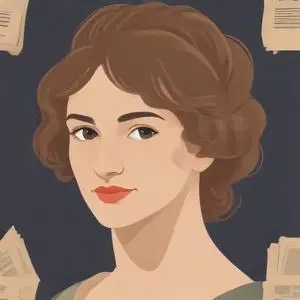
A pioneering advocate for women's rights and education, this 18th-century thinker wrote influential works that shaped feminist philosophy and literature.
Mary Wollstonecraft, a British writer, philosopher, and fierce advocate for women's rights, left an indelible mark on the world with her groundbreaking works and unconventional personal life. She is renowned for her iconic book, A Vindication of the Rights of Woman, which boldly argued that women are not naturally inferior to men, but rather, their lack of education is the root of their perceived inferiority.
Mary Wollstonecraft was born on April 27, 1759, in Spitalfields, London, to Elizabeth Dixon and Edward John Wollstonecraft. Despite her family's comfortable income, Mary's life was marked by a series of unconventional relationships that would shape her worldview and writing. Her notable affairs with Henry Fuseli and Gilbert Imlay, with whom she had a daughter, Fanny Imlay, were just the beginning of her tumultuous personal life.
In 1797, Mary married the philosopher William Godwin, a prominent figure in the anarchist movement. This union produced a daughter, Mary Shelley, who would go on to become a celebrated writer and the author of Frankenstein. Tragically, Mary Wollstonecraft died just 11 days after giving birth to Mary, leaving behind several unfinished manuscripts.
Mary Wollstonecraft's writing was deeply rooted in her philosophical beliefs about women's rights, education, and social reform. Her magnum opus, A Vindication of the Rights of Woman, is a testament to her conviction that women are rational beings deserving of equal treatment and opportunities. She argued that education, not nature, is the key to unlocking women's potential and that they should be treated as equals in society.
Although Wollstonecraft's life and work were largely forgotten until the late 20th century, her impact on modern society and the feminist movement cannot be overstated. Her ideas about women's rights, education, and social reform continue to inspire generations of women and men around the world. Wollstonecraft's legacy serves as a reminder of the power of activism, writing, and philosophy to shape our collective future.
Mary Wollstonecraft's legacy extends far beyond her writing. She is celebrated as a pioneering feminist philosopher, a champion of women's rights, and an inspiration to countless individuals around the world. Her life and work serve as a testament to the power of individual activism and the importance of challenging societal norms.
In conclusion, Mary Wollstonecraft's remarkable life, writing, and legacy continue to captivate and inspire us today. As we reflect on her remarkable achievements, we are reminded of the enduring importance of fighting for women's rights, education, and social reform.
"Virtue can only flourish among equals."
"It is justice, not charity, that is wanting in the world."
Mary Wollstonecraft's story encourages us to embrace our own power to create positive change in the world. Her courage, conviction, and writing continue to inspire future generations to strive for a more just, equal, and compassionate society.
Born in 1756
A pioneering anarchist philosopher who wrote influential works on politics, morality, and individualism, shaping modern thought on liberty and social justice.
Born in 1797
Author of Gothic novels, particularly the iconic "Frankenstein", which has become a cultural phenomenon and influenced countless adaptations and reinterpretations.
Born in 1792
Romantic-era writer of lyrical poetry and Gothic dramas that explored the human condition, freedom, and the beauty of nature.
Born in 1806
A prominent 19th-century thinker who championed individual liberty, free speech, and women's rights, and is best known for his influential book "On Liberty".
Born in 1712
A pioneering thinker who shaped modern democracy and education with his ideas on social contracts, general will, and the importance of early childhood education. His writings influenced the French Revolution and modern political thought.
Born in 1724
Developed influential philosophical frameworks, such as the Critique of Pure Reason, that shaped modern Western thought on ethics, morality, and human understanding.
Born in 1632
A 17th-century thinker who laid the groundwork for modern democracy, arguing that governments derive their power from the people and that individuals have inherent rights to life, liberty, and property.
Born in 1737
A founding father of American democracy, he penned influential writings that fueled the American Revolution and shaped modern democracy. His ideas still resonate in contemporary politics.
