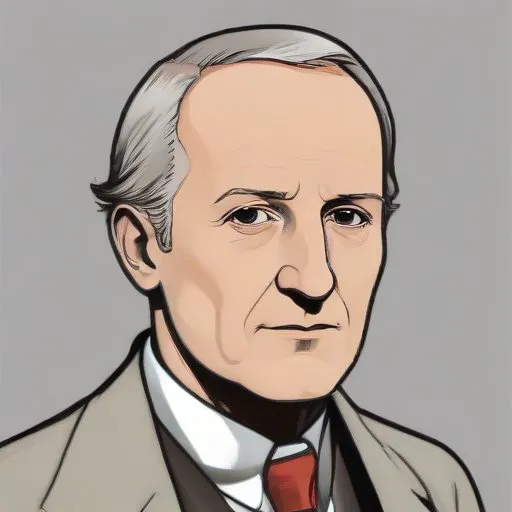
William Godwin: The Revolutionary Thinker Who Shaped British Literature and Philosophy
A Champion of Anarchism and Utilitarianism
William Godwin, a renowned English journalist, political philosopher, and novelist, is celebrated as one of the first exponents of utilitarianism and anarchism. His groundbreaking works, particularly
An Enquiry Concerning Political Justice and
Things as They Are; or, The Adventures of Caleb Williams, catapulted him to fame in the late 18th century, earning him a prominent place in radical circles of London.
Early Life and Education
Born on March 3, 1756, in Wisbech, Isle of Ely, Cambridgeshire, Godwin was the seventh of thirteen children to John and Anne Godwin. His family, adhering to a strict form of Calvinism, instilled in him a strong sense of morality and social responsibility. Despite his family's modest means, Godwin's father, a Nonconformist minister, ensured his son received a quality education, which would later shape his philosophical outlook.
Philosophical Contributions and Beliefs
Godwin's magnum opus,
An Enquiry Concerning Political Justice, published in 1793, is a scathing critique of political institutions, advocating for the abolition of government and the establishment of a decentralized, stateless society. This work solidified his position as a pioneer of anarchism, influencing thinkers such as
Pierre-Joseph Proudhon and
Mikhail Bakunin. Godwin's utilitarianism, which posits that actions should be guided by the principle of promoting the greatest happiness of the greatest number, has had a lasting impact on British philosophy.
Literary Career and Notable Works
Godwin's literary prowess extends beyond philosophical treatises. His novel,
Things as They Are; or, The Adventures of Caleb Williams, published in 1794, is considered one of the first mystery novels in the English language. This work, along with his later novels, such as
St. Leon and
Mandeville, showcases Godwin's mastery of storytelling and his ability to craft compelling narratives that critique social injustices.
Personal Milestones and Key Life Events
In 1797, Godwin married the feminist writer
Mary Wollstonecraft, with whom he had a daughter,
Mary Shelley, later the author of
Frankenstein. After Wollstonecraft's untimely death, Godwin wrote a candid biography of his wife, which sparked controversy due to its honesty about their unconventional relationship. He later married Mary Jane Clairmont, with whom he established The Juvenile Library, a publishing venture that produced works for children, including original stories and translations.
Influence on Modern Society
Godwin's ideas have permeated various aspects of modern society. His anarchist and utilitarian principles have inspired social and political movements, such as the anti-globalization and environmental movements. His literary contributions have paved the way for successive generations of writers, including his daughter Mary Shelley, who went on to become a prominent author in her own right.
Legacy and Historical Context
Godwin's life and works are a testament to the power of radical thinking and intellectual courage. Despite facing criticism and persecution, he remained committed to his principles, influencing British literature and philosophy in profound ways. His legacy continues to inspire thinkers, writers, and activists today, cementing his position as a towering figure in the history of British intellectual thought.
FAQ
What is William Godwins most notable literary work?
William Godwins most notable literary work is his novel Caleb Williams, a pioneering work of detective fiction that explores themes of justice, morality, and social reform. This novel is considered a landmark in English literature, influencing subsequent generations of writers.
What was William Godwins role in the English Enlightenment?
William Godwin played a significant role in the English Enlightenment, contributing to the development of liberal and radical thought. He was a key figure in the debating societies and salons of London, promoting ideas of political reform, social justice, and individual liberty.
How did William Godwins philosophy influence the development of anarchism?
William Godwins philosophy had a significant impact on the development of anarchism, shaping the ideas of subsequent anarchist thinkers such as Pierre-Joseph Proudhon and Mikhail Bakunin. His critique of government and advocacy of individual liberty helped to lay the foundations for anarchist thought.
What was William Godwins view on the role of reason in politics?
William Godwin believed that reason should play a central role in politics, arguing that individuals should be guided by rational principles rather than emotional or instinctive responses. He advocated for the use of reason to promote social reform and individual liberty.
How did William Godwins personal life influence his writing?
William Godwins personal life had a significant impact on his writing, particularly in the areas of love, relationships, and family. His novels often explored themes of romantic love and domestic drama, reflecting his own experiences as a husband, father, and friend.