


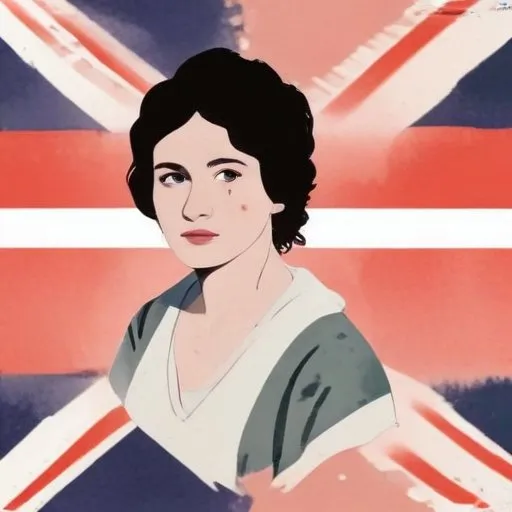
Pioneering feminist writer and philosopher who advocated for women's rights and education, and her daughter who struggled with identity and family legacy.
Fanny Imlay, also known as Fanny Godwin and Frances Wollstonecraft, was the illegitimate daughter of the British feminist Mary Wollstonecraft and American commercial speculator Gilbert Imlay. She is known for her tumultuous life, marked by family tragedies and personal struggles, which ultimately led to her tragic demise at the age of 22.
Fanny was born on May 14, 1794, to Mary Wollstonecraft and Gilbert Imlay, who had a brief but intense relationship. After her mother's death in 1797, Fanny was left in the care of her father's friend, William Godwin, a prominent anarchist and political philosopher.
Fanny grew up in Godwin's household, alongside his new wife, Mary Jane Clairmont, and their combined family of five children, including her half-sister Mary Godwin, who would later become the famous author of Frankenstein.
As Fanny entered her teenage years, tensions rose in the Godwin household. Her stepmother's favoritism towards her own children created animosity among the siblings, and debts continued to mount. In 1814, Mary and Claire Clairmont escaped the tumultuous household by running off to the Continent with Percy Bysshe Shelley, a leading Romantic poet.
Fanny, left behind, bore the brunt of her stepmother's anger and frustration, leading to increased isolation and despair.
In 1816, at the tender age of 22, Fanny took her own life, ending a life marked by tragedy and hardship.
Percy Bysshe Shelley, who had become a close family friend, was deeply affected by Fanny's death and wrote a poignant poem in her memory.
Fanny Imlay's short but tumultuous life serves as a testament to the complexities of family dynamics and the struggles of women in the late 18th and early 19th centuries.
Her mother, Mary Wollstonecraft, wrote extensively about Fanny in her later works, ensuring that her daughter's memory lived on. Fanny's half-sister Mary Godwin, as Mary Shelley, would go on to write one of the most enduring works of Gothic literature, Frankenstein, which continues to captivate readers to this day.
Fanny's tragic story serves as a reminder of the importance of empathy, understanding, and support in the lives of those around us.
Born in 1759
A pioneering advocate for women's rights and education, this 18th-century thinker wrote influential works that shaped feminist philosophy and literature.
Born in 1756
A pioneering anarchist philosopher who wrote influential works on politics, morality, and individualism, shaping modern thought on liberty and social justice.
Born in 1797
Author of Gothic novels, particularly the iconic "Frankenstein", which has become a cultural phenomenon and influenced countless adaptations and reinterpretations.
Born in 1792
Romantic-era writer of lyrical poetry and Gothic dramas that explored the human condition, freedom, and the beauty of nature.
Born in 1775
Wrote humorous, insightful essays and poems that explored the human condition, often using wit and irony to comment on social issues. Known for his unique, conversational style that made literature accessible to a wider audience.
Born in 1770
A major Romantic poet, known for his focus on nature, emotion, and the human experience, creating works that evoke a sense of wonder and connection to the natural world.
Born in 1772
A leading figure of the Romantic movement, he crafted vivid, imaginative poetry and explored the human experience through his writing and philosophical ideas. His works continue to inspire and influence literature and art to this day.
Born in 1788
Romantic poet and playwright celebrated for passionate, expressive works that explored themes of love, freedom, and the human condition.
