


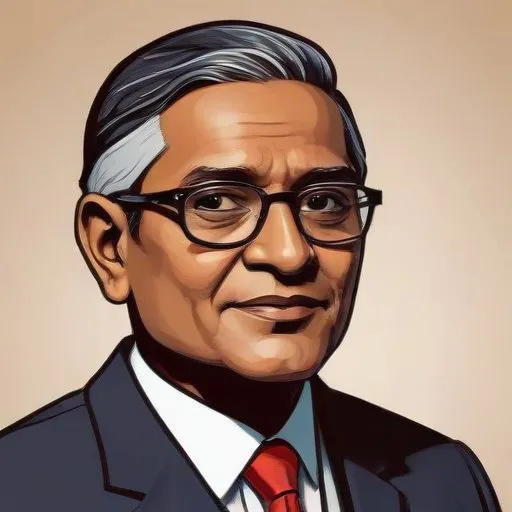
Indian lawyer and politician who served as the Advocate General of Tamil Nadu and played a key role in shaping the state's legal landscape. Known for his expertise in constitutional law and human rights.
P. Jeevanandham, fondly known as Jeeva, was a pioneering social reformer, political leader, and litterateur who championed the causes of the marginalized and oppressed in the state of Tamil Nadu, India. He was a key figure in the Communist and socialist movements, leaving an indelible mark on the country's socio-political landscape.
Born on August 21, 1907, in Boothapandi, near Nagercoil, in the then princely state of Travancore (now part of Kanyakumari District of Tamil Nadu), Jeevanandham grew up in an orthodox middle-class family with a strong cultural and literary background. His original name was Sorimuthu, named after his clan god. The rigid caste system and discriminatory practices prevalent during his time instilled in him a strong sense of justice and empathy for the downtrodden.
Jeevanandham's resentment towards the caste-based system and untouchability grew as he witnessed the humiliation and exclusion of his Dalit friends from temples and public places. As a schoolboy, he defied his family's traditions and joined the national movement, inspired by Mahatma Gandhi's call to wear khadi and his stand against untouchability. He took a bold step by wearing only khadi, symbolizing his commitment to the cause.
His father, displeased with his son's actions, asked him to conform to their caste traditions. Jeevanandham, however, chose to leave his home rather than compromise his values. This act of defiance marked the beginning of his lifelong journey as a champion of social justice.
Jeevanandham was not only a sociopolitical leader but also a cultural theoretician, orator, journalist, and critic. He was a prolific writer, contributing to various publications and journals, and was respected for his insightful critiques. His eloquence and persuasive skills made him an effective communicator, earning him the admiration of the common people.
Jeevanandham's relentless fight for the deprived and his unwavering commitment to social justice left a lasting impact on Tamil Nadu's social and political landscape. His influence extended beyond his political affiliation, inspiring generations to strive for a more equal and just society.
Today, P. Jeevanandham is remembered as a beacon of hope for the marginalized and a champion of humanity, his legacy continuing to inspire social reformers and activists.
Jeevanandham's life serves as a testament to the power of courage, conviction, and determination. His unwavering commitment to social justice continues to inspire generations, cementing his place as a pioneering figure in India's struggle for equality and human rights.
Born in 1917
A charismatic actor-turned-politician who dominated Tamil cinema and served as Chief Minister of Tamil Nadu, known for his on-screen heroics and off-screen populist policies.
Born in 1903
A pioneering Indian nationalist who played a key role in India's struggle for independence and later became a chief minister, known for his simple living and dedication to social welfare.
Born in 1909
A pioneering Tamil politician and educator who played a key role in shaping Tamil Nadu's identity and politics, known for his advocacy of social justice and linguistic equality.
Born in 1910
The 6th President of India, a lawyer and politician who played a key role in India's independence movement and later served as the country's head of state from 1987 to 1992. He's known for his contributions to India's constitutional development and foreign policy.
