


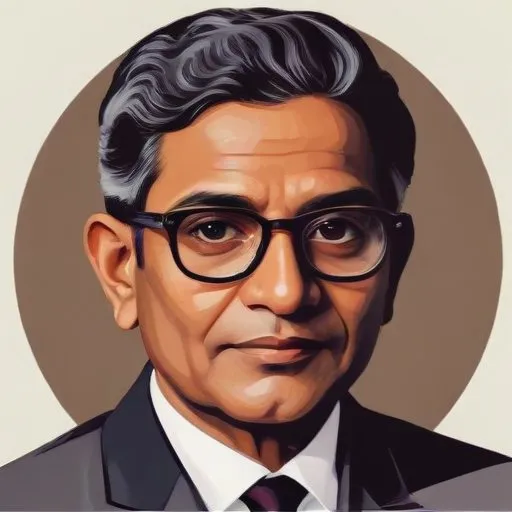
The 6th President of India, a lawyer and politician who played a key role in India's independence movement and later served as the country's head of state from 1987 to 1992. He's known for his contributions to India's constitutional development and foreign policy.
R. Venkataraman, the eighth President of India, is renowned for his unparalleled commitment to democracy and his tireless efforts to strengthen the country's constitutional framework. As a seasoned politician, administrator, and lawyer, Venkataraman played a pivotal role in shaping India's political landscape during the latter half of the 20th century.
Venkataraman's tryst with public service began in the early 1940s, when he actively participated in India's freedom struggle. He was a member of the Indian National Congress and played a key role in the Quit India Movement. After India gained independence, Venkataraman continued to serve the nation in various capacities, including as a Member of Parliament, Minister of Industries, and Minister of Defence.
Venkataraman's administrative acumen and political sagacity earned him the respect of his peers and the nation at large. He was unanimously elected as the Vice-President of India in 1984, a position he held until 1987. His dedication to the principles of democracy and his unwavering commitment to the Constitution of India paved the way for his ascent to the highest office in the land – the Presidency.
Venkataraman's presidential tenure, from 1987 to 1992, was marked by unprecedented stability and growth. He worked tirelessly to strengthen India's federal structure, foster greater cooperation between the Centre and the states, and promote economic development. His leadership played a crucial role in maintaining peace and tranquility in the country, particularly during the tumultuous years of the late 1980s.
Venkataraman was a firm believer in the principles of democracy, secularism, and social justice. He was deeply influenced by the ideals of Mahatma Gandhi and Jawaharlal Nehru, and worked towards realizing their vision of a prosperous and equitable India. Throughout his life, he remained committed to the values of egalitarianism, inclusivity, and social harmony.
Venkataraman's life was marked by several milestones, including his marriage to Janaki Venkataraman in 1934, with whom he had three daughters. He was a voracious reader and had a deep appreciation for literature, music, and the arts. Despite his busy schedule, he found time to write several books, including his memoirs, "My Presidential Years."
Venkataraman's contributions to Indian democracy are unparalleled. He played a significant role in shaping the country's constitutional framework, promoting economic growth, and fostering social harmony. His legacy continues to inspire generations of Indians, and his commitment to democracy remains an enduring testament to his unwavering dedication to the nation.
Venkataraman's influence on modern Indian society is profound. He worked towards creating a more equitable and just society, where every citizen had access to equal opportunities and resources. His efforts towards promoting education, healthcare, and social welfare have had a lasting impact on the country.
Venkataraman was awarded the Bharat Ratna, India's highest civilian honor, in 1987. He was also conferred with the Soviet Land of Lenin Peace Prize in 1987, in recognition of his outstanding contributions to the cause of world peace and international cooperation.
Venkataraman's impact on Indian politics and governance is immeasurable. He played a pivotal role in shaping the country's constitutional framework, promoting economic growth, and fostering social harmony. His commitment to democracy, secularism, and social justice continues to inspire politicians, administrators, and citizens across the nation.
Venkataraman's life is a testament to the power of dedication, hard work, and commitment to public service. His unwavering commitment to democracy and his tireless efforts to promote social harmony and economic growth continue to inspire generations of Indians. His life serves as a beacon of hope for those who strive to make a positive impact on society.
R. Venkataraman's life is a testament to the power of dedication, hard work, and commitment to public service. His unwavering commitment to democracy, secularism, and social justice continues to inspire generations of Indians, and his legacy remains an enduring testament to his tireless efforts to build a more prosperous and equitable India.
81 Years Old
The 6th Prime Minister of India, a key figure in Indian politics, known for introducing economic reforms and promoting technology in the country. He was also a strong advocate for social justice and equality.
Born in 1917
The first female Prime Minister of India, serving from 1966 to 1977 and again from 1980 until her assassination in 1984, known for her strong leadership and economic reforms.
Born in 1889
India's first Prime Minister, a key figure in the country's struggle for independence from British rule, and a champion of democracy and secularism. He played a crucial role in shaping modern India's government and economy.
Born in 1896
Fourth Prime Minister of India, known for his efforts to decentralize power and promote economic development, and for being the first Indian Prime Minister to resign from office.
Born in 1902
The 5th Prime Minister of India, a champion of rural development and social justice, who implemented land reforms and empowered farmers. He played a crucial role in shaping India's agricultural sector and economy.
Born in 1916
The first Sikh to hold the office, he served as President of India from 1982 to 1987, playing a crucial role in maintaining national stability during a tumultuous period. He's also remembered for his humble beginnings and rise to prominence.
