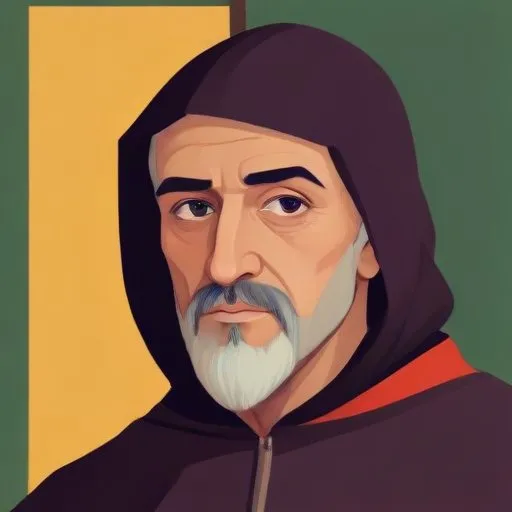
Pandolfo Petrucci

Pandolfo Petrucci

Pandolfo Petrucci was born on February 14th, 1452

Full Name: Pandolfo Petrucci
Title: Tyrant of Siena
Nationality: Italian
Born: 1452
Died: 1512
Family: Petrucci family
Notable Work: Ruling Siena
Overthrown: 1508

A ruthless and cunning ruler who dominated Siena's politics for over 30 years, known for his clever manipulation of alliances and brutal suppression of opposition.

Timeline
1452
Born in Siena, Italy
Pandolfo Petrucci was born in 1452 in Siena, Italy. He would go on to become the tyrant of Siena.
1487
Became Tyrant of Siena
Petrucci became the tyrant of Siena in 1487, ruling the city-state until his death.
1498
Exiled from Siena
Petrucci was exiled from Siena in 1498, following a brief period of exile.
1500
Returned to Power in Siena
Petrucci returned to power in Siena in 1500, solidifying his position as tyrant.
1512
Died in Siena, Italy
Petrucci died on May 21, 1512, in Siena, Italy.
Pandolfo Petrucci

Pandolfo Petrucci Quiz

Pandolfo Petrucci was known for his ability to maintain power through

Score: 0/5
FAQ
What was Pandolfo Petruccis role in Sienese politics?
Pandolfo Petrucci was a powerful and influential figure in Sienese politics, serving as the de facto ruler of Siena from 1487 to 1502.
How did Pandolfo Petrucci rise to power?
Pandolfo Petrucci rose to power through a combination of strategic alliances, military victories, and clever politics, eventually becoming the tyrant of Siena.
What was Pandolfo Petruccis relationship with the Medici family?
Pandolfo Petrucci had a complex and often contentious relationship with the Medici family, frequently clashing with them over power and influence in Italy.
What was Pandolfo Petruccis legacy in Siena?
Pandolfo Petrucci left a lasting legacy in Siena, with his rule marked by significant cultural, economic, and architectural developments.
How did Pandolfo Petrucci die?
Pandolfo Petrucci died on May 21, 1512, after a long and eventful life marked by both triumphs and tribulations.

Related People:

Alessandro Farnese

Born in 1520

A powerful and influential figure in the Catholic Church, he played a crucial role in shaping the Church's policies and was a skilled diplomat, known for his clever negotiations and strategic alliances.

Cesare Borgia

Born in 1475

A ruthless and cunning politician who rose to power in the Renaissance era through intrigue and military conquest, leaving a lasting legacy in politics and governance.

Lorenzo de' Medici

Born in 1449

Renaissance leader who ruled Florence and sponsored artists like Michelangelo and Botticelli, shaping the city's cultural and artistic heritage.

Niccolò Machiavelli

Born in 1469

Italian historian and philosopher who wrote "The Prince", a seminal work on politics and power that still influences modern leadership and governance today.

Pope Julius III

Born in 1487

A 16th-century Pope who commissioned Michelangelo to paint the Sistine Chapel's frescoes and was a patron of the arts, leaving a lasting impact on Renaissance art and architecture.

Pope Leo XI

Born in 1535

The second shortest-reigning pope in history, serving for just 27 days in 1605, he is most known for his brief but tumultuous papacy marked by power struggles and controversy.

Francesco I Sforza

Born in 1401

The Duke of Milan, a powerful Renaissance leader, expanded his dominion through strategic marriages and military campaigns, fostering a cultural and artistic boom in 15th-century Italy.

Ferdinand I of Aragon

Born in 1380

Unified the Crown of Aragon, ruling over a vast territory in eastern Spain, and sponsored the voyages of Christopher Columbus, leading to the discovery of the New World.