


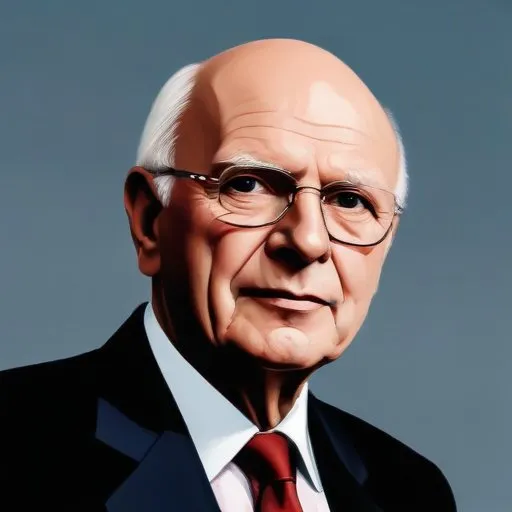
A Canadian engineer and politician who served as the 16th Minister of Defence, known for being the first person to accuse the US government of covering up the existence of UFOs and aliens. He also advocated for a new economic and social order.
Paul Hellyer, a Canadian engineer, politician, writer, and commentator, left an indelible mark on the country's political landscape, serving as the longest-serving member of the Queen's Privy Council for Canada at the time of his passing in 2021. As a trailblazing figure, Hellyer is best known for his unwavering commitment to Canadian democracy, his unshakeable integrity, and his tireless advocacy for progressive values.
Born on August 6, 1923, on a farm near Waterford, Ontario, Hellyer was the son of Lulla Maude Anderson and Audrey Samuel Hellyer. His early years were marked by a passion for aeronautics, which led him to study at the Curtiss-Wright Technical Institute of Aeronautics in Glendale, California, graduating in 1941. During this period, he also obtained his private pilot's license.
Hellyer's entry into politics came in 1949, when he was elected as a Liberal in the federal election, representing the riding of Davenport. At 26, he became the youngest member ever elected to the House of Commons of Canada. His meteoric rise continued as he served as Parliamentary Assistant to the Minister of National Defence and later as Associate Minister of National Defence in the cabinet of Prime Minister Louis St. Laurent.
In 1963, Hellyer became Minister of National Defence in the cabinet of Lester B. Pearson, a position that cemented his reputation as a skilled strategist and ardent defender of Canadian sovereignty. Throughout his political career, he remained an unwavering advocate for progressive values, committing himself to the causes of peace, social justice, and environmental stewardship.
Hellyer's philosophical underpinnings were rooted in a deep commitment to democracy, social justice, and human rights. He believed in the power of collective action, advocating for international cooperation and diplomacy as a means of resolving global conflicts. His unwavering convictions earned him respect and admiration from across the political spectrum.
Hellyer's unshakeable commitment to democratic values, social justice, and human rights has left an enduring impact on Canadian society. His tireless advocacy has inspired generations of political leaders, activists, and citizens to strive for a more just and equitable world.
Hellyer's life and legacy serve as a testament to the power of conviction, integrity, and moral courage. As Canada continues to grapple with the complexities of the modern world, his commitment to democratic values, social justice, and human rights remains an beacon of inspiration, guiding future generations towards a brighter, more just future.
"The most important thing in life is to stop saying 'I wish' and start saying 'I will'."
"Peace is not a dream, it's a reality that we can achieve through collective action and determination."
"Democracy is not a spectator sport; it requires active participation and engagement from all citizens."
Paul Hellyer's remarkable life and legacy serve as a powerful reminder of the transformative potential of political leadership, vision, and conviction. As we reflect on his enduring impact, we are inspired to continue striving for a world that is more just, equitable, and peaceful – a world that reflects the values and principles that Hellyer championed throughout his remarkable career.
Born in 1897
A Canadian leader who served as Prime Minister and won the Nobel Peace Prize for resolving the Suez Canal Crisis, known for his diplomatic efforts and peacekeeping initiatives.
Born in 1895
The 13th Prime Minister of Canada, a champion of individual rights and freedoms, introduced the Canadian Bill of Rights, a precursor to the Charter of Rights and Freedoms. He's also known for his anti-apartheid stance and leadership during the Suez Crisis.
Born in 1919
The charismatic leader who championed Canadian unity and implemented progressive policies, known for his iconic style and influential legacy in shaping modern Canada.
92 Years Old
The 20th Prime Minister of Canada, serving from 1993 to 2003, known for his leadership during the Quebec sovereignty movement and his role in shaping Canada's national unity. He implemented policies like the Clarity Act and the National Child Benefit.
45 Years Old
American professional ice hockey player who won two Stanley Cup championships and was a four-time NHL All-Star. Known for his rugged defensive play and physical presence on the ice.
87 Years Old
The 16th Prime Minister of Canada, serving from 1979 to 1980, is known for being a Progressive Conservative and leading a brief but significant term in Canadian politics. He's also a journalist and politician who played a key role in shaping Canada's foreign policy.
90 Years Old
A Canadian pilot and politician who served as leader of the New Democratic Party and was a prominent advocate for social justice and human rights. He's known for his progressive policies and charismatic leadership.
79 Years Old
The first and only female Prime Minister of Canada, serving for a brief four months in 1993, known for her efforts to reform the country's justice system. She was also a strong advocate for women's rights and gender equality.
