


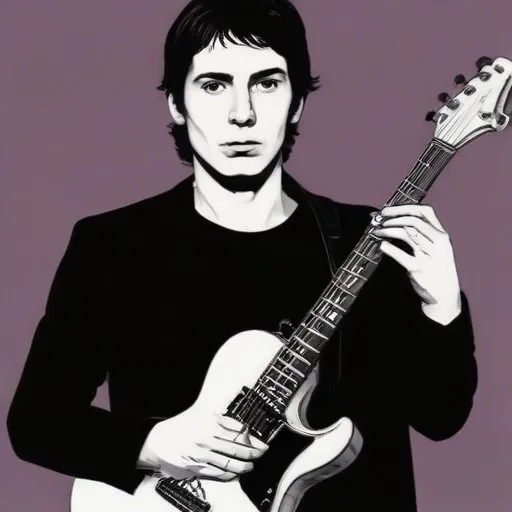
A British rock guitarist and producer, known for his work with the band Samson, and his virtuosic guitar playing style.
Paul Samson, a revered English guitarist, is synonymous with the new wave of British heavy metal, a genre that swept the music scene in the late 1970s and early 1980s. As the founder and lead guitarist of the eponymous band Samson, he played a pivotal role in shaping the sound of this iconic era.
Born Paul Sanson on June 4, 1953, Samson's musical journey began in the late 1960s with his first band, The Innocence. This local Kent-based group laid the groundwork for his future endeavors. After a brief stint with several obscure bands, Samson formed his own outfit, Samson, in 1977.
The original lineup consisted of Chris Aylmer on bass, Clive Burr on drums, and Samson on guitar. This trio recorded their debut album, Survivors, in 1979. Burr's departure led to the arrival of Thunderstick, donning a gimp mask on stage, and Bruce Dickinson on vocals, who would later join Iron Maiden.
The band's cult following grew, and they released two more albums, Head On and Shock Tactics, solidifying their place in the new wave of British heavy metal. Samson's guitar work and songwriting skills were instrumental in shaping the band's sound, which blended heavy riffs with melodic vocals.
After Dickinson and Thunderstick's departure in 1981, Nicky Moore joined as vocalist, and the band released Before the Storm and Dont Get Mad, Get Even. These albums enjoyed greater commercial success, and the band toured extensively, playing to larger audiences.
Samson continued to evolve, forming new bands and projects, including Paul Samson's Empire, which toured with Iron Maiden in 1986. He also released a solo album, Joint Forces, in 1985.
Paul Samson's contributions to the new wave of British heavy metal are undeniable. His guitar work and songwriting skills influenced a generation of metal musicians. Samson's music has stood the test of time, with their albums remaining cult classics to this day.
Samson's legacy extends beyond his music. He played a significant role in shaping the sound of a genre that continues to inspire new generations of metal fans. His influence can be seen in bands such as Iron Maiden, Judas Priest, and Def Leppard, who all emerged during this era.
Paul Samson passed away on August 9, 2002, leaving behind a rich musical legacy. His life was marked by a passion for music, and his dedication to his craft continues to inspire fans worldwide.
Paul Samson's impact on the world of heavy metal cannot be overstated. As a guitarist, songwriter, and band leader, he played a pivotal role in shaping the sound of a genre that continues to thrive today. His music remains a testament to his enduring legacy, inspiring new generations of metal fans and musicians alike.
78 Years Old
Legendary guitarist and songwriter behind Black Sabbath's iconic riffs and heavy metal sound, credited with creating the genre.
77 Years Old
A legendary bassist and primary lyricist of Black Sabbath, credited with creating the heavy metal sound and penning iconic songs like "Iron Man" and "Paranoid".
77 Years Old
The "Godfather of Heavy Metal" is a legendary vocalist and songwriter who rose to fame with Black Sabbath and later as a solo artist, known for his iconic voice and outrageous stage antics.
78 Years Old
The original drummer and songwriter for Black Sabbath, credited with creating the iconic heavy metal sound and penning lyrics that explored the darker side of life.
84 Years Old
Legendary heavy metal vocalist and songwriter behind iconic bands like Rainbow, Black Sabbath, and Dio, known for powerful vocals and fantasy-themed lyrics.
81 Years Old
Legendary guitarist and songwriter behind iconic bands Deep Purple and Rainbow, known for his neoclassical style and epic compositions.
81 Years Old
Lead vocalist of Deep Purple, known for powerful, wide-ranging voice and iconic songs like "Smoke on the Water" and "Child in Time".
70 Years Old
The iconic bassist and primary songwriter of Iron Maiden, renowned for crafting epic, galloping rhythms and conceptual themes that have shaped the heavy metal genre.
