


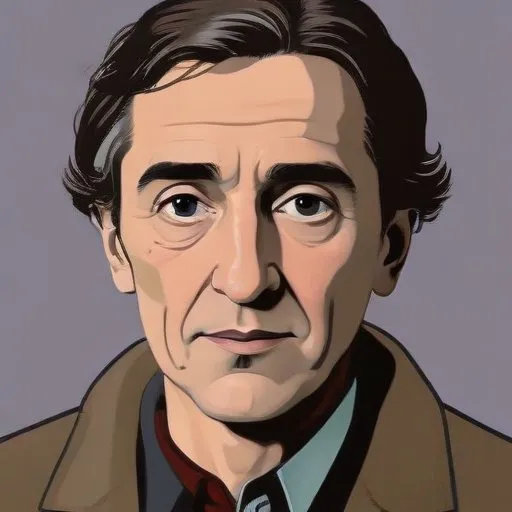
A British literary figure celebrated for his sprawling, nuanced novels of India during the British Raj, particularly the acclaimed "Raj Quartet" series.
Paul Scott, a renowned English novelist, is best known for his tetralogy, The Raj Quartet, a seminal work that secured his place in the literary world. His novel, Staying On, won the prestigious Booker Prize in 1977, catapulting him to fame in the twilight of his life.
Born on March 25, 1920, in suburban London, Scott's early life was marked by contrasts. His father, Thomas, a Yorkshireman and commercial artist, and his mother, Frances, a laborer's daughter, instilled in him the dual values of creativity and practicality. This dichotomy would later reflect in his writing.
Scott's education was cut short when he had to leave Winchmore Hill Collegiate School without qualifications due to his father's financial difficulties. He worked as an accounts clerk and took evening classes in bookkeeping, nurturing his passion for writing in his spare time.
During World War II, Scott was posted to India, Burma, and Malaya, where he witnessed the grandeur and decline of the British Empire. This experience would later shape his writing, particularly in The Raj Quartet.
After the war, Scott worked as a literary agent, handling the works of notable authors, including Evelyn Waugh and Muriel Spark. However, he soon realized his true calling lay in writing, and in 1960, he devoted himself to full-time writing.
In 1964, Scott embarked on a research trip to India, which inspired the creation of The Raj Quartet. The series, consisting of The Jewel in the Crown, The Day of the Scorpion, The Towers of Silence, and A Division of the Spoils, is a sweeping narrative of the British Raj's decline and its impact on Indian society.
The Raj Quartet received widespread critical acclaim, with The Jewel in the Crown being adapted into a successful television series by Granada Television in the 1980s. Scott's work was praised for its nuance, depth, and historical accuracy, earning him a loyal following and cementing his reputation as a master storyteller.
Scott's personal life was marked by struggles with ill health and alcoholism. Despite these challenges, he continued to write, leaving behind a rich literary legacy. His private archive is housed at the University of Tulsa, where he taught as a visiting professor.
Scott's work has inspired generations of writers and continues to be studied in academia. His unique blend of historical context, nuanced character development, and poetic prose has solidified his place in the pantheon of great English novelists.
"I think the most important thing in writing is to find out what you want to say, and then to say it as simply and as directly as possible."
Paul Scott's remarkable life and work serve as a testament to the power of creative expression, perseverance, and dedication to one's craft. His legacy continues to inspire and captivate readers, scholars, and writers alike.
Born in 1879
This celebrated author crafted novels and plays that probed the human condition, exploring themes of social class, morality, and personal relationships, with a distinctive wit and insight. Their works continue to captivate audiences with their nuanced portrayals of English society during the early 20th century.
Born in 1903
A renowned writer of dystopian classics, such as "1984" and "Animal Farm", who warned of totalitarianism's dangers through allegorical fiction.
Born in 1903
A renowned English writer, known for his witty satires and novels of manners, particularly "Brideshead Revisited", which explores the British aristocracy's decline.
74 Years Old
A Canadian actor who appeared in over 150 films and TV shows, often playing Native American and First Nations characters, and was a pioneer for Indigenous representation in media.
Born in 1911
A Nobel Prize-winning author of allegorical novels, known for exploring the human condition through thought-provoking stories, most famously "Lord of the Flies".
Born in 1906
This Indian author is celebrated for crafting relatable, humorous, and poignant stories that explore the human condition, often set in the fictional town of Malgudi. His works are cherished for their simplicity, wit, and insight into Indian culture.
94 Years Old
A Nobel Prize-winning writer who crafted nuanced, thought-provoking novels and essays that explored identity, culture, and colonialism. His works are known for their lyrical prose and piercing insight into the human condition.
79 Years Old
A celebrated author of magical realist fiction, known for provocative and imaginative novels that explore cultural identity, politics, and history. His writing often sparks controversy and debate.
