


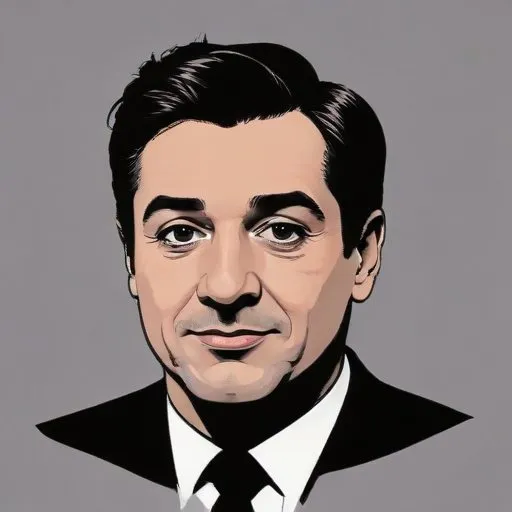
French actor known for his roles in silent films, particularly in the 1910s and 1920s, starring in over 100 films during his career.
Paul Vermoyal was a French stage and film actor of the early 20th century, known for his striking performances on the stages of the Grand Guignol theatre and in over 20 films during the 1910s and 1920s. His impressive range and versatility earned him a reputation as one of the most sought-after actors of his time, working with renowned directors such as Maurice Mariaud, Abel Gance, and Robert Boudrioz.
Vermoyal was born on October 18, 1888, in Bray-en-Laonnois, Aisne, Picardy, France. Little is known about his early life, but it is believed that he began his acting career on the stages of Paris, where he honed his craft and developed his unique style.
By the 1910s, Vermoyal had become a regular fixture at the Grand Guignol theatre in the Quartier Pigalle area of Paris, where he performed in numerous productions, including the famous short film Le roi de l'atin, directed by Maurice Mariaud in 1916.
Vermoyal's film career took off in the 1910s, with appearances in a string of successful films, including The Mysteries of Paris (1922), a serial film directed by Charles Burguet, and Koenigsmark (1923), directed by Lonce Perret. His performances were met with critical acclaim, and he quickly became known for his ability to bring depth and nuance to his characters.
One of Vermoyal's most notable roles was in the 1924 film Terreur, directed by Edward Jos, opposite American actress Pearl White. This film showcased Vermoyal's talent for playing complex, emotionally charged characters, and cemented his status as a leading man of French cinema.
Vermoyal's international reputation grew with his appearance in the 1924 American film The Arab, directed by Rex Ingram and starring Ramon Novarro and Alice Terry. This film marked a turning point in Vermoyal's career, as it introduced him to a global audience and solidified his position as a major star of the silent era.
Vermoyal's final film appearance was in the 1925 film Audel de la mort, directed by Benito Perojo. Tragically, Vermoyal's life was cut short when he died on September 28, 1925, at the age of 36, in Amlie-les-Bains-Palalda, France.
Despite his untimely death, Vermoyal's legacy lives on through his impressive body of work, which continues to inspire and influence actors and filmmakers to this day. His contributions to French cinema and the silent era are a testament to his talent and dedication to his craft.
Vermoyal's remarkable career and enduring legacy serve as a reminder of the power of cinema to captivate and inspire audiences across generations.
Born in 1910
A renowned French actor and director who pioneered the art of mime, bringing silence to life on stage and screen through his expressive gestures and poignant performances.
Born in 1913
A renowned French actor and director, starring in iconic films like "Beauty and the Beast" and "Orpheus", known for his androgynous looks and poetic on-screen presence.
Born in 1921
A charismatic actor and singer who starred in iconic films like "On the Waterfront" and "Let's Make Love" alongside Marilyn Monroe, charming audiences with his rugged good looks and smooth vocals.
Born in 1895
A renowned actor of French and Swiss descent, celebrated for his iconic roles in classic films like "Boudu Saved from Drowning" and "The Red Balloon".
Born in 1905
A French-Italian actor and screenwriter, known for his iconic roles in classic films like "Les Enfants du Paradis" and "Eyes Without a Face", showcasing his versatility in drama and horror.
