


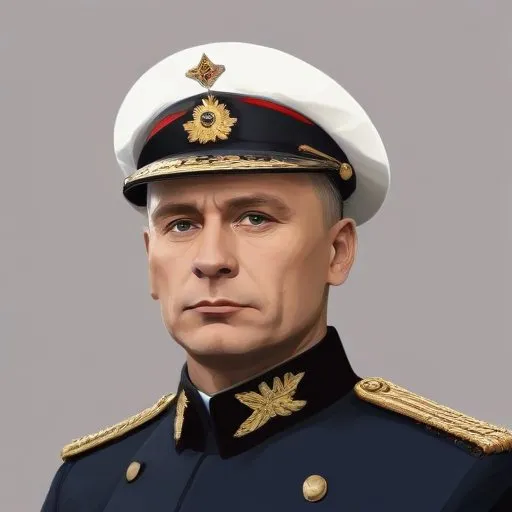
A Russian army officer who led a secret society of liberal nobles and army officers that sought to overthrow the Russian monarchy and establish a constitutional government. He's known for his radical ideas and his role in the Decembrist revolt.
Pavel Pestel was a Russian revolutionary and ideologue of the Decembrists, a group of Russian aristocrats who organized a rebellion against the Russian autocracy in the early 19th century. He is known for his radical republican views and his role in shaping the Decembrist movement.
Pestel was born on July 5, 1793, in Moscow to a Lutheran family of Saxon descent that had settled in Russia during the reign of Peter the Great. His great-grandfather, grandfather, father, and uncle had all successively served as director of Moscow's postal mail service, forming a dynasty of sorts.
In 1805-1809, Pestel studied in Dresden, and in 1810-1811, he was a student at the Page Corps, from which he would graduate in the rank of praporshchik. He was then sent to the Lithuanian Regiment of the Leib Guard and took part in the Patriotic War of 1812 and foreign military campaigns of 1813-1814.
During the war, Pestel distinguished himself at the battles of Borodino, Dresden, Kulm, and Leipzig, and for his actions, he personally received the Gold Sword for Bravery from Field Marshal Kutuzov. After serving in a number of cavalry regiments, he was in 1821 appointed commander of the Vyatka Infantry Regiment quartered in Tulchin.
In 1816, Pestel became a member of the Union of Salvation and one of the authors of its charter. He managed to make all the society members agree on the republican program of the Union, thereby laying the foundations for the republican traditions in the Russian emancipation movement.
Pestel's radical views and his influence on the Decembrist movement led to his arrest in 1825, and he was eventually executed in 1826 for his role in the Decembrist uprising.
Pestel's philosophical contributions lay in his radical republican views, which emphasized the importance of democracy and the abolition of the monarchy. He believed in the principles of social equality and justice, and he saw the Decembrist movement as a means to achieve these goals.
Pestel's legacy lies in his role as a precursor to the Russian revolutionary movement of the 19th and 20th centuries. His radical republican views and his influence on the Decembrist movement paved the way for future generations of Russian revolutionaries.
In conclusion, Pavel Pestel was a Russian revolutionary and ideologue of the Decembrists, known for his radical republican views and his role in shaping the Decembrist movement. His legacy continues to influence Russian politics and intellectual thought to this day.
