


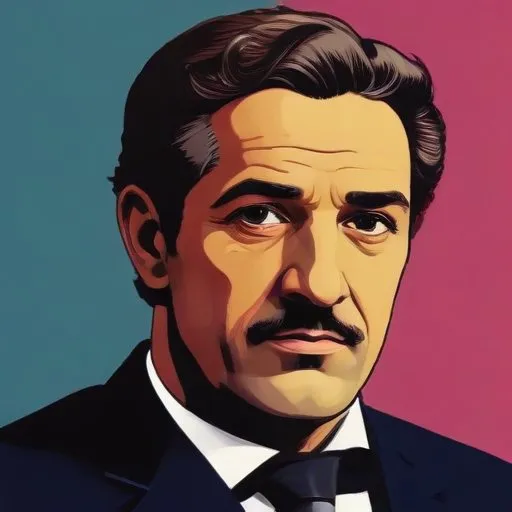
A renowned Greek composer and educator, he is most known for his significant contributions to the development of Greek music education, creating a new musical movement that combined traditional and modern elements. His work had a profound impact on the country's musical identity.
Pavlos Carrer, a renowned Greek composer, is credited with creating the first national operas and national songs on Greek plots, librettos, and verses, inspired by the folk and urban popular musical tradition of modern Greece. Born on May 12, 1829, in Zante, Greece, Carrer's contributions to the world of music have left an indelible mark on the country's cultural heritage.
Carrer descended from a noble family on the island of Zante. He began his music studies in his birthplace under the guidance of Italian teachers Giuseppe Cricca and Francesco Marangoni. Possibly, he also received training in Corfu with Nikolaos Mantzaros. Carrer's natural talent, combined with the cultural atmosphere of the Ionian Islands, which was heavily influenced by Italian opera and Western European culture, led him to compose his first small musical pieces in the late 1840s.
In 1850, Carrer moved to Milan, the operatic capital of Europe at the time, to further his music studies. He took private courses with Raimondo Boucheron, Pietro Tassistro, and Giuseppe Winter. The same year, he presented a concert at the Carcano theatre, showcasing his first instrumental works. His big break came when he composed the music score for Tomaso Casati's ballet, Bianca di Belmonte, produced at the Teatro della Canobbiana.
Mentored by Francesco Lucca, a powerful Italian music publisher, Carrer made his debut as an opera composer in August 1852 at the Carcano, with Dante e Bice, an opera in three parts to a libretto by Serafino Torelli. This work, which subtly hinted at the Italian national poet Dante Alighieri's unfulfilled love for Beatrice Portinari, his political activities, and the writing of the Divine Comedy, seemed to have annoyed the Austrian police due to its political connotations.
Pavlos Carrer's pioneering efforts in creating national operas and national songs have had a profound impact on Greek music. His works not only showcased the country's rich cultural heritage but also paved the way for future generations of Greek composers. Today, Carrer is recognized as one of the leaders of the Ionian art music school, leaving behind a legacy that continues to inspire and influence Greek music.
Little is known about Carrer's personal life, except that he returned to Greece after his studies in Milan. He continued to compose music, contributing significantly to the country's cultural landscape. Pavlos Carrer passed away on June 7, 1896, leaving behind a rich legacy that continues to resonate in the world of Greek music.
In conclusion, Pavlos Carrer's remarkable contributions to Greek opera and music have earned him a place in the annals of Greek cultural history. His innovative spirit, passion for music, and dedication to promoting Greek culture have inspired generations of musicians and composers, ensuring his legacy continues to thrive.
Born in 1904
A Greek virtuoso violinist and composer who blended folk elements with modernist techniques, creating a unique and influential body of work. His music is characterized by complex rhythms and harmonies.
Born in 1896
A renowned Greek musician who excelled as a pianist, composer, and conductor, leading major orchestras and premiering numerous works. He's particularly famous for his interpretations of Mahler and his advocacy for modern classical music.
Born in 1883
A Greek pianist and composer who blended folk elements with classical music, creating a unique national style that showcased his country's rich cultural heritage.
Born in 1861
A Greek composer who wrote the Olympic Hymn, the official anthem of the Olympic Games, and other notable works that blended Greek folk music with Western classical traditions.
Born in 1925
A renowned Greek composer, he is best known for his iconic scores in films like "Zorba the Greek" and "Serpico", blending traditional Greek music with modern orchestral arrangements.
56 Years Old
A renowned Greek pianist and composer, celebrated for his exceptional technique and expressive performances, particularly in the Romantic repertoire.
Born in 1925
A renowned Greek bouzouki player and songwriter, celebrated for his iconic compositions that blended traditional folk with modern styles, leaving an indelible mark on Greek music.
