


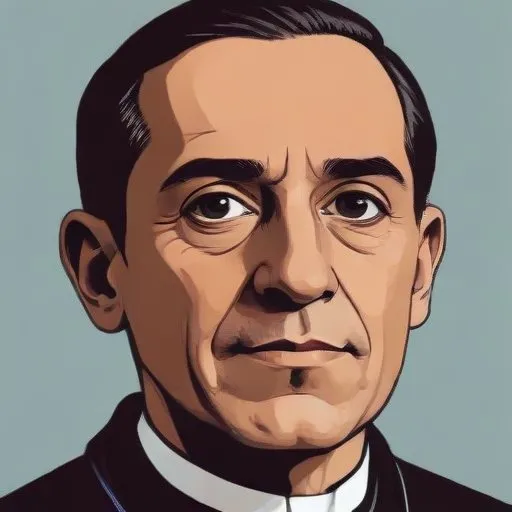
Argentinian priest and politician who served as a deputy and senator, advocating for social justice and education reforms. He's remembered for his humanitarian work and dedication to improving the lives of the poor.
Pedro Ignacio de Castro Barros, a trailblazing Argentine statesman and priest, is remembered for his pivotal role in shaping the country's fate. As a representative to the Congress of Tucumán, he played a crucial part in declaring Argentina's independence on July 9, 1816.
Born on July 31, 1777, in Chuquis, Arauco Department, La Rioja Province, Argentina, Castro Barros was destined for greatness. He pursued his education in Santiago del Estero and later in Córdoba, where he earned his doctorate in theology in 1800. His academic achievements were soon complemented by his ordination as a priest by Bishop Moscoso of Tucumán.
Castro Barros' leadership skills and intellectual prowess led to his election as a representative to the 1813 Assembly, replacing Ugarteche. In 1815, he was elected to the Tucumán Congress, where he served as president in May 1816, playing a key role in the appointment of Juan Martín de Pueyrredón as Supreme Director.
On July 9, 1816, Castro Barros led the Tedeum mass to give thanks for the declaration of Argentina's independence. This momentous occasion marked a turning point in the country's history, and Castro Barros' unwavering support for the cause cemented his place in the annals of Argentine history.
Castro Barros was a staunch advocate for an Incan constitutional monarchy, a system that would balance power and ensure the well-being of the people. His commitment to this vision was reflected in his tireless efforts to promote education, social justice, and equality.
Throughout his life, Castro Barros dedicated himself to education, serving as rector of the University of Córdoba on three occasions. He also founded several primary schools, leaving an indelible mark on Argentina's educational landscape.
Despite his many achievements, Castro Barros faced exile, first in the Banda Oriental from 1833 and later in Chile from 1841. During this period, he continued to serve as rector of the University of Chile, demonstrating his unwavering commitment to education and leadership.
A museum dedicated to Castro Barros is located in his birthplace, Chuquis, a testament to his enduring legacy. His contributions to Argentina's independence, education, and social development continue to inspire generations, cementing his place as a nation-builder and a true visionary.
By exploring the remarkable life and achievements of Pedro Ignacio de Castro Barros, we gain a deeper understanding of the complex tapestry of Argentine history and the enduring legacy of a true patriot.
89 Years Old
The leader of the Catholic Church, known for his progressive stance on social issues and efforts to reform the Church, inspiring millions worldwide.
Born in 1895
The authoritarian leader who ruled Argentina with his charismatic wife Eva, implementing populist economic policies and promoting nationalism, while suppressing opposition and civil liberties.
73 Years Old
The first female President of Argentina, serving from 2007 to 2015, known for her progressive policies and strong leadership during a period of economic growth. She later became Vice President, continuing to shape the country's politics.
67 Years Old
The first democratically elected non-Peronist president of Argentina, who implemented market-friendly reforms and led the country out of recession. He's known for his efforts to stabilize the economy and promote foreign investment.
99 Years Old
The first democratically elected president of Argentina after a period of military rule, known for his efforts to promote human rights and democracy in the country.
