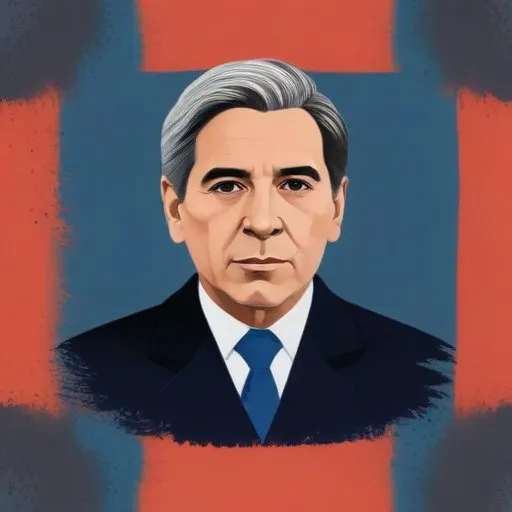
Raúl Alfonsín: The Champion of Democracy and Human Rights in Argentina
A Legacy of Courage and Conviction
Raúl Alfonsín, the former President of Argentina, is remembered for his unwavering commitment to democracy, human rights, and social justice. As the first democratically elected president after the 7-year National Reorganization Process, Alfonsín played a crucial role in restoring democracy and accountability in his country.
Early Life and Political Career
Born on March 12, 1927, in Chascomús, Buenos Aires Province, Argentina, Alfonsín studied law at the National University of La Plata and later graduated from the University of Buenos Aires. He joined the Radical Civic Union (UCR) and quickly rose through the ranks, becoming a deputy in the legislature of the Buenos Aires province in 1958 and later a national deputy during the presidency of Arturo Umberto Illía.
A Voice of Reason During the Dirty War
During the National Reorganization Process, Alfonsín fearlessly opposed the military dictatorship, denouncing human rights abuses and filing writs of habeas corpus to secure the release of political prisoners. He also condemned the crimes committed by the military regime and opposed the Falklands War, earning him the respect and admiration of the international community.
The Triumph of Democracy
In 1983, Alfonsín ran for president and won, marking a significant turning point in Argentina's history. As president, he sent a bill to Congress to revoke the self-amnesty law established by the military, paving the way for the Trial of the Juntas and the prosecution of former regime leaders.
Champion of Human Rights
Alfonsín established the National Commission on the Disappearance of Persons, which led to the investigation of human rights abuses and the identification of victims of forced disappearances. His government also implemented policies to promote human rights, social justice, and democracy, earning him the recognition of international organizations and human rights advocates.
Awards and Honors
Alfonsín received numerous awards and honors for his contributions to democracy and human rights, including the Prince of Asturias Award for International Cooperation, the Notre Dame Award, and the Charles T. Manatt Democracy Award.
Personal Milestones and Key Life Events
- 1963: Joined the Radical Civic Union (UCR)
- 1958: Elected deputy in the legislature of the Buenos Aires province
- 1973: Became leader of the UCR after the death of Ricardo Balbín
- 1983: Elected President of Argentina
- 1991: Stepped down as President due to economic crisis
- 1999-2001: Led the UCR once again
- March 31, 2009: Passed away at the age of 82
Legacy and Impact
Raúl Alfonsín's unwavering commitment to democracy, human rights, and social justice has left an indelible mark on Argentina's history. His bravery and conviction inspired a generation of political leaders and human rights advocates, earning him a place among the most revered figures in Argentine politics.
Today, Alfonsín's legacy serves as a beacon of hope for those fighting for democracy, human rights, and social justice around the world. His courage in the face of adversity continues to inspire, reminding us that even in the darkest of times, the power of the human spirit can overcome even the greatest challenges.
FAQ
What were Raúl Alfonsíns achievements as President of Argentina?
Raúl Alfonsín was the 46th President of Argentina, serving from 1983 to 1989. During his presidency, he restored democracy to Argentina after a period of military rule, and implemented several reforms to promote human rights and economic stability.
What was Raúl Alfonsíns role in Argentine politics?
Raúl Alfonsín was a prominent figure in Argentine politics, serving as a lawyer, politician, and leader of the Radical Civic Union party. He played a key role in the countrys transition to democracy in the 1980s.
What were Raúl Alfonsíns human rights initiatives?
Raúl Alfonsín was a strong advocate for human rights, and during his presidency, he established the National Commission on the Disappearance of Persons to investigate human rights abuses committed during the military dictatorship.
What were Raúl Alfonsíns economic policies?
Raúl Alfonsín implemented several economic reforms during his presidency, including the Austral Plan, which aimed to control inflation and stabilize the economy.
What was Raúl Alfonsíns legacy?
Raúl Alfonsíns legacy is as a champion of democracy and human rights in Argentina. He is remembered for his courage and vision in leading the countrys transition to democracy, and his commitment to promoting justice and equality.