


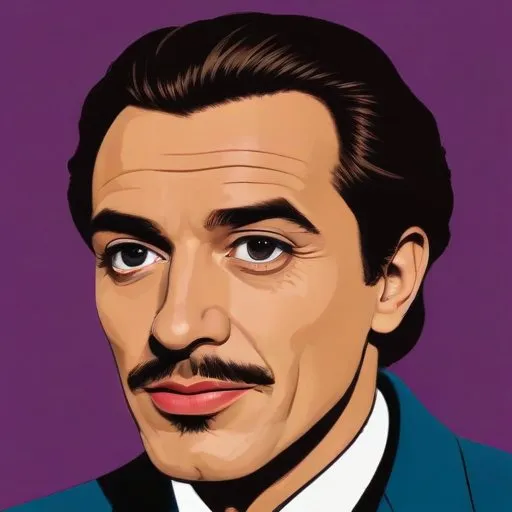
Early 20th-century stage and screen actor, known for being one of the first Hispanic actors to achieve success in Hollywood, breaking racial barriers in the industry.
Pedro de Cordoba was an American actor of French and Cuban descent, renowned for his versatility in playing aristocratic and clerical characters of Hispanic origin in Hollywood films. With a career spanning over three decades, he became a staple of the silent film era and later transitioned seamlessly to talking pictures.
Born on September 28, 1881, in New York City, de Cordoba was classically trained in theatre and began his career on the stage. He confessed that he did not enjoy appearing in silent films as much as he liked working on stage, but his extensive career during the silent film era proved otherwise.
In 1913, de Cordoba was a member of the resident summer stock cast at Elitch Theatre in Denver, Colorado. His first film was Cecil B. DeMille's version of Carmen in 1915, and he soon became a regular leading man in Hollywood. He worked alongside prominent stage actresses such as Jane Cowl and Katharine Cornell during his Broadway career.
With the advent of talking pictures, de Cordoba's deeply resonant speaking voice made him perfectly suited for the new era of filmmaking. He continued to work as a character actor in Hollywood from the mid-1930s until the end of his life. He often played aristocratic or clerical characters of Hispanic origin, capitalizing on his last name and regal bearing.
De Cordoba's notable roles include The Keys of the Kingdom (1944), where he played a priest, and Saboteur (1942), where he played a living skeleton sideshow character. He also worked with prominent directors such as Alfred Hitchcock and Cecil B. DeMille.
De Cordoba was a devout Catholic and served as president of the Catholic Actors Guild of America for a time. His faith was an integral part of his life and career, and he often drew inspiration from his beliefs in his performances.
The last film de Cordoba appeared in, Crisis (1950), a political drama set in an unnamed South American dictatorship, was released shortly after his death on September 16, 1950. His legacy continues to inspire actors and filmmakers to this day.
Pedro de Cordoba's remarkable career and devotion to his craft continue to inspire generations of actors and filmmakers. His legacy serves as a testament to the power of hard work, dedication, and faith.
Born in 1889
A pioneer of silent film, he is renowned for his iconic "Little Tramp" character and groundbreaking work in writing, directing, and starring in his own movies.
Born in 1895
A pioneering silent film comedian, known for his deadpan expression and ingenious physical comedy, who wrote, directed, and starred in his own films.
Born in 1893
Pioneering silent film star and stunt master, known for performing daring physical comedy and iconic scenes, such as hanging from a clock tower.
Born in 1895
Silent film heartthrob and sex symbol, known for his iconic roles in films like "The Four Horsemen of the Apocalypse" and "The Sheik", captivating audiences with his exotic good looks and charming on-screen presence.
Born in 1905
A legendary actress who captivated audiences with her iconic performances on the silver screen, earning her the title of Hollywood's first female superstar.
Born in 1892
A pioneering actress, producer, and screenwriter who co-founded United Artists, revolutionizing the film industry with her creative vision and business acumen. She was a silent film star and one of the most popular actresses of her time.
Born in 1883
A swashbuckling pioneer of silent films, known for his daring stunts and charming on-screen presence, revolutionizing the action-adventure genre.
Born in 1905
Silent film star and sex symbol of the 1920s, known for her flapper style and energetic on-screen presence.
