


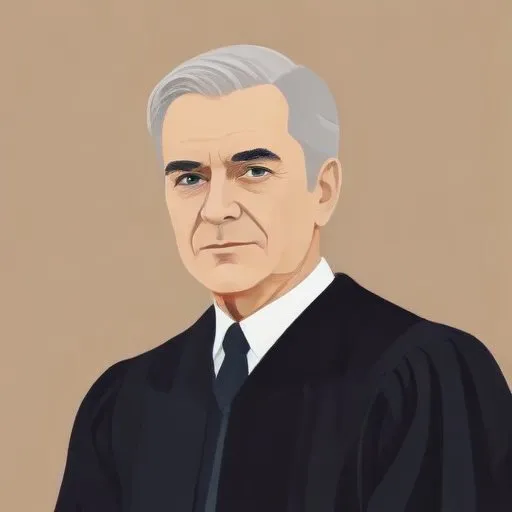
Finnish lawyer, judge, and politician who served as the 3rd President of Finland, known for his role in the country's independence from Russia. He played a key part in shaping Finland's early years as a sovereign state.
Pehr Evind Svinhufvud, the third President of Finland, is revered for his instrumental role in the country's independence movement and his tireless efforts to establish Finland as a sovereign nation. He is best known for presenting the Declaration of Independence to the Parliament in 1917, marking a significant milestone in Finland's journey to self-governance.
Svinhufvud was born on December 15, 1861, in Sksmki, Finland, to Pehr Gustaf Svinhufvud af Qvalstad, a sea captain, and Olga von Becker. After his father's untimely death at sea in 1863, Svinhufvud's mother raised him in a modest home. He pursued higher education, graduating with a law degree from the University of Helsinki in 1882.
Svinhufvud's professional career spanned multiple roles, including lawyer, judge, and politician. He served in the Grand Duchy of Finland, which was then an autonomous state under the Russian Empire's rule. His experiences in these roles helped shape his strong nationalist views and fueled his desire for Finnish independence.
Svinhufvud played a pivotal role in the Finnish independence movement, earning him the title "Ukko-Pekka" or "Old Man Pekka." He presented the Declaration of Independence to the Parliament on December 6, 1917, marking the beginning of Finland's journey to sovereignty.
As the first head of government of independent Finland, Svinhufvud served as Chairman of the Senate from December 1917 to May 1918. During the Finnish Civil War, he led the White government, while Mannerheim led the armies. Following the war, Svinhufvud served as Finland's first temporary head of state with the title of Regent until late 1918.
Svinhufvud's presidency from 1931 to 1937 was marked by his efforts to consolidate Finland's independence and establish it as a modern nation-state. He is notable for putting an end to the Mntsl rebellion, a significant achievement during his presidency.
Svinhufvud's legacy is complex, and opinions about him vary. As a conservative and nationalist, he was strong in his opposition to communism and the Left. While he enjoyed wide popularity during his presidency, his subsequent years were marked by controversy and criticism.
However, in recent decades, appreciation for Svinhufvud has increased, particularly after the collapse of communism and the Soviet Union in the early 1990s. His sharp line as a defender of Finland's legal rights during the period under Russian rule is now widely valued.
Pehr Evind Svinhufvud's life and legacy serve as a testament to his unwavering commitment to Finnish independence and sovereignty. His contributions to Finland's journey to self-governance continue to inspire and influence the nation's development to this day.
Born in 1867
A Finnish military leader and statesman who served as the 6th President of Finland, known for leading the country through World War II and maintaining its independence. He's also revered for his role in shaping modern Finland's identity and politics.
Born in 1889
A Finnish lawyer and politician who served as the Governor of the Bank of Finland and the 5th President of Finland, known for leading the country through World War II. He played a crucial role in maintaining Finland's independence and sovereignty during the war.
Born in 1900
A Finnish leader who served as President from 1956 to 1982, known for maintaining Finland's neutrality during the Cold War and fostering good relations with the Soviet Union.
Born in 1873
A Finnish farmer, banker, and politician who served as the 4th President of Finland, known for his role in shaping the country's post-WWII economy and politics. He's remembered for his humble, down-to-earth leadership style.
Born in 1881
The Prime Minister of Finland who led the country through post-WWII reconstruction and implemented significant social and economic reforms. He's most known for his efforts to establish Finland as a neutral state during the Cold War.
Born in 1880
Finnish lawyer and politician who served as Minister of the Interior, known for his efforts to establish Finnish independence from Russia and his mysterious assassination in 1922.
