


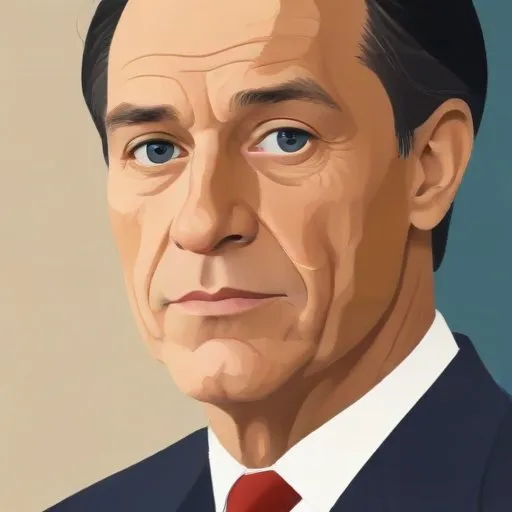
A Swedish writer and politician who explored themes of individualism and social responsibility in his novels, and served as a member of the Swedish parliament.
Per Olof Sundman, born on September 4, 1922, was a renowned Swedish writer and politician, best known for his literary works that have been compared to those of Ernest Hemingway, and his significant contributions to Swedish politics.
Sundman's writing career took off in 1957 with the release of his first book, marking the beginning of a successful literary journey. His unique writing style, characterized by simplicity, precision, and depth, earned him international recognition. His works explored themes of human relationships, politics, and social issues, captivating readers worldwide.
In addition to his writing career, Sundman was an active politician. He joined the Centre Party after World War II and was elected to the Riksdag, Sweden's parliament. His political pursuits further solidified his commitment to promoting social change and progress.
Sundman's literary achievements were recognized with several prestigious awards. In 1968, he received the Nordic Council's Literature Prize for his novel "Ingenjör Andrés luftfärd" (The Flight of the Eagle). This honor was a testament to his exceptional storytelling and literary craftsmanship.
In 1975, Sundman became a member of the Swedish Academy, occupying seat 6. This esteemed institution recognized his significant contributions to Swedish literature and culture. Today, Tomas Riad holds his seat, continuing Sundman's legacy.
Sundman's writing was influenced by the Icelandic sagas, medieval stories that explored themes of human nature, morality, and social dynamics. His work was also shaped by his experiences as a politician, reflecting his deep understanding of the human condition.
Per Olof Sundman's remarkable career has left an indelible mark on Swedish literature and politics. His commitment to promoting social change, his contributions to Swedish culture, and his literary achievements continue to inspire future generations of writers, politicians, and readers.
Born in 1918
Acclaimed filmmaker behind psychologically complex, visually stunning, and emotionally charged dramas that probed the human condition, often exploring themes of faith, morality, and mortality.
Born in 1900
A Swedish novelist and short story writer, known for his lyrical and introspective works that explored the human condition, earning him the Nobel Prize in Literature in 1974.
Born in 1891
A Swedish literary mastermind, renowned for his poignant and thought-provoking works that explore the human condition, often blending elements of mysticism and social commentary.
Born in 1864
A Swedish poet and literary historian who was awarded the Nobel Prize in Literature in 1931 for his poetry's lyric style and exploration of Swedish folklore. His works are still widely read and studied in Sweden today.
95 Years Old
A Swedish poet, translator, and psychologist who explored the human condition through lyrical and accessible verse, and was awarded the Nobel Prize in Literature in 2011.
