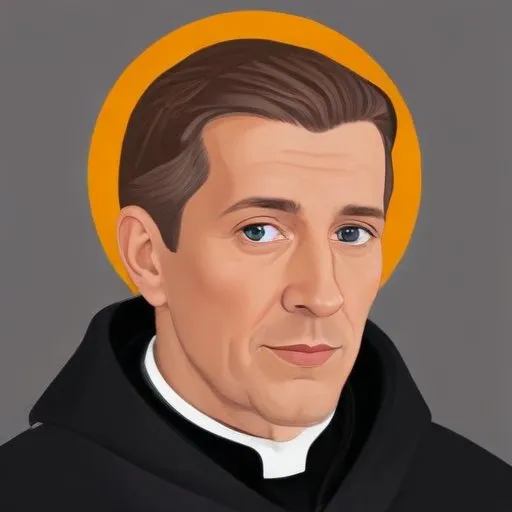
Peter Canisius: The Second Apostle of Germany
A Leading Figure in the Catholic Reformation
Peter Canisius, a Dutch Jesuit priest, is renowned for his unwavering support of the Catholic faith during the tumultuous Protestant Reformation in Germany, Austria, Bohemia, Moravia, Switzerland, and the British Isles. His tireless efforts led to the restoration of the Catholic Church in Germany, earning him the esteemed title of "Second Apostle of Germany."
Early Life and Education
Born on May 8, 1521, in Nijmegen, Duchy of Guelders (now the Netherlands), Peter Canisius was the son of Jacob Kanis, a wealthy burgermeister. After his mother, Odinia van Houweningen, passed away shortly after his birth, Peter was sent to study at the University of Cologne, where he earned a master's degree in 1540 at the age of 19.
Joining the Society of Jesus
During his time at the University of Cologne, Peter Canisius met
Peter Faber, one of the founders of the Society of Jesus. This encounter led to Peter becoming the first Dutchman to join the newly founded Society of Jesus in 1543.
Influential Catholic of His Time
Through his preaching, writings, and debates, Peter Canisius became one of the most influential Catholics of his era. He played a crucial role in supervising the establishment and maintenance of the first German-speaking Jesuit colleges, often under challenging circumstances.
Travels and Ministry
Peter Canisius' frequent travels between colleges earned him the nickname "Second Apostle of Germany." He preached in cities and towns, debated and taught in universities, and provided spiritual guidance to the faithful.
Influence on the Emperor and the Royal Family
Peter Canisius' strong influence extended to the royal family. He counseled Emperor Ferdinand I and later King Maximilian II, advising them on matters of faith and state. Despite facing opposition, Peter remained firm in his convictions, even when it meant disagreeing with the monarchs.
Legacy and Veneration
Peter Canisius' tireless efforts to promote the Catholic faith and his significant contributions to the Counter-Reformation earned him the recognition of the Catholic Church. He was declared a saint and Doctor of the Church, solidifying his place in history as a champion of faith and learning.
- 1521: Born on May 8th in Nijmegen, Duchy of Guelders (now the Netherlands)
- 1540: Earned a master's degree from the University of Cologne at the age of 19
- 1543: Became the first Dutchman to join the Society of Jesus
- 1547: Warned Emperor Ferdinand I about the appointment of Phauser, a married priest, as court preacher
- 1597: Passed away on December 21st
Philosophical Contributions and Beliefs
Peter Canisius' philosophical contributions centered on the importance of education, the role of the Jesuits in promoting the Catholic faith, and the need for spiritual renewal. He believed in the power of preaching, teaching, and writing to inspire and guide the faithful.
Personal Relationships and Anecdotes
Peter Canisius' relationships with his contemporaries, including Peter Faber and Emperor Ferdinand I, played a significant role in shaping his ministry and legacy. His disagreements with the royal family, particularly Maximilian II, demonstrate his unwavering commitment to his convictions.
Influence on Modern Society
Peter Canisius' legacy extends beyond the Catholic Church, influencing modern society through his emphasis on education, spiritual renewal, and the importance of faith in public life. His contributions continue to inspire and guide individuals seeking a deeper understanding of their faith and its role in the world.
Quotes and Memorable Sayings
- "The highest wisdom is to understand that all men are mad." – Peter Canisius
Historical Context and Legacy
Peter Canisius' life and ministry took place during a tumultuous period in European history, marked by the Protestant Reformation and the Counter-Reformation. His contributions to the Catholic Church and his role in shaping the Jesuit order have secured his place in history as a champion of faith and learning.
FAQ
What was Peter Canisiuss role in the Catholic Counter-Reformation?
Peter Canisius was a Dutch-Swiss priest and saint who played a significant role in the Catholic Counter-Reformation. He was a prominent preacher, writer, and educator who helped to counter the spread of Protestantism in Europe.
What was Peter Canisiuss relationship with the Jesuits?
Peter Canisius was a Jesuit priest who was deeply committed to the orders mission and values. He was one of the first Dutchmen to join the Jesuits and went on to become a prominent leader within the order.
What were Peter Canisiuss achievements as a preacher and writer?
As a preacher and writer, Peter Canisius was highly influential in promoting Catholic doctrine and values. He wrote several popular works, including the Catechism of Peter Canisius, which became a standard textbook for Catholic education.
Did Peter Canisius have any notable students?
Yes, Peter Canisius had several notable students, including the famous Jesuit theologian and philosopher, Robert Bellarmine. His students went on to become influential scholars and leaders within the Catholic Church.
What was Peter Canisiuss legacy?
Peter Canisiuss legacy is that of a dedicated and influential priest who played a significant role in promoting Catholicism during the Counter-Reformation. He is remembered as a saint and a champion of Catholic education and values.