


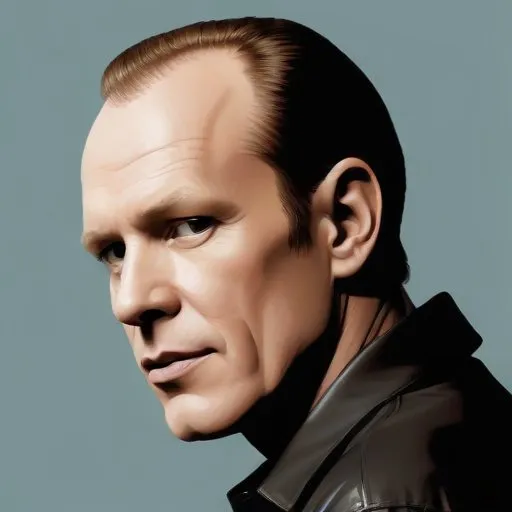
Lead vocalist and co-founder of the rockabilly band The Blasters, known for his raw, bluesy voice and eclectic style. He's a roots rock icon, influencing many Americana and rock musicians.
Phil Alvin, the American singer and guitarist, is best known as the leader of the rock band The Blasters, a group that defined the California rockabilly scene in the late 1970s. With his robust, powerful, and richly resonant voice, Alvin has been hailed as one of the most confident and charismatic frontmen in rock 'n' roll.
Born on March 6, 1953, in Downey, California, Alvin grew up in a music-loving family where blues, rockabilly, and country music were staples. Along with his younger brother Dave Alvin, Phil was exposed to the likes of Robert Johnson, Hank Williams, and Carl Perkins, influences that would shape his musical style and direction.
In the late 1970s, Phil and Dave Alvin, along with fellow Downey residents Bill Bateman and John Bazz, formed The Blasters, a rock and roll band that would go on to release four studio albums between 1980 and 1985. Though they never achieved mainstream success, The Blasters garnered critical acclaim and a devoted cult following across the United States and Europe.
In 1986, after The Blasters disbanded, Alvin released his debut solo album, Un Sung Stories. During this period, he also returned to graduate school, earning a master's degree in mathematics and artificial intelligence from California State University, Long Beach. Before launching his music career, Alvin had taught mathematics at the same university.
In 1986, The Blasters reformed without Dave Alvin, who was pursuing a solo career. Phil resumed his role as lead vocalist, rhythm guitarist, and harmonica player. In 1994, he released his second solo album, County Fair 2000. Under Alvin's leadership, The Blasters released 41144 in 2005, followed by Fun On Saturday Night in 2012.
In June 2012, while performing in Spain with The Blasters, Alvin had a near-death experience due to an infection. This life-threatening event did not slow him down, and he continued to tour and record with The Blasters, leaving behind a legacy of rockabilly and roots rock music that continues to inspire new generations of musicians and fans.
Alvin's unique blend of mathematical prowess and musical talent reflects his philosophical approach to art and life. He has spoken about the importance of staying true to one's artistic vision, even in the face of commercial pressures and uncertainty.
Phil Alvin's contributions to rockabilly and roots rock have had a lasting impact on modern music. His influence can be heard in artists such as Brian Setzer, The Reverend Horton Heat, and The Stray Cats. Alvin's music has also been featured in various films, television shows, and commercials, introducing his unique sound to new audiences.
Phil Alvin's remarkable career serves as a testament to the power of artistic vision, perseverance, and dedication to one's craft. As a true original, Alvin continues to inspire and influence musicians across genres, ensuring his legacy as a rockabilly rebel with a mathematical mind.
70 Years Old
A roots rock pioneer, blending folk, rock, and country to craft poignant, storytelling-driven songs that often explore the American experience. Known for his work with The Blasters and as a solo artist.
99 Years Old
A pioneering saxophonist of the 1950s, known for his bold, energetic playing style and iconic recordings with artists like Fats Domino and Little Richard.
Born in 1911
A pioneering blues shouter and R&B singer, known for his powerful, soulful voice and hits like "Shake, Rattle and Roll" and "Flip, Flop and Fly".
Born in 1910
A pioneering blues musician who electrified the genre with his virtuosic guitar playing and soulful vocals, influencing generations of rock and blues legends.
Born in 1913
A blues legend who electrified the genre with his signature sound and influential hits like "Hoochie Coochie Man" and "Mannish Boy", shaping the course of rock 'n' roll .
Born in 1910
A blues legend who electrified audiences with his powerful voice and guitar playing, creating a unique sound that influenced many rock and roll artists.
