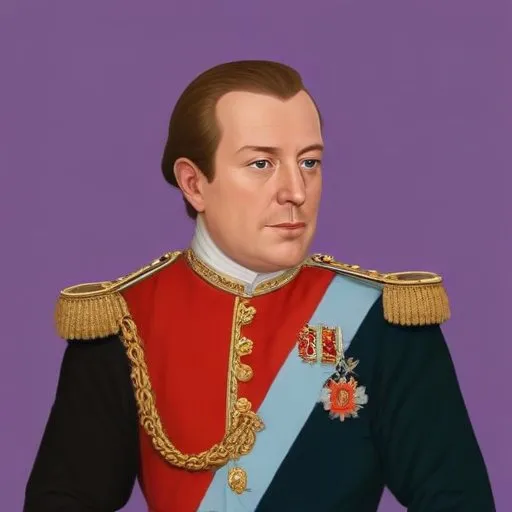
Philip III, Count of NassauWeilburg: A Visionary Leader in a Turbulent Era
A Champion of the Reformation and Patron of Education
Philip III, Count of NassauWeilburg, is renowned for introducing the Reformation to his territory and founding the Gymnasium Philippinum in Weilburg, a testament to his commitment to education and progress. His reign, marked by significant achievements and challenges, has left a lasting impact on the history of NassauWeilburg and beyond.
Early Life and Succession
Born on September 20, 1504, at Neuweilnau Castle in Weilrod, Philip was the son of Louis I of NassauWeilburg. At the tender age of 19, he took over the reins of government after his father's death, demonstrating his ability to navigate the complexities of governance from a young age.
Territorial Expansion and Co-Rulership
During Philip's reign, the NassauWeilburg part of the County of Nassau comprised the districts of Weilburg, Merenberg, Usingen, Sonnenberg, and Gleiberg. Notable towns under his jurisdiction included Kirberg, Weilmnster, and Neuweilnau. Additionally, he held shares in jointly owned territories with the Counts of NassauSaarbrcken and NassauWiesbaden, as well as the Landgrave of Hesse.
Promoting the Reformation and Asserting Independence
Philip actively promoted the Reformation in his territory, forging an alliance with Landgrave Philip I of Hesse to achieve this goal. However, he took care to maintain his independence and avoid becoming a vassal of Hesse. By emphasizing his position as an immediate count, he remained active in the Wetterau Association of imperial counts.
Architectural Legacy and Financial Challenges
Philip initiated the construction of Schloss Weilburg, a testament to his vision for architectural development. Despite his many achievements, his reign was not without financial challenges. His ambitions often exceeded his financial means, leaving a heavily indebted county upon his passing in 1559, at the age of 55.
Succession and Legacy
After Philip's death, his sons Albert and Philip IV ruled NassauWeilburg jointly until 1561, before dividing their inheritance. Albert received Weilburg, while Philip IV inherited Neuweilnau. Philip's legacy, marked by his commitment to education, the Reformation, and territorial development, continues to inspire generations to come.
Trivia and Fun Facts
- Philip III was buried in the chapel of Weilburg Castle.
- He was a member of the Wetterau Association of imperial counts.
- Philip's father, Louis I of NassauWeilburg, left a significant debt, which Philip worked to manage during his reign.
Philip III, Count of NassauWeilburg, was a visionary leader who left an indelible mark on history. His commitment to education, the Reformation, and territorial development continues to inspire and captivate audiences to this day.
FAQ
What were Philip III, Count of Nassau-Weilburgs military achievements?
He fought in several battles, including the Battle of Pavia, where he was taken prisoner by the Spanish, and later played a key role in the Siege of Maastricht.
How did Philip III, Count of Nassau-Weilburg contribute to the development of Nassau-Weilburg?
He invested in infrastructure, tourism, and education, transforming Nassau-Weilburg into a thriving region.
What were Philip III, Count of Nassau-Weilburgs relationships with other European leaders?
He maintained close ties with prominent European leaders, including the Holy Roman Emperor Charles V and the French King Francis I.
What was Philip III, Count of Nassau-Weilburgs stance on the Protestant Reformation?
He supported the Protestant Reformation and introduced Lutheranism in Nassau-Weilburg, which became a haven for Protestant refugees.
What is Philip III, Count of Nassau-Weilburgs legacy in German history?
He is remembered as a skilled military leader and a wise ruler, who played a significant role in shaping the course of the Protestant Reformation in Germany.