


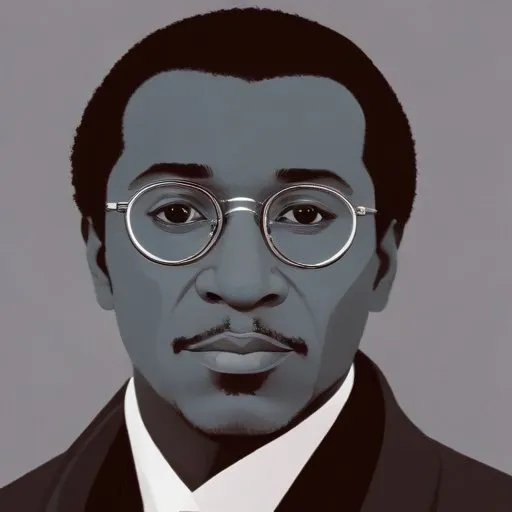
A French mathematician and astronomer who made significant contributions to the field of mathematics, particularly in the study of dynamics and celestial mechanics. He is most known for his work on the Fatou set, a fundamental concept in complex dynamics.
Pierre Fatou, a French mathematician and astronomer, left an indelible mark on the development of analysis in the 20th century. He is renowned for his groundbreaking contributions to the field, particularly in the areas of sequence theory, function theory, and algebraic geometry, earning him the distinction of having the Fatou lemma and the Fatou set named after him.
Fatou was born on February 28, 1878, to Prosper Ernest Fatou and Louise Eulalie Courbet, both of whom were in the military. His health issues precluded him from following in his parents' footsteps, and instead, he pursued a career in mathematics. Fatou entered the École Normale Supérieure in Paris in 1898, graduating in 1901.
Fatou's academic prowess earned him an internship at the Paris Observatory, where he worked alongside prominent astronomers. He was appointed assistant astronomer in 1904 and later became an astronomer in 1928. His work in the observatory spanned over two decades, during which he made significant contributions to astronomy, particularly in the field of celestial mechanics.
In mathematics, Fatou's work had a profound impact on the development of analysis. His 1906 PhD thesis, "Séries trigonométriques et séries de Taylor," laid the foundation for his subsequent research. He went on to make substantial contributions to the study of power series, algebraic functions, and the theory of functions.
Fatou's achievements were recognized with the prestigious Becquerel prize in 1918. He was also awarded the Knight of the Legion of Honour in 1923 and served as the president of the French Mathematical Society in 1927.
Fatou maintained close relationships with his contemporaries, including Maurice René Fréchet and Paul Montel. He was known for his humble nature and his reluctance to seek medical attention, which eventually led to his untimely demise.
Fatou's work continues to influence modern analysis, with his ideas and techniques remaining essential in the field. His legacy extends beyond mathematics, as his contributions have had far-reaching implications for astronomy, physics, and engineering.
Pierre Fatou's remarkable journey, marked by his groundbreaking contributions to analysis and astronomy, continues to inspire mathematicians and scientists today. His work remains a testament to the power of human ingenuity and the importance of fostering a deeper understanding of the world around us.
Born in 1854
A pioneer in mathematics and physics, he laid the foundations for modern chaos theory, topology, and relativity, making groundbreaking contributions to our understanding of space and time.
Born in 1871
A French mathematician and politician who made significant contributions to probability theory, measure theory, and topology, and served as a minister in the French government.
Born in 1749
Developed nebular hypothesis of the origin of the solar system and formulated Laplace's equation, a fundamental concept in mathematics and physics. He's considered the founder of celestial mechanics.
Born in 1736
Developed calculus, number theory, and celestial mechanics, making significant contributions to the fields of mathematics and astronomy.
Born in 1752
Developed the theory of elliptic integrals, and his work on number theory laid the foundation for modern cryptography.
Born in 1789
Developed rigorous mathematical theories and introduced concepts like convergence and continuity, revolutionizing calculus and paving the way for modern mathematics.
Born in 1774
A French polymath who made significant contributions to the fields of physics, astronomy, and mathematics, particularly in the discovery of chromatic polarization and the Biot-Savart law.
Born in 1781
Developed mathematical tools to analyze probability and statistics, and made significant contributions to the fields of electricity and magnetism.
