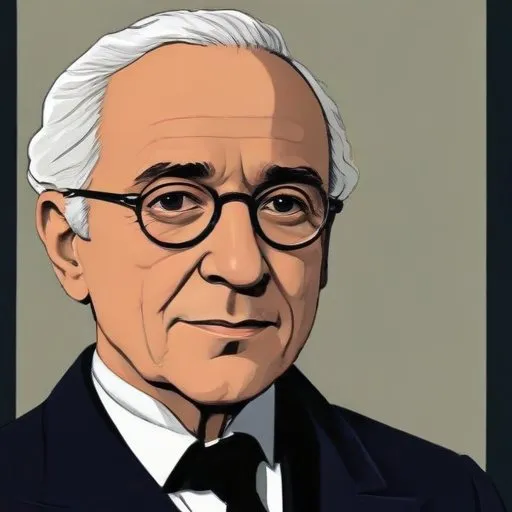
Pierre Henry: The Pioneer of Musique Concrète
A Life of Sonic Exploration
Pierre Henry, a French composer, was a pioneer of musique concrète, a genre that revolutionized the music world by integrating noise into music. Born on December 9, 1927, in Paris, France, Henry's fascination with sounds produced by various objects led him to experiment with noise music at the tender age of 15.
Early Life and Education
Henry's musical journey began at the Conservatoire de Paris, where he studied with renowned composers
Nadia Boulanger,
Olivier Messiaen, and Félix Passerone from 1938 to 1948. This period laid the foundation for his future innovations in music.
The Birth of Musique Concrète
In 1949, Henry joined the Club d'Essai studio at RTF, founded by
Pierre Schaeffer in 1942. It was during this period that he wrote the 1950 piece
Symphonie pour un homme seul, in collaboration with Schaeffer. This work marked one of the earliest examples of musique concrète, a genre that would become a hallmark of Henry's career.
A Collaborative Spirit
Henry's collaborative nature led him to work with various artists, including composers, choreographers, and filmmakers. One notable collaboration was with
Michel Colombier on the 1967 ballet
Messe pour le temps présent, which debuted in Avignon. He also scored numerous films and ballets, showcasing his versatility as a composer.
Breaking Boundaries
Henry's innovative spirit led him to venture into uncharted territories. In 1970, he collaborated with British rock band Spooky Tooth on the album
Ceremony, blurring the lines between classical and rock music. This experimentation paved the way for future generations of musicians.
Legacy and Influence
Henry's impact on modern music is undeniable. His work inspired a generation of electronic artists, including Fatboy Slim, Coldcut, and Saint Germain, who remixed his compositions in the 1997 album
Métamorphose Messe pour le temps présent. Moreover, Christopher Tyng, composer of the popular animated cartoon show
Futurama, drew inspiration from Henry's
Psych Rock, further solidifying his influence on popular culture.
Awards and Honors
Henry's contributions to music were recognized through various awards and honors. His work continues to inspire and influence musicians across genres, cementing his place as a pioneer of musique concrète.
Personal Milestones
Throughout his life, Henry remained committed to his craft, continually pushing the boundaries of sound and music. His legacy serves as a testament to the power of innovation and collaboration in the arts.
Trivia and Fun Facts
- Henry was one of the first composers to use noise as a musical element.
- He was a pioneer of electronic music in France.
- His work has been featured in various films, ballets, and television shows.
Conclusion
Pierre Henry's life was a testament to the power of innovation and creativity. As a pioneer of musique concrète, he left an indelible mark on the music world, inspiring generations of musicians and composers. His legacy continues to resonate, a reminder of the boundless possibilities that emerge when artistic vision meets technical innovation.
FAQ
What is Pierre Henrys most famous composition?
Pierre Henry is perhaps best known for his acclaimed composition Psychédélique, which was released in 1967 and is considered a landmark work in the development of electronic music.
How did Pierre Henrys music reflect his French heritage?
Henrys music often incorporated elements of French folk and classical traditions, reflecting his cultural heritage and adding a unique perspective to his electronic compositions.
What was Pierre Henrys role in the development of musique concrète?
Henry was a prominent figure in the development of musique concrète, a genre of electronic music that emerged in the 1940s and 1950s. His experiments with tape loops, found sounds, and other techniques helped shape the genre and inspire subsequent generations of musicians.
How did Pierre Henrys music influence the avant-garde movement?
Henrys innovative compositions and use of electronic sounds helped inspire the avant-garde movement of the 1960s and 1970s, influencing artists such as Karlheinz Stockhausen and Can.
What is Pierre Henrys contribution to the world of electronic music?
Henrys pioneering work in electronic music has had a lasting impact on the genre, paving the way for future generations of electronic musicians and earning him recognition as one of the most important electronic music composers of the 20th century.