


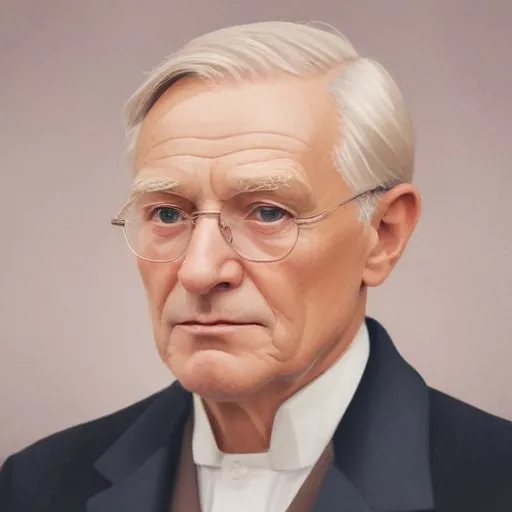
A Danish polymath who crafted clever, concise poems and invented the "superellipse," a mathematical shape used in design and architecture.
Piet Hein, a Danish polymath, left an indelible mark on the world through his groundbreaking contributions to mathematics, literature, and design. Best known for inventing the Soma cube and the board game Hex, Hein's creative genius knew no bounds, extending to poetry, writing, and even resistance against the German occupation of Denmark.
Born on December 16, 1905, in Copenhagen, Denmark, Hein was a direct descendant of Piet Pieterszoon Hein, the 17th-century Dutch naval figure. He studied at the Institute for Theoretical Physics (later known as the Niels Bohr Institute) of the University of Copenhagen and the Technical University of Denmark. In 1972, Yale University awarded him an honorary doctorate.
Hein's mathematical prowess led to the creation of the Soma cube, a 3D puzzle consisting of seven pieces that can be combined to form a cube. This iconic puzzle has been a staple of mathematical recreation for decades. His other notable invention, the board game Hex, is a strategy game played on a hexagonal grid, which has been widely studied in mathematics and computer science.
During the German occupation of Denmark, Hein turned to writing as a form of resistance. Under the pseudonym Kumbel, he penned short poems called "gruks" (or "grooks" in English), which were published in the daily newspaper Politiken. These poems, often humorous and lighthearted, contained subtle critiques of the occupation, providing a beacon of hope and defiance for the Danish people.
Hein's philosophy was deeply rooted in his fascination with the human condition. He believed that creativity and playfulness were essential components of human existence. Through his work, Hein demonstrated that mathematics, art, and literature could be intertwined, leading to new perspectives and insights.
Hein's work has had a profound impact on various fields, from mathematics and computer science to art and literature. His designs and writings continue to inspire new generations of thinkers and creators, solidifying his legacy as a true Renaissance man.
"Consolation Gruok":
Losing one glove
is certainly painful,
but nothing
compared to the pain
of losing one,
throwing away the other,
and finding
the first one again.
This iconic poem, often seen as graffiti during the occupation, embodies the Danish spirit of resistance and patriotism.
Piet Hein's life and work serve as a testament to the power of human creativity and resilience. His contributions to mathematics, art, and literature continue to inspire and delight people around the world, ensuring his legacy as a true polymath of the 20th century.
Born in 1914
Prolific writer and puzzle enthusiast who popularized mathematics and science through engaging books and columns, making complex concepts accessible to a broad audience.
Born in 1854
A pioneer in mathematics and physics, he laid the foundations for modern chaos theory, topology, and relativity, making groundbreaking contributions to our understanding of space and time.
Born in 1845
Developed set theory, introducing infinite sets and cardinal numbers, revolutionizing mathematics and philosophy.
Born in 1862
A renowned mathematician and academic who developed infinite-dimensional vector spaces and laid the foundation for quantum mechanics and relativity. He's also famous for his 23 unsolved math problems that shaped 20th-century mathematics.
Born in 1882
A pioneering mathematician and physicist who revolutionized abstract algebra and made groundbreaking contributions to modern physics, particularly in the development of Einstein's theory of general relativity.
Born in 1879
A brilliant physicist who developed the theory of relativity and is considered one of the most influential scientists of the 20th century, known for his groundbreaking work in physics and mathematics.
Born in 1885
A pioneer in quantum mechanics, he introduced the concept of wave-particle duality, revolutionizing our understanding of atomic structure. His philosophical approach to science also explored the nature of reality and human understanding.
Born in 1901
A pioneer in quantum mechanics, he formulated the uncertainty principle, which revolutionized our understanding of the atomic world. His groundbreaking work reshaped modern physics.
