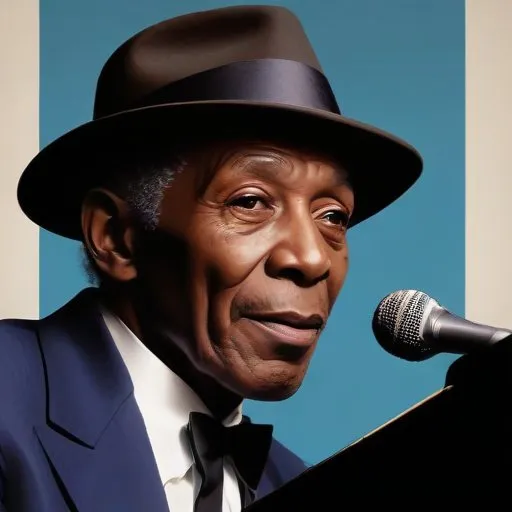
Pinetop Perkins: The Blues Piano Legend
Known for His Soulful Keyboard Skills
Pinetop Perkins was an American blues pianist who left an indelible mark on the music world with his soulful keyboard skills and collaborations with some of the most influential blues and rock 'n' roll performers of his time. With a career spanning over six decades, Perkins earned numerous honors, including a Grammy Lifetime Achievement Award and induction into the Blues Hall of Fame.
Early Life and Career
Born Joe Willie Perkins on July 7, 1913, in Belzoni, Mississippi, Perkins grew up on a plantation in Honey Island, Mississippi. He began his music career as a guitarist but was forced to switch to the piano after injuring the tendons in his left arm in a knife fight with a chorus girl in Helena, Arkansas, in the 1940s.
Rise to Fame
Perkins' breakthrough came when he joined
Earl Hooker and began touring in the 1950s. He recorded "Pinetops Boogie Woogie" at
Sam Phillips' Sun Studio in Memphis, Tennessee, a tune written by Pinetop Smith, who created the original recording in 1928. Perkins didn't write music, but he learned to play from Smith's records, earning him the nickname "Pinetop."
Touring and Collaborations
Perkins relocated to Illinois and left the music business until Hooker persuaded him to record again in 1968. He replaced
Otis Spann in the
Muddy Waters band when Spann left in 1969 and spent ten years with the organization. Perkins then formed the Legendary Blues Band with Willie Big Eyes Smith, recording from the late 1970s to the early 1990s.
Film Appearances
Perkins made notable film appearances, including a brief musical cameo in the 1980 movie "The Blues Brothers," where he had an argument with
John Lee Hooker over who wrote "Boom Boom." He also appeared in the 1987 movie "Angel Heart" as a member of guitarist Toots Sweet's band.
Awards and Accolades
Perkins received numerous awards and accolades for his contributions to blues music, including:
- Grammy Lifetime Achievement Award
- Induction into the Blues Hall of Fame
Legacy
Pinetop Perkins' legacy continues to inspire new generations of blues musicians. His soulful piano playing and collaborations with legendary blues and rock 'n' roll performers have left an indelible mark on the music world. Perkins passed away on March 21, 2011, but his music lives on, reminding us of the power of blues to bring people together and transcend generations.
FAQ
What was Pinetop Perkinss early life like?
Pinetop Perkins was born in 1913 in Belzoni, Mississippi, and grew up playing piano in local juke joints and bars. He was influenced by blues and boogie-woogie music.
Who did Perkins play with during his career?
Pinetop Perkins played with many notable blues musicians, including Muddy Waters, Sonny Boy Williamson II, and Earl Hooker. He was a member of the Muddy Waters Band and appeared on several of Waters albums.
What awards did Perkins receive for his music?
Pinetop Perkins received several awards for his music, including a Grammy Lifetime Achievement Award and multiple Blues Music Awards.
What was Perkinss style of piano playing?
Pinetop Perkins was known for his energetic and driving piano style, which often featured rapid-fire boogie-woogie rhythms and intricate improvisations.
How did Perkinss later life and career unfold?
In his later years, Pinetop Perkins continued to perform and record music, releasing several albums and collaborating with other musicians. He remained active until his death in 2011 at the age of 97.