


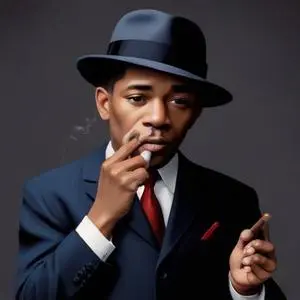
A pioneering blues harmonica virtuoso and soulful singer, known for revolutionizing the instrument's role in blues music with his innovative, amplified playing style. He's a legendary figure in blues history, influencing many famous musicians.
Known for his unparalleled skill and innovative approach to the harmonica, Little Walter revolutionized the blues genre and left an indelible mark on the music world. With a playing style that blended precision, passion, and experimentation, he elevated the harmonica from a humble folk instrument to a virtuosic vehicle for self-expression.
Born Marion Walter Jacobs on May 1, 1930, in Marksville, Louisiana, Little Walter grew up in Rapides Parish, where he developed a passion for music at an early age. He learned to play the harmonica and guitar, honing his skills by performing with local blues musicians, including Sonny Boy Williamson II, Sunnyland Slim, and Honeyboy Edwards.
In 1946, Little Walter arrived in Chicago, where he became an integral part of the city's thriving blues scene. His unique harmonica playing style, which combined elements of jazz, swing, and rhythm and blues, quickly gained attention from fellow musicians and audiences alike. He began recording with Muddy Waters, Bo Diddley, and other notable blues artists, eventually landing a solo deal with Chess Records.
Little Walter's innovations on the harmonica were nothing short of groundbreaking. He pioneered the use of amplification, reverb, and distortion, creating a distinctive sound that was both melancholic and mesmerizing. His mastery of tone, phrasing, and vibrato enabled him to convey a wide range of emotions, from tender introspection to raw, unbridled passion.
Throughout his career, Little Walter released numerous albums and singles, including the iconic "Juke" (1952), "My Babe" (1955), and "Boom, Boom (Out Go the Lights)" (1966). His music has inspired generations of blues, rock, and roll, and jazz musicians, including Eric Clapton, Keith Richards, and Stevie Wonder. In 2008, Little Walter was posthumously inducted into the Rock and Roll Hall of Fame, the first and only harmonica player to receive this honor.
Little Walter's life was marked by periods of personal turmoil, including struggles with addiction and a tumultuous relationship with his wife, Marion. He continued to perform and record music until his untimely death on February 15, 1968, in Chicago.
Little Walter's pioneering spirit, innovative techniques, and soulful music continue to influence countless musicians across genres. His legacy serves as a testament to the power of creativity, experimentation, and dedication to one's craft.
Born in 1913
A blues legend who electrified the genre with his signature sound and influential hits like "Hoochie Coochie Man" and "Mannish Boy", shaping the course of rock 'n' roll .
Born in 1910
A blues legend who electrified audiences with his powerful voice and guitar playing, creating a unique sound that influenced many rock and roll artists.
Born in 1917
A legendary blues musician who mesmerized audiences with his unique, boogie-woogie guitar style and soulful vocals, creating a distinctive sound that influenced many rock and roll artists.
97 Years Old
A rock 'n' roll pioneer who blended blues, R&B, and rock to create a unique sound, influencing many famous musicians with his innovative guitar playing and songwriting style.
99 Years Old
Rock 'n' roll pioneer who wrote and performed iconic hits like "Johnny B. Goode" and "Maybellene", blending country, blues, and rhythm to create a unique sound.
Born in 1925
A legendary blues musician renowned for his soulful voice, masterful guitar playing, and iconic hits like "The Thrill Is Gone." He's the embodiment of blues music, inspiring countless artists across genres.
Born in 1915
A legendary blues musician who wrote over 500 songs, including iconic hits like "Hoochie Coochie Man" and "Little Red Rooster", and is often referred to as the "father of modern Chicago blues".
Born in 1914
A pioneering blues musician, he's renowned for his soulful harmonica playing and influential songwriting, which shaped the Chicago blues sound.
