


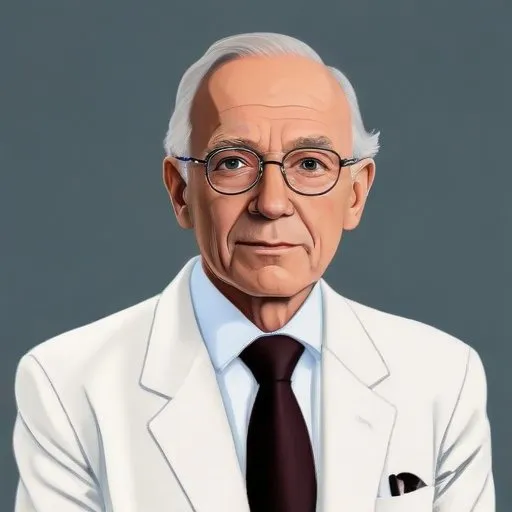
A pioneer in the field of physics, he was awarded the Nobel Prize for his precise determination of the magnetic moment of the electron, a fundamental constant in physics. His work has had a lasting impact on our understanding of the behavior of subatomic particles.
Polykarp Kusch, a German-born American physicist, is renowned for his groundbreaking discovery that the magnetic moment of the electron is greater than its theoretical value, leading to a significant reevaluation of quantum electrodynamics. In recognition of his pioneering work, Kusch was awarded the Nobel Prize in Physics in 1955, sharing the honor with Willis Eugene Lamb.
Kusch was born on January 26, 1911, in Blankenburg, Germany, to John Mathias Kusch, a Lutheran missionary, and Henrietta van der Haas. In 1912, the Kusch family emigrated to the United States, where Polykarp became a naturalized citizen in 1922. Growing up in the Midwest, Kusch developed a passion for physics, which led him to attend Case Institute of Technology (now Case Western Reserve University) in Cleveland, Ohio. He graduated with a Bachelor of Science degree in 1931 and went on to pursue his master's degree at the University of Illinois at Urbana-Champaign.
Kusch's academic journey continued at the University of Illinois, where he earned his Ph.D. in 1936 under the mentorship of F. Wheeler Loomis. His thesis, titled "The Molecular Spectrum of Caesium and Rubidium," demonstrated his early interest in the mysteries of the atomic world.
Kusch's academic career took off when he joined Columbia University in New York City in 1937. He worked alongside I. I. Rabi, a renowned physicist, and began exploring molecular beam resonance studies. This marked the beginning of his pioneering work on the anomalous magnetic moment of the electron. Kusch's meticulous measurements of magnetic moments and hyperfine structure paved the way for a deeper understanding of quantum electrodynamics.
Kusch served as the provost of Columbia University for several years, leaving an indelible mark on the institution. In 1969, he moved to the University of Texas at Dallas, where he continued to teach and conduct research until his retirement.
Polykarp Kusch's groundbreaking discovery has had a profound impact on our understanding of quantum electrodynamics. His work has inspired generations of physicists, encouraging them to explore the intricacies of the atomic world. The accuracy of Kusch's measurements has enabled scientists to develop new theories and models, furthering our understanding of the universe.
Kusch's legacy extends beyond the realm of physics. His dedication to education and his commitment to fostering a community of scholars have left a lasting impact on the academic world. His contributions have inspired countless individuals to pursue careers in science, driving innovation and progress in various fields.
In 1935, Kusch married Edith Starr Roberts, and the couple had three daughters together. Kusch's personal life was marked by a deep sense of purpose and a passion for his work. He remained committed to his family and his research, leaving behind a legacy that continues to inspire and educate future generations.
Polykarp Kusch's remarkable journey serves as a testament to the power of human ingenuity and the pursuit of knowledge. His groundbreaking discoveries have redefined our understanding of the universe, and his legacy continues to inspire and motivate individuals to strive for excellence.
Born in 1918
A brilliant physicist and engineer who pioneered quantum mechanics and famously explained complex concepts in simple terms, making science accessible to all.
96 Years Old
A pioneer in particle physics, discovering subatomic particles like quarks and gluons, and developing the theory of quantum chromodynamics.
Born in 1906
A renowned physicist and Nobel laureate who made groundbreaking contributions to our understanding of the universe, particularly in the fields of nuclear physics and astrophysics.
Born in 1901
A pioneer in nuclear physics, known for leading the team that developed the first nuclear reactor and playing a crucial role in the development of the atomic bomb.
Born in 1908
Developed the hydrogen bomb and was a key figure in the development of the US nuclear program, known for his advocacy of nuclear energy and his role in the Cold War.
