


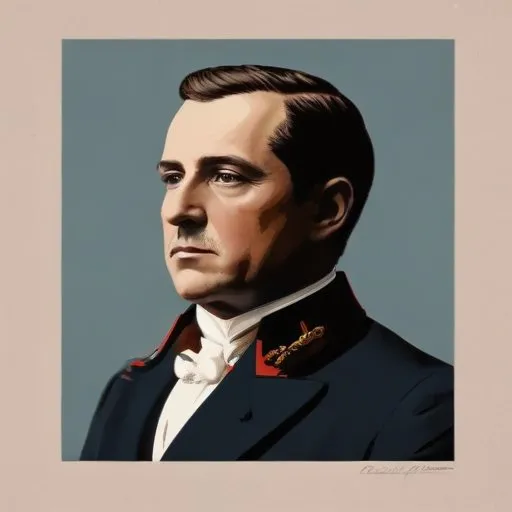
Eldest son of King Edward VII, he was next in line to the British throne until his early death, sparking rumors of murder and conspiracy. He's also known for his alleged involvement in the Cleveland Street scandal.
Prince Albert Victor, Duke of Clarence and Avondale, was the eldest child of the Prince and Princess of Wales, later King Edward VII and Queen Alexandra, and second in line to the British throne. However, his life was cut short, and he died before both his grandmother Queen Victoria and his father, leaving behind a legacy shrouded in mystery and speculation.
Albert Victor was born two months prematurely on January 8, 1864, at Frogmore House, Windsor, Berkshire. Following his grandmother Queen Victoria's wishes, he was named Albert Victor after the Queen and her late husband, Prince Albert. As a grandchild of the reigning British monarch in the male line and a son of the Prince of Wales, he was formally styled His Royal Highness.
As a young prince, Albert Victor travelled extensively, joining the Royal Navy as a cadet and visiting numerous countries around the world. These experiences broadened his perspective and helped shape his views on the world. However, his intellectual abilities and educational achievements were often called into question, sparking concerns about his suitability for the throne.
Albert Victor's personal life was marked by two unsuccessful courtships and a brief engagement to his second cousin once removed, Princess Victoria Mary of Teck, in late 1891. Unfortunately, their union was not meant to be, as he died just a few weeks later. Mary would eventually marry his younger brother, the future King George V.
Rumours surrounding his personal life, including speculation about his sexuality and mental health, have persisted to this day. Although there is no conclusive evidence to support these claims, they have tarnished his reputation and contributed to the enigmatic nature of his legacy.
One of the most enduring scandals surrounding Albert Victor's life is his alleged involvement in the Cleveland Street scandal, a notorious homosexual brothel in London. Despite the lack of concrete evidence, this rumour has persisted, fuelling speculation about his private life.
Another, more infamous conspiracy theory links Albert Victor to the notorious serial killer, Jack the Ripper. This claim suggests that he was involved in the brutal murders that terrorized London's East End in the late 19th century. However, contemporaneous documents prove that he was not in London at the time of the murders, rendering this theory utterly baseless.
Tragedy struck on January 14, 1892, when Albert Victor died during a major flu pandemic, just a few weeks after his engagement. His untimely passing shook the royal family and the nation, leaving behind a sense of what could have been.
In the years following his death, Albert Victor's legacy has been the subject of intense scrutiny and speculation. While his life was marked by controversy and mystery, it is essential to remember that he was a complex individual, multifaceted and full of contradictions, much like the royal family he belonged to.
Despite the many questions surrounding his life, Prince Albert Victor, Duke of Clarence and Avondale, remains an intriguing figure in British history, a testament to the complexities and intrigues of the royal family.
