


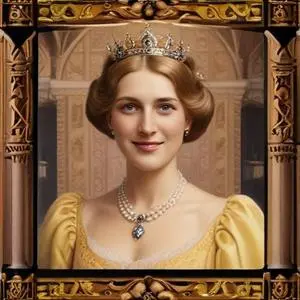
The mother of Prince Philip, Duke of Edinburgh, was a Greek princess who married into the British royal family and overcame personal struggles, including deafness and mental health issues, to become a respected humanitarian. She's known for her bravery during World War II, hiding a Jewish family in her home in Athens.
Known as the mother of Prince Philip, Duke of Edinburgh, and the paternal grandmother of King Charles III, Princess Alice of Battenberg led a life marked by dedication to her family, her faith, and her charitable work. Her remarkable journey, spanning over eight decades, took her from the grandeur of Windsor Castle to the war-torn streets of Athens, earning her a place in history as a pillar of strength and compassion.
Born on February 25, 1885, at Windsor Castle, Princess Alice was a great-granddaughter of Queen Victoria and a member of the Battenberg family, a morganatic branch of the House of Hesse-Darmstadt. Growing up in the United Kingdom, Germany, and Malta, she developed a strong sense of duty and service to others. In 1903, she married Prince Andrew of Greece and Denmark, adopting the style of her husband and becoming Princess Andrew of Greece and Denmark.
Princess Alice faced numerous challenges throughout her life, including her congenital deafness and the tumultuous fate of the Greek royal family. Following her husband's exile in 1917, she returned to Greece a few years later, only to face another period of exile after the country's defeat in the Greco-Turkish War. During this time, her husband was blamed for the country's defeat, leading to their separation.
In 1930, Princess Alice was diagnosed with schizophrenia and committed to a sanatorium in Switzerland. Despite this adversity, she found solace in her faith and devoted herself to charitable work. After her recovery, she focused on helping others, particularly in Greece, where she stayed during World War II and sheltered Jewish refugees. This selfless act earned her recognition as Righteous Among the Nations by Israel's Holocaust memorial institution, Yad Vashem.
In the aftermath of the war, Princess Alice founded the Christian Sisterhood of Martha and Mary, a Greek Orthodox nursing order of nuns dedicated to serving the poor and the sick. She continued to live in Greece until 1967, when she was invited by her son and daughter-in-law to live at Buckingham Palace in London. Two years later, on December 5, 1969, Princess Alice passed away, leaving behind a legacy of courage, compassion, and devotion to her faith and her fellow human beings.
Princess Alice's life serves as a powerful reminder of the importance of compassion, faith, and service to others. Her selfless acts, particularly during World War II, have inspired countless individuals to follow in her footsteps and make a positive difference in their communities.
Born in 1921
The husband of Queen Elizabeth II, supporting her reign and carrying out numerous philanthropic and ceremonial duties, while also advocating for environmental conservation and education.
Born in 1900
The wife of King George VI and mother of Queen Elizabeth II, known for her strong support of the British people during World War II and her iconic sense of style.
