


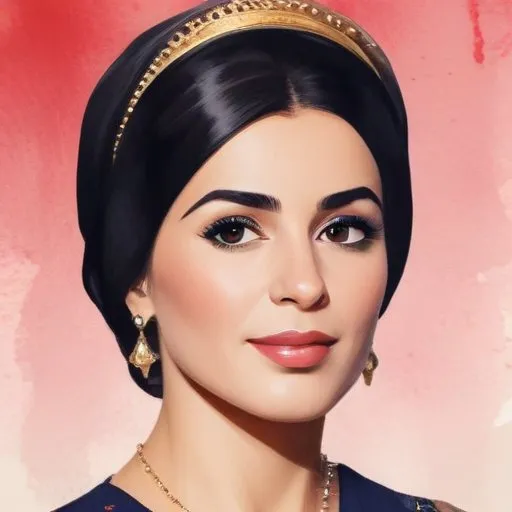
Twin sister of Mohammad Reza Pahlavi, the last Shah of Iran, and a fierce advocate for women's rights, playing a crucial role in the country's modernization. She was a symbol of female empowerment in a patriarchal society.
Princess Ashraf Pahlavi, the twin sister of Mohammad Reza Pahlavi, the last Shah of Iran, is a name synonymous with strength, courage, and determination. She is known for her unwavering dedication to her country, her family, and the rights of women, earning her the nickname "the Lioness of Iran."
Born on October 26, 1919, in Tehran, Iran, Princess Ashraf was the daughter of Reza Shah Pahlavi, the founder of the Pahlavi dynasty, and his wife, Queen Tadj ol-Molouk. Along with her twin brother, she was raised in a Royal household, receiving an education that prepared her for her future role as a member of the Iranian royal family.
Princess Ashraf was a pioneer in the struggle for women's rights in Iran. She worked tirelessly to promote education, employment, and equality for women, often facing opposition from conservative elements in society. Her efforts led to the establishment of several women's organizations, including the Women's Organization of Iran, which she founded in 1955.
The Princess was a dedicated philanthropist, focusing on issues such as healthcare, education, and poverty alleviation. She was instrumental in establishing the Red Lion and Sun Society, Iran's equivalent of the Red Cross, and played a key role in providing aid to victims of natural disasters and wars.
Princess Ashraf married Ahmad Shafiq, an Iranian diplomat, in 1937. The couple had two children, but the marriage ended in divorce in 1942. In 1944, she married again, this time to Mehdi Bushehri, a wealthy businessman, with whom she had a daughter.
Princess Ashraf's legacy extends far beyond her royal status. She was a trailblazer for women's empowerment, challenging traditional norms and paving the way for future generations of women leaders. Her humanitarian work and advocacy for social justice continue to inspire Iranians and people around the world.
The Princess received numerous honors and awards for her humanitarian work and dedication to women's rights, including the highest award of the Red Cross, the Henry Dunant Medal.
Princess Ashraf's life was marked by her unwavering commitment to her country and her people. She will be remembered as a true champion of women's rights, a devoted philanthropist, and a shining example of courage and determination.
Through her life and work, Princess Ashraf of Iran has left an indelible mark on the world, inspiring generations to come. Her legacy serves as a beacon of hope, reminding us of the power of courage, compassion, and determination in creating a better world for all.
Born in 1919
The last monarch of the Pahlavi dynasty, ruling Iran from 1941 until the 1979 revolution, known for his modernization efforts and close ties to the West. His regime was marked by controversy, including a CIA-backed coup and brutal suppression of dissent.
88 Years Old
The last empress of Iran, known as the queen of hearts, was a fashion icon and patron of the arts, supporting Iranian culture and women's rights. She was a symbol of elegance and refinement in a tumultuous era.
56 Years Old
The last child of Mohammad Reza Pahlavi, the Shah of Iran, and his third wife, Farah Diba, she was a member of the Pahlavi dynasty and a symbol of Iranian monarchy. She struggled with depression and died at a young age.
