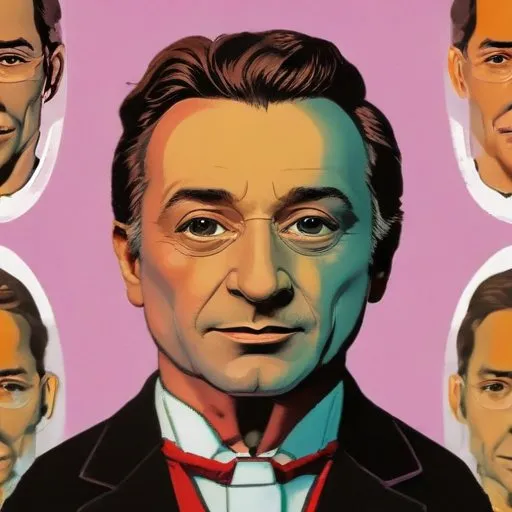
Pter Etvs: The Visionary Hungarian Composer and Conductor
A Legacy of Innovative Music and Cultural Fusion
Pter Etvs, a renowned Hungarian composer, conductor, and academic teacher, left an indelible mark on the world of classical music. With a career spanning over four decades, Etvs was known for his eclectic and avant-garde compositions, blending traditional Hungarian elements with modern and international influences.
Early Life and Education
Born on January 2, 1944, in Szkelyudvarhely, Transylvania (then part of Hungary, now in Romania), Etvs was exposed to music from a young age. His family fled to Hungary when he was just one year old, but he always maintained a strong connection to his Transylvanian roots. Raised in a musical family, Etvs received a thorough education in music, which included familiarizing himself with the works of Hungarian composer Bla Bartk.
The Formative Years: Composing and Conducting
Etvs began his compositional journey at the tender age of eleven, winning a contest for young composers. This early success propelled him into the Hungarian artistic scene, where he was noticed by prominent musicians and conductors. He went on to study composition in Budapest and Cologne, eventually returning to Hungary to compose film music from 1962. During this period, he collaborated with influential musicians, including
Karlheinz Stockhausen, with whom he played in the Stockhausen Ensemble between 1968 and 1976.
Founding the Oeldorf Group and Ensemble InterContemporain
In 1973, Etvs co-founded the Oeldorf Group, an avant-garde ensemble that explored the intersection of music, theater, and visual arts. This experience laid the groundwork for his subsequent work as the musical director and conductor of the Ensemble InterContemporain from 1979 to 1991. During his tenure, the ensemble became a hub for contemporary classical music, showcasing the works of innovative composers.
International Recognition and Collaborations
Etvs's reputation as a conductor and composer extended beyond Hungary, earning him invitations to work with esteemed orchestras worldwide. He served as the principal guest conductor of the BBC Symphony Orchestra from 1985 to 1988 and later conducted several other prominent orchestras. His operas, such as
Love and Other Demons and
Three Sisters, were performed to critical acclaim outside Hungary, demonstrating his ability to transcend cultural boundaries.
Philosophical Contributions and Beliefs
Etvs's music often reflected his fascination with the connection between Hungarian grammar and the country's rich musical heritage. He believed that the unique rhythms and accents of the Hungarian language influenced the music of notable composers like Bartk and Kodly. This conviction led him to incorporate elements of folk music and traditional Hungarian melodies into his compositions, blurring the lines between high art and popular culture.
Awards and Honors
Throughout his illustrious career, Etvs received numerous accolades for his contributions to music. Although specific honors are not readily available, his impact on the world of classical music is undeniable.
Legacy and Impact on Modern Society
Pter Etvs's innovative spirit and cultural exchange have left an enduring legacy in the world of classical music. His unique blend of traditional Hungarian elements with modern and international influences has inspired generations of composers and musicians. As a conductor, he championed the works of contemporary composers, ensuring their music reached a wider audience. Etvs's commitment to experimentation and cultural fusion continues to influence modern music, reminding us of the power of art to bridge cultural divides.
Personal Milestones and Key Life Events
- 1944: Born in Szkelyudvarhely, Transylvania
- 1962: Began composing film music in Hungary
- 1968-1976: Played with the Stockhausen Ensemble
- 1973: Co-founded the Oeldorf Group
- 1979-1991: Musical director and conductor of the Ensemble InterContemporain
- 1985-1988: Principal guest conductor of the BBC Symphony Orchestra
Trivia and Fun Facts
- Etvs's mother, a pianist, played a significant role in nurturing his early interest in music.
- He began writing plays and small pieces as a child.
- Etvs won a composition contest at the age of eleven, marking the beginning of his musical journey.
FAQ
What is Péter Eötvöss background in music?
Péter Eötvös is a Hungarian composer and conductor with a strong background in classical music, studying under renowned composers and conductors.
What are some of Péter Eötvöss most notable compositions?
Péter Eötvös has composed a wide range of works, including operas, orchestral pieces, and chamber music, often incorporating elements of jazz and folk music.
How has Péter Eötvös contributed to the development of contemporary music?
Péter Eötvös has been a driving force in contemporary music, pushing boundaries and exploring new sounds, and his compositions have been performed by leading orchestras and ensembles worldwide.
What awards has Péter Eötvös received for his work?
Péter Eötvös has received numerous awards and honors for his compositions and conducting, including the Kossuth Prize and the Siemens Music Prize.
What is Péter Eötvöss approach to conducting?
Péter Eötvös is known for his exceptional conducting skills, bringing a deep understanding of the music and a collaborative approach to his work with orchestras and musicians.