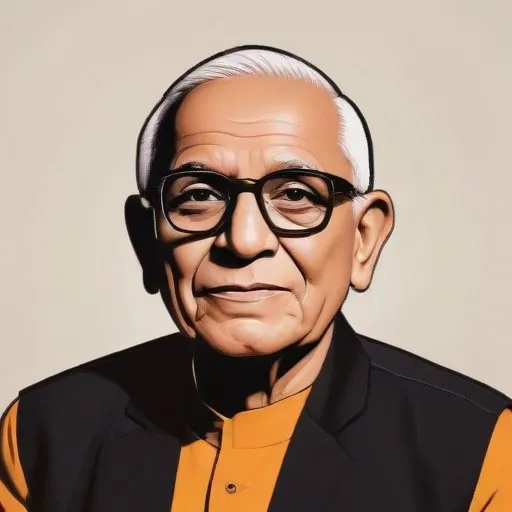
R. K. Laxman: The Cartoonist Who Captivated India
The Creator of The Common Man
R. K. Laxman, one of India's most renowned cartoonists, is best known for his iconic creation, The Common Man, a silent observer of Indian politics and society. Through his daily cartoon strip, "You Said It," in The Times of India, Laxman's witty and insightful commentary on Indian politics, society, and culture captivated readers for over six decades.
Early Life and Inspiration
Born on October 24, 1921, in Mysore, India, Laxman grew up in a Tamil Hindu brahmin family. His father was a headmaster, and he was the youngest of eight children, including his elder brother, the renowned novelist R.K. Narayan. Laxman's fascination with illustrations began at an early age, inspired by magazines such as The Strand, Punch, and Bystander. He would spend hours drawing on the floors, walls, and doors of his house, doodling caricatures of his teachers at school.
The Making of a Cartoonist
Laxman's early influences included the work of Sir David Low, a world-renowned British cartoonist. He began his career as a part-time cartoonist, working for local newspapers and magazines while still a college student. His first full-time job was as a political cartoonist for The Free Press Journal in Mumbai. It was during this time that he developed his signature style, blending humor and satire to comment on Indian politics and society.
The Common Man: A Cultural Icon
Laxman's creation of The Common Man in 1951 marked a turning point in his career. This silent, bespectacled everyman became a symbol of the ordinary Indian citizen, commenting on the country's politics, corruption, and societal ills. The Common Man's popularity soared, and it soon became a staple of Indian newspapers.
Awards and Recognition
Throughout his career, Laxman received numerous awards and honors, including the Padma Vibhushan, India's second-highest civilian honor, in 2005. He was also awarded the
Ramon Magsaysay Award for Journalism, Literature, and Creative Communication in 1984.
Influence on Indian Society
Laxman's work had a profound impact on Indian society and politics. His cartoons not only entertained but also educated and informed the public about critical issues. He was known for his fearlessness in tackling sensitive topics, often causing controversy and sparking public debate.
Philosophy and Beliefs
Laxman believed that humor was an essential tool for social commentary. He once said, "Humor is the best way to talk about serious things." His cartoons often poked fun at the establishment, highlighting the hypocrisy and contradictions of Indian politics and society.
Personal Milestones and Key Life Events
In 1943, Laxman married Kamala, and the couple had a daughter, Usha. Laxman was known for his love of cricket and was the captain of his local cricket team. He was also an avid reader and had a passion for classical music.
Legacy
R. K. Laxman passed away on January 26, 2015, leaving behind a legacy of insightful and humorous commentary on Indian society and politics. His work continues to inspire generations of cartoonists, writers, and artists. The Common Man remains an iconic symbol of Indian culture, a testament to Laxman's wit, creativity, and courage.
Trivia and Fun Facts
- Laxman was known as the "Pied Piper of Delhi" for his ability to captivate audiences with his cartoons.
- He was a prolific writer and author, penning several books, including his autobiography, "The Tunnel of Time."
- Laxman's love for cricket was so great that he even had a cricket pitch built in his backyard.
Quote
"Caricature is not a faithful likeness, but a likeness that is more like than the truth." - R. K. Laxman
FAQ
What was R.K. Laxmans most famous comic strip?
R.K. Laxmans most famous comic strip was You Said It, which featured the iconic character of the Common Man and offered witty commentary on Indian politics and society.
How did R.K. Laxmans work as a cartoonist influence Indian politics and culture?
R.K. Laxmans work as a cartoonist had a profound impact on Indian politics and culture, using satire and humor to comment on key issues and shape public opinion.
What was R.K. Laxmans early life and career like?
R.K. Laxmans early life was marked by a passion for drawing, and he began his career as a cartoonist in the 1940s, eventually joining The Times of India in 1946.
What awards and recognition did R.K. Laxman receive for his work?
R.K. Laxman received numerous awards and honors for his work, including the Padma Bhushan, the Padma Vibhushan, and the Magsaysay Award.
What is R.K. Laxmans legacy in Indian journalism and cartooning?
R.K. Laxmans legacy in Indian journalism and cartooning is marked by his innovative style, his biting satire, and his commitment to social commentary, which have inspired generations of cartoonists and journalists.