


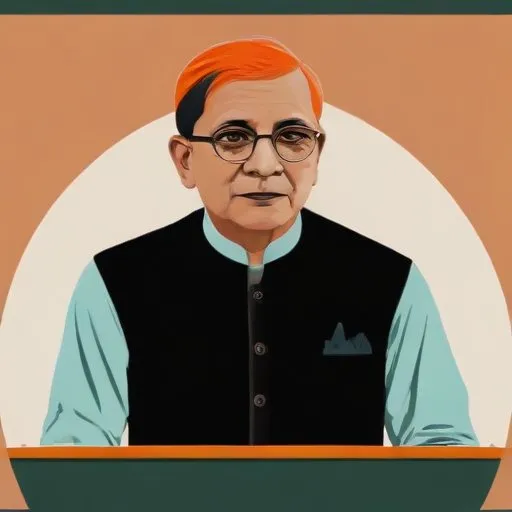
The 10th Speaker of the Lok Sabha, a prominent Indian activist and politician, fought for social justice and championed the rights of the marginalized, leaving a lasting impact on Indian politics.
Rabi Ray, a stalwart of Indian politics, is renowned for his unwavering commitment to socialism and his multifaceted contributions to the country's growth. As a politician, freedom fighter, and former Union minister, Ray's influence spans multiple realms, leaving an indelible mark on India's parliamentary history.
Born on November 26, 1926, in Bhanaragarh village, Puri district, Orissa, Ray's early life was shaped by his strong sense of social responsibility. He earned his B.A. Honours in History from Ravenshaw College, Cuttack, and later studied law at Madhusudan Law College, Cuttack. This intellectual foundation laid the groundwork for his future political endeavors.
Ray's tryst with politics began during his college days, when he was arrested by the British Army in 1947 for unfurling the Indian national flag at Ravenshaw College. This defining moment sparked his passion for the Indian independence movement and solidified his commitment to socialism. He joined the Socialist Party in 1948, becoming an integral part of the movement's leadership.
Ray's socialist ideology was deeply rooted in his belief in the power of the masses and the need for social and economic equality. He was an ardent advocate for the rights of the marginalized and worked tirelessly to promote their welfare.
Ray's personal life was marked by his dedication to his wife, Dr. Saraswati Swain, a medical doctor and professor at SCB Medical College, Cuttack. He was a strong supporter of women's empowerment and encouraged his wife to maintain her surname after marriage, breaking away from traditional norms.
Rabi Ray's contributions to Indian politics and society are multifaceted and far-reaching. His commitment to socialism, advocacy for the marginalized, and dedication to women's empowerment have inspired generations of leaders and continue to shape India's political landscape.
As we reflect on Ray's remarkable journey, we are reminded of the power of unwavering conviction and the importance of staying true to one's ideals. His legacy serves as a beacon of hope for a more just and equitable society, inspiring future generations to strive for a better India.
82 Years Old
The 6th Prime Minister of India, a key figure in Indian politics, known for introducing economic reforms and promoting technology in the country. He was also a strong advocate for social justice and equality.
79 Years Old
The first female President of the Indian National Congress, leading the party to a landslide victory in 2004, and playing a crucial role in shaping India's political landscape.
94 Years Old
The 13th Prime Minister of India, a renowned economist who led the country through a period of rapid economic growth and liberalization, implementing reforms that transformed India's economy. He is credited with helping to lift millions of people out of poverty.
90 Years Old
The 13th President of India, a seasoned politician and journalist, served as the head of state from 2012 to 2017, playing a key role in shaping the country's economy and foreign policy. He's known for his diplomatic skills and ability to build consensus.
97 Years Old
The 14th Speaker of the Lok Sabha, a prominent Indian politician and lawyer, known for his tenure as the Speaker of the Lower House of the Indian Parliament from 2004 to 2009. He played a crucial role in shaping India's legislative landscape during his term.
Born in 1891
Indian lawyer and politician who served as the second Speaker of the Lok Sabha, playing a crucial role in shaping India's parliamentary democracy. He's known for his significant contributions to the country's legislative framework.
