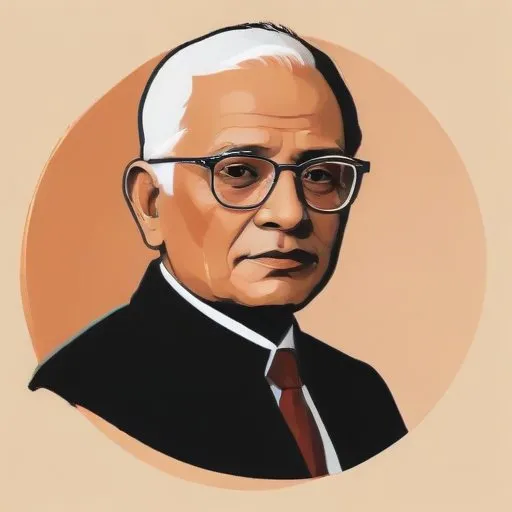
M. A. Ayyangar: The Visionary Statesman Behind India's Democratic Pillars
A Legacy of Leadership and Reform
M. A. Ayyangar is revered as the first Deputy Speaker and later Speaker of the Lok Sabha in the Indian Parliament, leaving an indelible mark on the country's democratic landscape. His stalwart leadership and commitment to social reform earned him a reputation as a champion of the Indian Freedom Struggle.
Early Life and Education: Laying the Foundations
Born on February 4, 1891, in Thiruchanoor, Tirupati district of Madras Presidency, British India, Ayyangar's early life was marked by academic pursuits. He completed his early education from Devasthanam High School, Tirupati, and later graduated from Pachiappas College, Chennai. His legal acumen was honed at Madras Law College, where he obtained a law degree in 1913.
A Career of Service: From Teacher to Statesman
Ayyangar's professional journey began as a mathematics teacher, which eventually paved the way for his career as a lawyer between 1915 and 1950. Inspired by
Mahatma Gandhi, he actively participated in the Indian Freedom Struggle, braving imprisonment twice. This unwavering commitment to the nation's quest for independence laid the foundation for his later accomplishments.
A Political Career: Elevating the Ranks
Ayyangar's political trajectory began in 1934 when he was elected as a member of the Central Legislative Assembly. He later represented Tirupathi and Chittoor constituencies in the first and second Lok Sabha in 1952 and 1956, respectively. His election as the first Deputy Speaker of Lok Sabha in 1952, alongside
Ganesh Vasudev Mavalankar as the Speaker, marked a significant milestone.
A Speaker of the People: Landmark Reforms
Following Mavalankar's demise in 1956, Ayyangar took the reins as Speaker of Lok Sabha. During his tenure, he oversaw the passage of the Dowry Prohibition Act in 1961, a landmark legislation that tackled a deeply ingrained social evil.
A Governor's Wisdom: Guiding Bihar's Progress
Between 1962 and 1967, Ayyangar served as the Governor of Bihar, contributing significantly to the state's development. His diplomatic acumen and vision helped shape the region's growth during this tenure.
Later Life and Legacy: A Life of Service
After relinquishing his governorship, Ayyangar retired from active politics and returned to Tirupati. Though he may have stepped back from the spotlight, his legacy continued to inspire generations. A life-size bronze statue of Ayyangar was erected in Tirupati in 2007, a testament to his enduring impact on Indian politics.
Personal Life: Family and Devotion
Ayyangar's life was marked by personal milestones, including his marriage to Choodammal in 1919. The couple was blessed with four sons and eight daughters. His devotion to his family and the nation he served remains an inspiration to those who follow in his footsteps.
A Lasting Impact: Shaping India's Democratic Fabric
M. A. Ayyangar's life's work has left an indelible mark on India's democratic fabric. His unwavering commitment to social reform, coupled with his leadership and vision, has earned him a revered place in the annals of Indian history.
FAQ
What was M. A. Ayyangars role in Indian politics and the Indian independence movement?
M. A. Ayyangar was an Indian lawyer and politician who played a key role in the Indian independence movement and served as the second Speaker of the Lok Sabha, the lower house of the Indian Parliament.
How did M. A. Ayyangar contribute to the development of Indias constitution and parliamentary system?
M. A. Ayyangar was a member of the Constituent Assembly of India and played a key role in drafting the Indian Constitution. He also contributed to the development of Indias parliamentary system, serving as a bridge between the Indian National Congress and the Indian government.
What were M. A. Ayyangars most notable achievements as a politician and lawyer?
M. A. Ayyangars most notable achievements include his role in the Indian independence movement, his contributions to the drafting of the Indian Constitution, and his service as the second Speaker of the Lok Sabha, where he played a key role in shaping Indias parliamentary democracy.
How did M. A. Ayyangars leadership style and policies impact Indias development?
M. A. Ayyangars leadership style and policies emphasized the importance of democracy, secularism, and social justice, shaping Indias development and influencing the countrys trajectory toward democracy and economic growth.
What is M. A. Ayyangars legacy in Indian history and politics?
M. A. Ayyangars legacy in Indian history and politics is that of a dedicated public servant who played a key role in shaping Indias independence movement, constitution, and parliamentary system, leaving a lasting impact on the countrys development and democratic institutions.