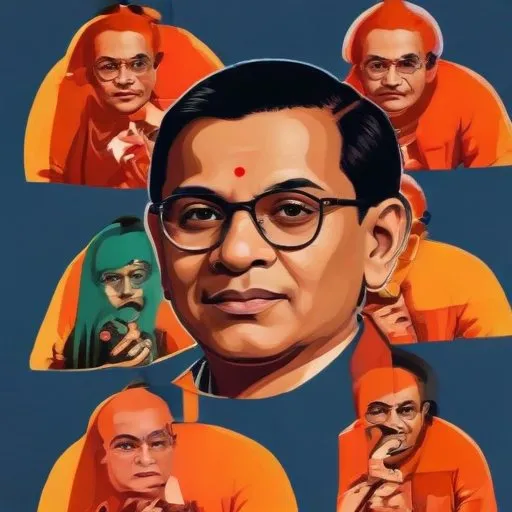
Ganesh Vasudev Mavalankar: The Unwavering Patriot and Architect of Indian Democracy
A Champion of Indian Independence and Democracy
Ganesh Vasudev Mavalankar, popularly known as Dadasaheb, was a stalwart of the Indian independence movement and a pioneer in shaping the country's democratic framework. As the first Speaker of the Lok Sabha, the lower house of the Parliament of India, Mavalankar played a pivotal role in laying the foundation of India's parliamentary democracy.
Early Life and Education
Born on November 27, 1888, in a Marathi family from Mavalange in Sangameshwar, Ratnagiri district of the Bombay Presidency, Mavalankar's early life was marked by a thirst for knowledge and a passion for social service. He completed his early education in Rajapur and later moved to Ahmedabad in 1902 for higher studies. He earned his B.A. degree in science from the Gujarat College, Ahmedabad, in 1908 and later pursued law studies at the Government Law School, Bombay, passing his law examination as First Class in 1912.
Rise to Prominence in the Independence Movement
Mavalankar's entry into the Indian Independence Movement was marked by his participation in the Non-Cooperation Movement. He was appointed secretary of the Gujarat Provincial Congress Committee during 1921-22 and later became a key figure in the Salt Satyagraha in 1930. His unwavering commitment to the cause of Indian independence earned him recognition from leaders like Sardar
Vallabhbhai Patel and
Mahatma Gandhi.
Political Career and Contributions
Mavalankar's political career was marked by several milestones, including his election to the Ahmedabad Municipality in 1919 and his appointment as the President of the Central Legislative Assembly from 1946 to 1947. He was also the Speaker of the Constituent Assembly of India and later the first Speaker of the Lok Sabha. His contributions to Indian democracy were instrumental in shaping the country's parliamentary system and its institutions.
Personal Milestones and Key Life Events
- 1913: Became the honorary secretary of the Gujarat Education Society
- 1916: Became the secretary of the Gujarat Sabha
- 1919: Elected to the Ahmedabad Municipality for the first time
- 1921-22: Appointed secretary of the Gujarat Provincial Congress Committee
- 1930: Participated in the Salt Satyagraha
- 1946-47: President of the Central Legislative Assembly
- 1947: Speaker of the Constituent Assembly of India
- 1952: First Speaker of the Lok Sabha
Legacy and Impact on Modern Society
Mavalankar's legacy extends beyond his political achievements. He played a crucial role in inspiring a generation of Indians to participate in the freedom struggle and later in shaping the country's democratic institutions. His unwavering commitment to the principles of democracy, equality, and social justice continues to inspire Indians today.
Controversies and Public Perception
Despite his many achievements, Mavalankar's life was not without controversy. He faced criticism for his temporary association with the Swaraj Party in the 1920s, which was seen as a deviation from the Gandhian path. However, his later return to the Gandhian fold and his unwavering commitment to the cause of Indian independence redeemed his reputation in the eyes of the public.
Quotes and Memorable Sayings
"The struggle for independence is not merely a struggle for political freedom, but also a struggle for economic and social emancipation."
"Democracy is not just a form of government, but a way of life that requires the active participation of citizens."
Historical Context and Legacy
Mavalankar's life and legacy are a testament to the power of individual commitment and sacrifice in the pursuit of a noble cause. His contributions to Indian democracy continue to inspire generations of Indians and serve as a reminder of the importance of upholding the principles of democracy, equality, and social justice.
FAQ
What was Ganesh Vasudev Mavalankars role in Indian politics?
Ganesh Vasudev Mavalankar was a prominent Indian politician who served as the first Speaker of the Lok Sabha, the lower house of the Indian parliament. He played a key role in shaping Indias parliamentary democracy.
What were Ganesh Vasudev Mavalankars views on Indian independence?
Ganesh Vasudev Mavalankar was a strong advocate for Indian independence from British rule. He was involved in the Indian independence movement and worked closely with Mahatma Gandhi and other prominent leaders.
How did Ganesh Vasudev Mavalankar contribute to Indian education?
Ganesh Vasudev Mavalankar was a strong believer in the importance of education for Indias development. He served as the president of the University of Mumbai and played a key role in shaping Indias education policy.
What was Ganesh Vasudev Mavalankars early life and education like?
Ganesh Vasudev Mavalankar was born in 1888 in Gujarat, India. He studied law at the University of Mumbai and later became involved in politics and social activism.
What is Ganesh Vasudev Mavalankars legacy in Indian politics?
Ganesh Vasudev Mavalankar is remembered as one of the pioneers of Indian democracy, and his contributions to the development of Indias parliamentary system continue to be celebrated to this day.