


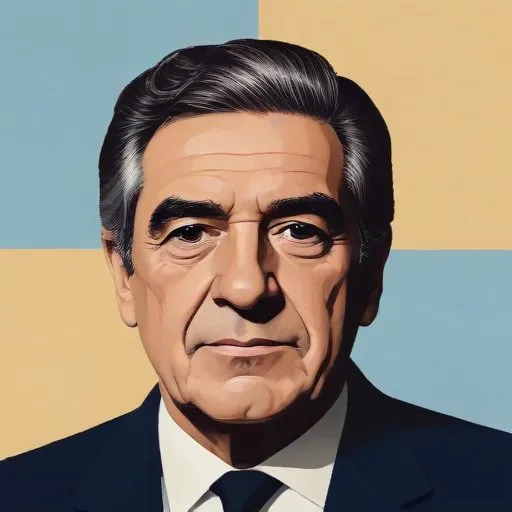
Uruguayan leader who served as President and played a key role in the country's constitutional reform, known for his efforts to establish a more democratic government.
Rafael Addiego Bruno, a Uruguayan jurist and political figure, is best known for serving as the President of Uruguay, albeit briefly, on two separate occasions in 1985. This remarkable feat is made all the more noteworthy by the fact that he was not elected to the position, but rather assumed the role as an interim chief executive.
Addiego Bruno's journey to the presidency began in 1984, when he was appointed as the President of the Supreme Court of Uruguay. At the time, the country was still reeling from the aftermath of a military dictatorship that had ruled the country since 1973. The sitting president, General Gregorio lvarez, had been facing mounting pressure to step down, and Addiego Bruno was seen as a compromise candidate who could help facilitate a smooth transition to democracy.
In February 1985, lvarez resigned, and Addiego Bruno was sworn in as the President of Uruguay, serving out the remainder of lvarez's term of office until March 1985. This brief stint as president was marked by Addiego Bruno's efforts to stabilize the country and pave the way for the accession of Julio Mara Sanguinetti, the democratically-elected president.
Addiego Bruno's role in Uruguayan politics was instrumental in facilitating the country's transition to democracy. By serving as a transitional figure, he helped to bridge the gap between the military dictatorship and the newly-elected government. This move was seen as a crucial step towards re-establishing democratic norms and institutions in Uruguay.
Addiego Bruno's presidency was also significant in that it allowed Sanguinetti to receive the transfer of office from a civilian, rather than a military officer. This was seen as a major step forward for democracy, and helped to enhance the public relations aspect of Uruguay's transition to democracy.
Rafael Addiego Bruno's legacy is that of a stabilizing force in Uruguayan politics during a tumultuous period. His brief stint as president may have been unconventional, but it played a crucial role in paving the way for the country's transition to democracy.
Addiego Bruno's commitment to democracy and the rule of law has been recognized both nationally and internationally. His contributions to Uruguayan politics have been celebrated as a testament to the power of compromise and cooperation in the pursuit of democratic governance.
Rafael Addiego Bruno's life and legacy serve as a testament to the power of democratic values and the importance of compromise in the pursuit of governance. His remarkable story continues to inspire and inform Uruguayan politics to this day.
90 Years Old
A Uruguayan journalist, lawyer, and politician who served as the 29th President of Uruguay, known for his efforts to consolidate democracy and promote economic growth in his country.
86 Years Old
A physician-turned-politician who served as Uruguay's president, known for his efforts to strengthen the country's economy and healthcare system. He implemented progressive policies, including marijuana legalization and same-sex marriage.
91 Years Old
A former guerrilla fighter turned president, known for his humble and unconventional leadership style, donating 90% of his salary to charity and living on a farm.
98 Years Old
Led Uruguay's government during a tumultuous period, implementing a military-backed authoritarian regime that suppressed civil liberties and led to human rights abuses. He's infamous for his role in the country's 1973 coup.
