


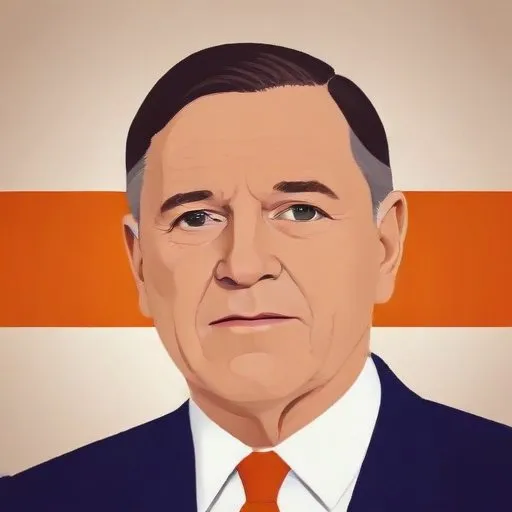
Australian Labor Party politician who served as Treasurer of Australia from 1993 to 1996, known for his role in shaping the country's economic policies during a period of significant reform.
Ralph Willis, an Australian politician, is best known for serving as the Treasurer of Australia from 1993 to 1996 and briefly in 1991, playing a crucial role in shaping the country's economy during the Hawke-Keating government. Throughout his career, Willis held various Cabinet positions, including Minister for Industrial Relations, Minister for Transport and Communications, and Minister for Finance.
Born on April 14, 1938, in Melbourne, Willis was educated at Footscray Central School, University High School, and Melbourne University, where he earned a Bachelor of Commerce degree. His early life and education laid the foundation for his future career in politics.
In 1972, Willis was elected to the House of Representatives for the safe Labor seat of Gellibrand in Melbourne's western suburbs. Following Labor's defeat in the 1975 election, he was appointed to the Shadow Cabinet, serving as Shadow Minister for Industrial Relations and later as Shadow Treasurer.
When Bob Hawke became Prime Minister in 1983, Willis was appointed Minister for Employment and Relations, where he played a key role in establishing the Prices and Incomes Accord. Later, in 1993, he became the Treasurer of Australia, a position he held until 1996.
Willis's contributions to Australian politics are undeniable. He was instrumental in implementing several key economic reforms during the Hawke-Keating government, including the introduction of the Goods and Services Tax (GST). His leadership and vision helped shape the country's economic landscape.
In recognition of his outstanding contributions to Australian politics, Willis was appointed an Officer of the Order of Australia (AO) in 1998.
Willis is married to Carol Willis (née Dawson) and has three children, Sandra, Fiona, and Evan. His dedication to his family and community has been an integral part of his life and political career.
Ralph Willis's legacy as a politician and economist continues to inspire and influence Australian politics. His commitment to economic reform, industrial relations, and social justice has left a lasting impact on the country.
82 Years Old
The 24th Prime Minister of Australia, a Labor Party leader who implemented significant economic reforms, including deregulation and privatization, and is known for his bold and charismatic leadership style.
96 Years Old
Leader of the Australian Labor Party who served as Prime Minister from 1983 to 1991, known for his charismatic leadership and economic reforms.
73 Years Old
A British singer-songwriter and pianist known for his emotive, poetic lyrics and soaring melodies, crafting introspective and atmospheric indie-pop soundscapes.
77 Years Old
The 9th Deputy Prime Minister of Australia, serving from 1995 to 1996, is a prominent figure in Australian politics, known for his leadership roles and diplomatic efforts. He later became the Australian Ambassador to the United States from 2010 to 2016.
77 Years Old
A prominent Australian trade union leader and politician who served as the Minister for the Arts, known for his contributions to the country's cultural development and labor movement.
68 Years Old
The 26th Prime Minister of Australia, a diplomat, and leader who apologized to the Indigenous Australians for past injustices and played a key role in shaping the country's climate change policies.
64 Years Old
The first female Prime Minister of Australia, serving from 2010 to 2013, known for her progressive policies and leadership during a period of significant economic reform.
72 Years Old
The 14th Deputy Prime Minister of Australia, a Labor Party member, and economist who served during the Rudd and Gillard governments, known for his role in navigating Australia through the 2008 global financial crisis. He's also an academic and author, having written several books on economics and politics.
