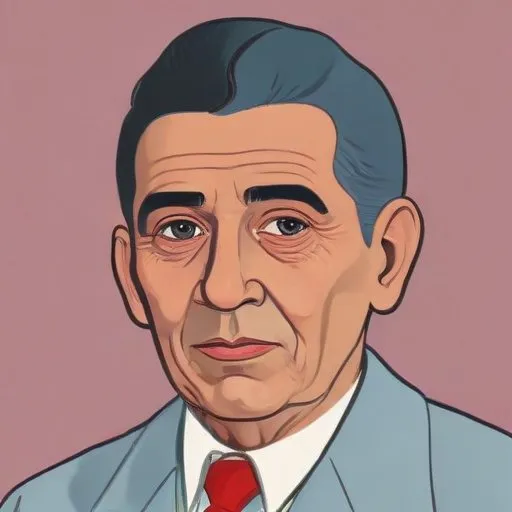
Ramn Grau: The Cuban Physician-Turned-Politician
A Leader of Two Eras
Ramn Grau, a Cuban physician, left an indelible mark on the country's history by serving as its President not once, but twice - from 1933 to 1934 and again from 1944 to 1948. As the last president born during Spanish rule, Grau's legacy is a testament to his unwavering dedication to Cuba's progress.
Early Life and Education
Born on September 13, 1881, to Francisco Grau Vinals and Pilar San Martin y del Collado, Ramn was encouraged by his father, a wealthy tobacco grower, to follow in his footsteps. However, Grau's passion lay in medicine, and he pursued his dream by studying at the University of Havana. He graduated in 1908 with a Doctor of Medicine degree and later expanded his medical knowledge by traveling to Europe.
From Medicine to Politics
Grau's return to Cuba in 1921 marked the beginning of his academic career as a professor of physiology at the University of Havana. His involvement in the student protests against President Gerardo Machado in the 1920s led to his imprisonment in 1931. Upon his release, he was exiled to the United States, where he temporarily resided before returning to Cuba.
The Revolution of 1933
The 1933 Cuban Revolution catapulted Grau to the forefront of politics. He became one of the five members of the Pentarchy of 1933 government and, subsequently, the President of Cuba on September 9, 1933. His presidency, known as the "One Hundred Days Government," lasted until January 15, 1934.
Cabinet Members
- Carlos E. Finlay: Secretary of Health
- Antonio Guiteras Holmes: Secretary of Government
- Ramiro Copablanca: Secretary of the Presidency
- Germn lvarez Fuentes: Secretary of Agriculture
- Joaquin del Rio Balamaseda: Secretary of Justice
- Julio Aguado: Secretary of War and Navy
- Gustavo Moreno: Secretary of Public Works
- Manuel Marquez Sterling: Secretary of State
Second Presidency and Legacy
Grau's second presidency, from 1944 to 1948, saw significant reforms and developments in Cuba. He passed away on July 28, 1969, leaving behind a legacy that continues to inspire generations of Cubans. As a physician-turned-politician, Ramn Grau's contributions to Cuban history serve as a testament to his unwavering commitment to his country's progress and well-being.
Trivia and Fun Facts
- Grau is sometimes referred to as Raymond Grau San Martin in English.
- He was the last president of Cuba born during Spanish rule, excluding Carlos Manuel Piedra, who served as interim president for one day.
FAQ
What was Ramón Graus role in Cuban politics?
Ramón Grau was a prominent Cuban politician who served as the 6th President of Cuba from 1933 to 1934 and again from 1944 to 1948.
How did Ramón Graus presidency impact Cuban economy?
Graus presidency saw significant economic reforms, including the establishment of a central bank and the nationalization of key industries.
What was Ramón Graus stance on Cuban independence?
Grau was a strong advocate for Cuban independence and sovereignty, and his presidency saw a significant shift towards greater autonomy from the United States.
How did Ramón Graus presidency impact Cuban education?
Graus presidency saw significant investment in education, including the establishment of new universities and the expansion of access to education for all Cubans.
What was Ramón Graus relationship with Fulgencio Batista?
Graus presidency was marked by a complex and often contentious relationship with Fulgencio Batista, who would later overthrow Graus government.