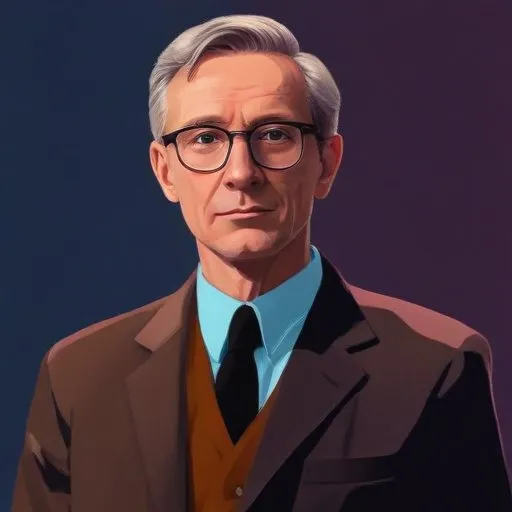
Randall Forsberg: A Trailblazer for Peace and Disarmament
A Lifetime of Advocacy Against War and Military Spending
Randall Forsberg was a renowned American advocate for peace and disarmament, dedicating her life to reducing the risk of war and promoting democratic institutions. She is best known for her leadership in the Nuclear Freeze movement, which aimed to halt the production and deployment of nuclear weapons during the Cold War era.
Early Years and Career
Born on July 23, 1943, in Huntsville, Alabama, Randall Forsberg grew up with a strong sense of social responsibility. She graduated from Columbia University in 1965 and later moved to Pennsylvania, where she taught English and married her husband, Gunnar Forsberg. The couple later divorced, and in 1967, Randall moved to Stockholm, Sweden, where she began working as a typist at the Stockholm International Peace Research Institute (SIPRI).
From Typist to Leading Voice for Disarmament
During her time at SIPRI, Randall developed a deep interest in arms control issues, which would become the driving force behind her future work. In 1974, she returned to the United States and enrolled as a graduate student in defense studies at the Massachusetts Institute of Technology (MIT). It was during this period that she earned her Ph.D. in 1980 and founded the Institute for Defense and Disarmament Studies (IDDS), a non-profit organization dedicated to promoting disarmament and international security.
The Nuclear Freeze Movement
In the early 1980s, Randall Forsberg emerged as a leading voice in the Nuclear Freeze movement, which called for a bilateral agreement between the United States and the Soviet Union to halt the production and deployment of nuclear weapons. Alongside her colleague, Helen Caldicott, Randall organized a massive rally in Central Park, New York, in 1982, which drew hundreds of thousands of people. Despite facing gender discrimination and media discreditation, Randall persisted in her efforts, ultimately contributing to the negotiation of the Intermediate-Range Nuclear Forces Treaty (INF) between President
Ronald Reagan and Mikhail Gorbachev in 1987.
Legacy and Impact
Randall Forsberg's tireless advocacy and leadership played a significant role in shaping foreign policy during the Reagan administration. Her work continues to inspire generations of peace activists and scholars, demonstrating the power of grassroots mobilization and civil society engagement in promoting disarmament and international security.
Awards and Honors
Randall Forsberg received numerous awards and honors for her contributions to peace and disarmament, including the MacArthur Fellowship (1983) and the National Nuclear Freeze Campaign's Dr.
Benjamin Spock Peace Award (1985).
Personal Milestones
- 1965: Graduated from Columbia University
- 1967: Moved to Stockholm, Sweden, and began working at SIPRI
- 1974: Returned to the United States and enrolled at MIT
- 1980: Earned Ph.D. in defense studies from MIT
- 1982: Organized the Nuclear Freeze rally in Central Park, New York
- 1983: Received the MacArthur Fellowship
- 1985: Received the National Nuclear Freeze Campaign's Dr. Benjamin Spock Peace Award
- 2007: Passed away on October 19, at the age of 64
Randall Forsberg's remarkable life and legacy serve as a testament to the power of individual activism and the importance of promoting peace, disarmament, and international security.
FAQ
What is Randall Forsbergs contribution to nuclear disarmament?
Randall Forsberg was an American scientist and activist, known for her pioneering work on nuclear disarmament. She was a leading advocate for a freeze on nuclear weapons development and deployment.
What is the significance of the Call to Halt the Nuclear Arms Race?
The Call to Halt the Nuclear Arms Race was a seminal document co-authored by Randall Forsberg, calling for a bilateral agreement between the United States and the Soviet Union to halt the production and deployment of nuclear weapons. It was signed by millions of people worldwide.
How did Randall Forsberg get involved in nuclear disarmament?
Randall Forsberg became involved in nuclear disarmament as a graduate student, working on a project to develop a bilateral freeze on nuclear weapons. She went on to become a leading voice in the movement, testifying before Congress and advising international organizations.
What is Randall Forsbergs legacy in the peace movement?
Randall Forsbergs legacy in the peace movement is profound, inspiring a generation of activists and policymakers to work towards a nuclear-free world. Her tireless advocacy and scholarship helped to shift the global conversation around nuclear disarmament.
What awards has Randall Forsberg received?
Randall Forsberg received numerous awards for her work on nuclear disarmament, including the MacArthur Fellowship and the Right Livelihood Award. She was also nominated for the Nobel Peace Prize.