


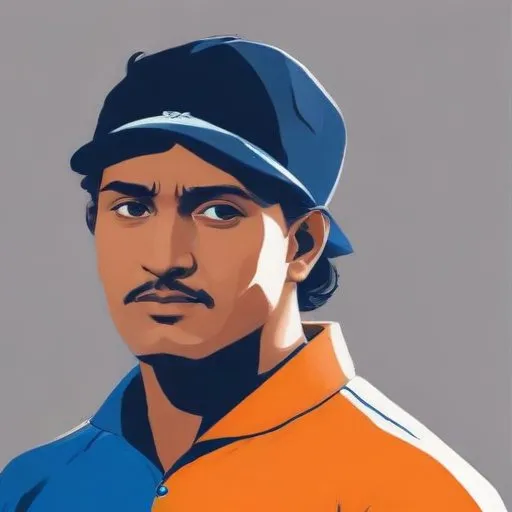
A pioneering Indian cricketer who introduced the "leg glance" shot, revolutionizing batting techniques and earning a reputation as one of the greatest batsmen of all time.
Ranjitsinhji, affectionately known as Ranji, was a cricketing sensation who revolutionized the game with his unorthodox batting style, becoming one of the greatest batsmen of his time. Playing for Cambridge University, Sussex, London County, and England, Ranji's unique approach to the game left an indelible mark on the sport.
Born on September 10, 1872, in Sadodar, a village in the state of Nawanagar, Western India, Ranjitsinhji Jadeja was the first son of a farmer, Jiwansinhji. His name, meaning "the lion who conquers in battle," foretold his future cricketing prowess. Despite suffering from ill health as a child, Ranji showed an early interest in cricket, which would eventually become his calling.
Ranjitsinhji's innovative batting style, characterized by his fast reactions and ability to play on the back foot, both in defense and attack, was a departure from the traditional forward-playing approach of his contemporaries. His mastery of the leg glance, a shot he popularized and may have invented, earned him widespread acclaim and recognition.
During his cricketing career, which spanned from 1893 to 1904, Ranji played 15 Test matches for England, showcasing his exceptional skills to the world. His performances earned him a reputation as one of the greatest batsmen of his era, with many regarding him as the first truly great batsman of the modern era.
In 1907, Ranjitsinhji ascended to the throne of his native Indian princely state of Nawanagar, a position he held until his death in 1933. Despite his cricketing achievements, Ranji's tenure as ruler was marked by controversy, with some criticizing his lack of support for the development of cricket in India.
In recognition of his contributions to Indian cricket, the annual first-class championship, the Ranji Trophy, was named in his honor in 1935. Ranji's nephew, Duleepsinhji, followed in his footsteps, becoming a successful batsman in his own right. Today, Ranjitsinhji is remembered as the "Father of Indian Cricket," a testament to his enduring impact on the sport.
Ranjitsinhji's unorthodox approach to batting, which emphasized the importance of back-foot play and quick reactions, has influenced generations of cricketers. His legacy can be seen in the modern game, where batsmen often employ similar techniques to great effect.
Ranjitsinhji's remarkable story serves as a testament to his innovative spirit, both on and off the cricket pitch. As a trailblazer in Indian cricket and a pioneering batsman, his legacy continues to inspire and influence the sport to this day.
Born in 1872
A multi-talented sportsman, educator, and politician who excelled in cricket and football, and later became a Member of Parliament, known for his exceptional athletic abilities and contributions to British sports.
Born in 1915
Indian cricket's first captain, a pioneering all-rounder who led the team to its first Test victory in 1952, and is still revered for his exceptional batting and bowling skills.
Born in 1917
Indian spin bowler who ran out a batsman while he was still at the crease, leading to the term "Mankaded" being coined, and took 162 wickets in 44 Tests.
Born in 1925
Indian fast bowler who played 31 Tests, taking 75 wickets, and was known for his pace and ability to swing the ball both ways. He was also a handy lower-order batsman.
88 Years Old
A charismatic wicket-keeper and opening batsman who played for India and Lancashire, known for his aggressive batting style and impressive stumping record.
