


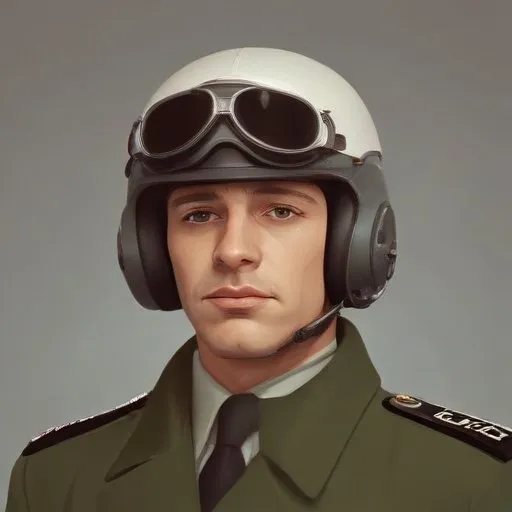
A pioneering fighter pilot and flying ace, credited with shooting down 16 enemy aircraft during World War I, earning him legendary status in aviation history.
Raoul Lufbery, a French-American fighter pilot, etched his name in the annals of history as one of the most successful flying aces of World War I, with 17 combat victories to his credit. His remarkable skills in the skies and his distinguished service in both the French Air Force and the United States Army Air Service earned him the reputation as one of the greatest aces of the Great War.
Born on March 14, 1885, in Chamalìeres, Puy-de-Dôme, France, to an American father, Edward Lufbery, and a French mother, Anne Joséphine Vessire, Raoul Lufbery's life was marked by cultural diversity and a sense of adventure from the very beginning. His paternal grandfather, Charles Samson Lufbery, had emigrated to the United States from Great Britain in the mid-19th century, while his father worked as a chemist for a Parisian chocolate company.
After his mother's untimely death when Raoul was just one year old, his father returned to the United States, leaving him to be raised by his maternal grandmother, Madeline Vessire Grenier, in France. This early separation would shape Lufbery's life, as he grew up with a strong sense of independence and a desire to explore the world beyond his native France.
In 1904, Lufbery left his job at a chocolate factory in Blois and Clermont-Ferrand to embark on a journey that would take him to exotic locales such as Egypt, Algeria, Tunisia, the Balkans, and Turkey. This period of his life was marked by a spirit of adventure and a desire to experience different cultures and ways of life.
In 1906, Lufbery, along with his middle brother, Charles, set sail for the United States to search for their father, who had started a second family. Although they did not find their father, they spent two years in Wallingford, Connecticut, with their relatives, and Lufbery worked at a silverplate factory during this time.
When World War I broke out, Lufbery joined the French Foreign Legion and was assigned to the Lafayette Escadrille, a renowned squadron of volunteer American pilots flying for France. It was during this period that he honed his flying skills and earned his reputation as a formidable combat pilot.
In 1918, Lufbery transferred to the United States Army Air Service, where he continued to fly combat missions. Despite his impressive record, Lufbery's life was cut short in a tragic accident on May 19, 1918, when he fell to his death from his plane during a flight test.
Raoul Lufbery's remarkable career and heroic sacrifices during World War I have inspired generations of pilots and military personnel. His legacy extends beyond his impressive combat record, as he embodied the values of bravery, patriotism, and selflessness that define the spirit of the Great War.
In recognition of his heroic service, Lufbery was posthumously awarded the French Croix de Guerre and the United States' Distinguished Service Cross. His story has been immortalized in books, films, and documentaries, ensuring that his memory continues to inspire and captivate people to this day.
Raoul Lufbery's remarkable life and achievements serve as a testament to the enduring power of courage, determination, and sacrifice. As one of the greatest flying aces of World War I, his legacy continues to soar, inspiring generations to come.
Born in 1890
A Medal of Honor recipient and pioneering aviator, known for his heroic feats in World War I and his leadership in the aviation industry.
Born in 1894
French colonel and pilot credited with shooting down 75 enemy aircraft during World War I, making him the highest-scoring Allied fighter ace. He also developed innovative aerial combat tactics.
Born in 1892
A legendary fighter pilot known as the "Red Baron," credited with 80 aerial combat victories in World War I, earning him legendary status as a flying ace.
Born in 1897
A highly skilled and decorated fighter pilot of World War I, credited with 48 aerial victories, and known for his exceptional flying skills and innovative tactics. 42
