


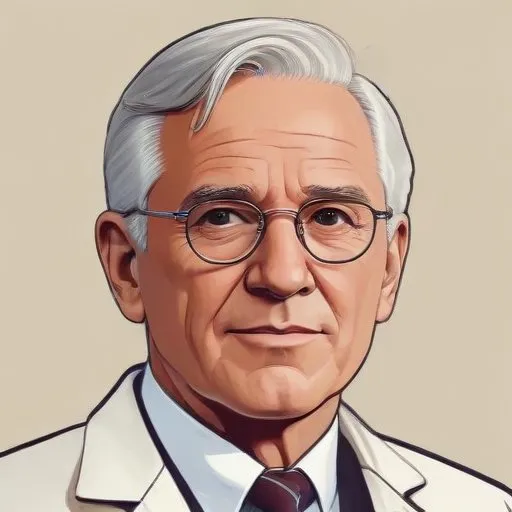
American physician, academic, and politician who served as the 31st United States Secretary of the Interior, overseeing national parks and natural resources. He's known for his conservation efforts and Stanford University leadership.
Ray Lyman Wilbur, a renowned American politician, physician, and eugenicist, is best known for his distinguished career as the third president of Stanford University and the 31st United States Secretary of the Interior under President Herbert Hoover.
Throughout his life, Wilbur demonstrated a remarkable ability to balance his medical practice with his passion for education and politics, earning him a unique position in American history.
Born on April 13, 1875, in Boonesboro, Iowa, Wilbur was the son of Dwight Locke Wilbur and Edna Maria Lyman. After moving to Riverside, California, at the age of twelve, he graduated from Riverside High School and went on to study at Stanford University.
At Stanford, Wilbur earned a B.A. degree in 1896 and an M.A. degree in 1897. He then pursued his medical degree at Cooper Medical College in San Francisco, completing it in 1899.
As a eugenicist, Wilbur was deeply interested in the improvement of human genetics. He believed in the importance of selective breeding and advocated for the sterilization of individuals deemed unfit.
Wilbur's eugenicist views were influential in shaping California's sterilization laws, which were later deemed unconstitutional.
In 1898, Wilbur married Marguerite May Blake, with whom he had five children. He was known for his close friendship with Herbert Hoover, whom he met while at Stanford.
On December 24, 1946, Wilbur's wife Marguerite passed away at the age of 71. He himself passed away on June 26, 1949, leaving behind a legacy of remarkable achievements in medicine, education, and politics.
Throughout his life, Wilbur left an indelible mark on American education, medicine, and politics. His commitment to improving human genetics, though controversial, reflected his unwavering dedication to the betterment of society.
As a leader, Wilbur demonstrated exceptional vision and leadership, inspiring generations of scholars, policymakers, and medical professionals.
Born in 1858
A pioneering leader who championed progressive reforms, trust-busting, and conservation, earning a Nobel Peace Prize for mediating the Russo-Japanese War. He's also famous for his rugged outdoorsmanship and "big stick" diplomacy.
Born in 1874
The 31st President of the United States was a humanitarian and politician who led the country through the Great Depression and is known for his humanitarian efforts and infrastructure development. He's also infamous for his inability to mitigate the economic crisis.
Born in 1882
Led the United States through the Great Depression and World War II, implementing a series of reforms known as the New Deal and helping to establish the country as a global superpower.
Born in 1884
The 33rd President of the United States, a strong leader who made tough decisions, including dropping atomic bombs on Japan and establishing the Marshall Plan to rebuild Europe after WWII.
Born in 1890
Led the Allied forces to victory in World War II and later served as President, maintaining peace and prosperity during the Cold War era. He's known for his strategic leadership and diplomatic skills.
Born in 1917
The 35th President of the United States was a charismatic leader who navigated the country through the Cuban Missile Crisis and advocated for civil rights, leaving a lasting legacy in American politics.
Born in 1908
The 36th President of the United States, a skilled politician and leader, played a crucial role in passing landmark civil rights legislation, including the Civil Rights Act and Voting Rights Act.
Born in 1913
The 37th President of the United States, a polarizing figure who led the country through significant domestic and foreign policy changes, infamous for his involvement in the Watergate scandal.
