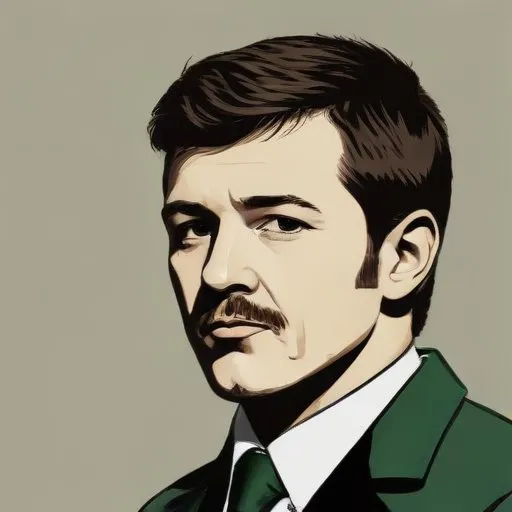
Raymond McCreesh: The Brave Irish Republican Martyr
Known for His Ultimate Sacrifice During the 1981 Irish Hunger Strike
Raymond McCreesh is famously known for his unwavering dedication to the Irish republican movement, ultimately giving his life during the 1981 Irish hunger strike in the Maze Prison. As one of the ten Irish republicans who died during this pivotal event, McCreesh's selfless act has left an indelible mark on Irish history and inspired generations to come.
Early Life and Republican Upbringing
Born on February 25, 1957, in St Malachys Park, Camlough, Raymond Peter McCreesh was the seventh of eight children in a strong Irish republican family. Growing up in a household steeped in nationalist values, McCreesh was destined to follow in the footsteps of his predecessors. He attended the local primary school in Camlough, St Malachys, and later studied at St Colmans College in Newry.
Journey into the Provisional IRA
In 1973, McCreesh joined Fianna Éireann, the IRA's youth wing, and later progressed to the Provisional IRA South Armagh Brigade. His brief stint as a steelworker in Lisburn was cut short due to sectarian threats and violence, prompting him to take up a job as a milk roundsman in his local area. This occupation allowed him to gain intimate knowledge of the surrounding countryside and observe the movements of British Army patrols.
The Fateful Ambush and Arrest
On June 25, 1976, McCreesh, then 19, and three other IRA volunteers attempted to ambush a British Army observation post in South Armagh. However, they were spotted by British paratroopers, who opened fire, forcing McCreesh and his comrade Paddy Quinn to take cover in a nearby farmhouse. The paratroopers surrounded the house, and after a brief exchange of fire, McCreesh and Quinn were arrested.
Imprisonment and the 1981 Hunger Strike
McCreesh was sentenced to life imprisonment and sent to the Maze Prison, where he joined other republican prisoners in their fight against the British government's policy of criminalization. In 1981, McCreesh volunteered to participate in the hunger strike, a last resort to protest the denial of political status to republican prisoners. On May 21, 1981, after 61 days without food, Raymond McCreesh succumbed to starvation, becoming the seventh hunger striker to die.
Legacy and Inspiration
Raymond McCreesh's ultimate sacrifice has inspired countless individuals to fight for their beliefs and has become an iconic symbol of Irish republicanism. His bravery and conviction have left an indelible mark on history, ensuring that his memory will continue to inspire future generations to stand up for what they believe in.
- Raymond McCreesh was one of 22 Irish republicans who died on hunger strike in the 20th century.
- His hunger strike lasted 61 days, from April 9 to May 21, 1981.
- McCreesh's funeral procession was attended by an estimated 30,000 people, making it one of the largest funerals in Irish history.
Remembering a Hero
Raymond McCreesh's story serves as a powerful reminder of the human spirit's capacity for courage, conviction, and selflessness. His sacrifice will never be forgotten, and his legacy continues to inspire and motivate people around the world to stand up for their beliefs and fight for their rights.
FAQ
What was Raymond McCreeshs role in the Irish Republican movement?
Raymond McCreesh was a prominent figure in the Irish Republican movement, participating in the 1981 hunger strike in Maze Prison and later becoming a Sinn Féin councillor. He was a strong advocate for Irish unity and human rights.
What was Raymond McCreeshs experience in prison?
Raymond McCreesh spent several years in prison for his involvement in the Irish Republican movement. During his imprisonment, he participated in the 1981 hunger strike, which lasted for 61 days and resulted in the deaths of 10 prisoners, including Bobby Sands.
How did Raymond McCreesh contribute to the peace process?
Raymond McCreesh played a key role in the peace process in Northern Ireland, working to promote reconciliation and understanding between republicans and unionists. He was a strong advocate for the Good Friday Agreement and worked to build bridges between communities.
What was Raymond McCreeshs legacy?
Raymond McCreeshs legacy is that of a dedicated Irish republican who fought for his beliefs and values. He remains a powerful symbol of the struggle for Irish unity and human rights, and his story continues to inspire people around the world.
What can be learned from Raymond McCreeshs story?
Raymond McCreeshs story teaches us about the importance of standing up for what we believe in, even in the face of adversity. His courage and determination serve as an inspiration to anyone fighting for social justice and human rights.