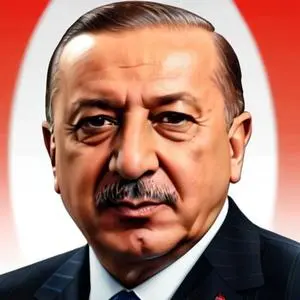
Recep Tayyip Erdoğan: The Visionary Leader of Modern Turkey
A Political Icon of the 21st Century
Recep Tayyip Erdoğan, the 12th and current President of Turkey, is renowned for his unwavering dedication to the Turkish people and his unrelenting pursuit of development, progress, and stability in the region. As the co-founder of the Justice and Development Party (AKP), Erdoğan has been instrumental in shaping Turkey's political landscape, propelling the country towards economic growth, and fostering regional influence.
Early Life and Political Awakening
Born on February 26, 1954, in Beyoğlu, Istanbul, Erdoğan was nurtured in a humble environment that instilled in him the values of hard work, perseverance, and a strong sense of community. His academic pursuits took him to the Aksaray Academy of Economic and Commercial Sciences, where he honed his skills in economics and commerce. Subsequently, he ventured into the private sector, working as a consultant and senior manager, which laid the foundation for his future entrepreneurial endeavors.
Rise to Prominence
Erdoğan's foray into politics began in 1984, when he was elected as the Welfare Party's Beyoğlu district chair. His leadership skills and charisma soon propelled him to the position of Istanbul chair in 1985. The 1994 local elections saw Erdoğan assume the role of mayor of Istanbul, a position that catapulted him to national prominence.
Justice and Development Party (AKP) and the Road to Premiership
Following his imprisonment in 1998 for inciting religious hatred, Erdoğan was released in 1999 and went on to form the AKP, abandoning openly Islamist policies. This strategic move paved the way for the AKP's landslide victory in the 2002 general elections, leading to Erdoğan's appointment as prime minister in 2003. Under his leadership, Turkey witnessed unprecedented economic growth, EU membership negotiations, and a significant reduction in military influence on politics.
Presidency and Democratic Reforms
In 2014, Erdoğan made history by becoming Turkey's first directly elected president. His presidency has been marked by significant reforms aimed at strengthening democratic institutions, enhancing civil liberties, and promoting economic development. The introduction of the presidential system in 2017, which replaced the parliamentary system, has been a cornerstone of Erdoğan's presidential tenure.
Economic Visionary
Erdoğan's economic policies have been instrumental in transforming Turkey into a major emerging market economy. His government's initiatives, such as the "Anatolian Tigers" project, have fostered regional development, encouraged entrepreneurship, and created new opportunities for Turkish businesses. However, critics have raised concerns about high inflation rates and the depreciation of the Turkish lira.
Regional Influence and Foreign Policy
Turkish foreign policy under Erdoğan's leadership has been marked by a more assertive approach, with a focus on regional security, energy diplomacy, and economic cooperation. His government's role in brokering the Turkish Stream pipeline project, which aims to transport Russian gas to Europe, has underscored Turkey's growing influence in the region.
Personal Milestones and Key Life Events
- 1954: Born in Beyoğlu, Istanbul, Turkey
- 1984: Elected as Welfare Party's Beyoğlu district chair
- 1994: Elected mayor of Istanbul
- 1998: Convicted for inciting religious hatred and banned from politics
- 1999: Released from prison and formed the Justice and Development Party (AKP)
- 2002: Led the AKP to a landslide victory in the general elections
- 2003: Became prime minister of Turkey
- 2014: Became the first directly elected president of Turkey
Philosophical Contributions and Beliefs
Erdoğan's political ideology is deeply rooted in conservative democracy, which emphasizes the importance of individual freedoms, social justice, and economic development. His leadership style is characterized by a strong sense of conviction, pragmatism, and a willingness to take bold decisions to achieve his vision for Turkey.
Controversies and Public Perception
Erdoğan's presidency has been marked by controversies surrounding democratic backsliding, human rights concerns, and an alleged shift towards authoritarianism. Critics have accused him of suppressing dissent, curbing press freedoms, and consolidating power. However, his proponents argue that his leadership has brought stability, economic growth, and a sense of national pride to Turkey.
Legacy and Historical Context
Recep Tayyip Erdoğan's leadership has redefined Turkey's role in the global arena, cementing its position as a key player in regional politics. His legacy will be remembered for his unwavering commitment to the Turkish people, his economic vision, and his efforts to reshape the country's political landscape. As Turkey navigates the complexities of the 21st century, Erdoğan's leadership will be remembered as a pivotal chapter in the country's modern history.