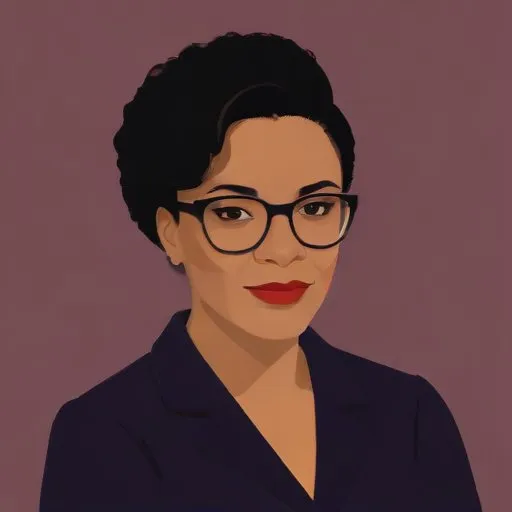
Regina M. Anderson: The Unwavering Voice of the Harlem Renaissance
A Pioneer in American Literary History
Regina M. Anderson, a trailblazing American playwright and librarian, was a pivotal figure in the Harlem Renaissance, a cultural movement that transformed the literary landscape of the 1920s and 1930s. As a playwright, Anderson's works often explored the complexities of African American life, challenging societal norms and shedding light on the Black experience.
Early Life and Education
Born on May 21, 1901, in Chicago, Illinois, Anderson was the daughter of Margaret Simons Anderson, a ceramicist, and William Grant Anderson, an attorney. Her parents, identified as Black in the 1900 census and mixed-race with Black heritage in the 1910 census, instilled in her a strong sense of cultural identity and social awareness. After her parents' divorce, Anderson moved to Normal, Illinois, to live with her maternal grandparents, where she spent her formative years. She later returned to Chicago, graduating from Hyde Park High School in 1919.
A Career Dedicated to Education and the Arts
Anderson's academic pursuits took her to Wilberforce University, a historically Black college, where she studied and worked as a librarian. In 1921, she returned to Chicago and began her career as a junior library assistant at the Chicago Public Library. Her passion for education and literature eventually led her to New York City, where she became a librarian at the 135th Street branch of the New York Public Library.
The 580: A Creative Nexus
Anderson's residence in Harlem's Sugar Hill district became a creative hub, affectionately known as the 580, the Dream Haven, or the Harlem West Side Literary Salon. She shared the apartment with Ethel Ray and Louella Tucker, hosting salons, events, and gatherings for artists, writers, and intellectuals. This cultural epicenter played a significant role in fostering the Harlem Renaissance, providing a platform for prominent figures such as
Langston Hughes,
W. E. B. Du Bois, and
Countee Cullen to share their ideas and talents.
A Champion of Black Culture and Identity
Anderson's commitment to promoting Black culture and intellectualism led her to organize the Civic Club dinner of 1924, a seminal event that brought together 110 distinguished guests, including esteemed writers, artists, and thinkers. This groundbreaking gathering not only spotlighted the talents of African American creatives but also served as a testament to Anderson's tireless efforts to celebrate and elevate Black culture.
Legacy and Impact
Regina M. Anderson's remarkable life and achievements have left an indelible mark on American literary history. As a pioneering playwright, librarian, and cultural leader, she inspired generations of writers, artists, and intellectuals, paving the way for future generations to explore and express their own voices.
- Anderson's contributions to the Harlem Renaissance helped shape the cultural identity of African Americans, challenging societal norms and prejudices.
- Her dedication to education and literature empowered countless individuals to pursue their passions and explore their creative potential.
- As a champion of Black culture and intellectualism, Anderson's legacy continues to inspire and uplift, providing a beacon of hope and creative expression for generations to come.
FAQ
What are some notable plays written by Regina M. Anderson?
Regina M. Anderson was a prominent multiracial playwright and librarian, known for her thought-provoking plays including Climbing Jacobs Ladder and The Woman King, which explored themes of race, identity, and social justice.
How did Regina M. Andersons experiences shape her writing?
Regina M. Andersons experiences as a multiracial woman in America heavily influenced her writing, as she drew upon her own life to craft powerful stories that tackled racism, sexism, and identity politics.
What impact did Regina M. Anderson have on the literary world?
Regina M. Andersons contributions to American literature helped pave the way for future generations of women writers of color, breaking down barriers and challenging dominant narratives.
How did Regina M. Andersons work as a librarian influence her writing?
Regina M. Andersons work as a librarian provided her with access to a vast array of literary works, which she drew upon to inform and enrich her own writing.
What are some of Regina M. Andersons most notable achievements?
Regina M. Andersons most notable achievements include being the first African American woman to integrate the New York Public Library, and her plays being performed at prominent theaters across the United States.