


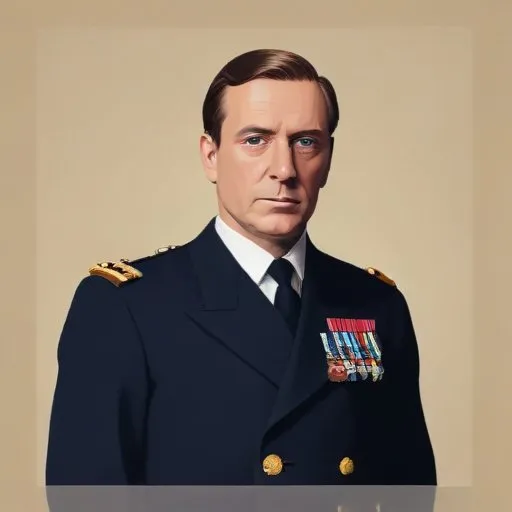
A British naval officer and politician who served as Secretary of State for Transport, known for his contributions to the country's transportation infrastructure. He played a key role in shaping the nation's transportation policies.
Reginald Fletcher, 1st Baron Winster, was a British politician who made a significant impact on the country's political landscape during the early 20th century. As a member of the Liberal and Labour parties, he held various positions of power, including Minister of Civil Aviation and Governor of Cyprus.
Born on March 27, 1885, Fletcher served as a Royal Navy officer during World War I. After the war, he entered politics and was elected as the Liberal Member of Parliament (MP) for Basingstoke in 1923, although he lost the seat in 1924. Undeterred, he continued to pursue his political ambitions and was elected as the Labour MP for Nuneaton in 1935.
Fletcher's dedication and hard work paid off when he was raised to the peerage as Baron Winster, of Witherslack in the County of Westmorland, in 1942. This was followed by his appointment as a Privy Counsellor in 1945. His most notable role came when he was appointed Minister of Civil Aviation in the government of Clement Attlee from 1945 to 1946.
In 1946, Fletcher was appointed Governor of Cyprus, a position he held until 1949. During his tenure, he played a crucial role in maintaining stability and promoting development in the island nation.
Lord Winster died on June 7, 1961, at the age of 76, in the Uckfield Rural District, Sussex. With his passing, the peerage became extinct. Despite his accomplishments, Fletcher's personal life remains relatively unknown, and it is his public service and leadership that have left a lasting impact on British politics.
Reginald Fletcher, 1st Baron Winster, was a product of his time, operating in a period of great change and upheaval in British politics. His contributions to the country's development, particularly in the fields of aviation and international relations, are still remembered today. As a politician, he embodied the values of public service and leadership, leaving behind a legacy that continues to inspire future generations.
Born in 1871
Prolific writer of historical novels and adventure stories, also a talented landscape painter.
Born in 1883
Led the Labour Party to a landslide victory in 1945, implementing significant social and economic reforms, including the creation of the National Health Service. He played a crucial role in shaping post-war Britain.
Born in 1897
A British politician who served as Prime Minister from 1955 to 1957, known for his role in the Suez Crisis and his diplomatic efforts during the Cold War.
Born in 1894
A British politician who served as Prime Minister from 1957 to 1963, known for leading the country through a period of economic prosperity and decolonization.
Born in 1903
A British aristocrat who served as Prime Minister from 1963 to 1964, known for his brief tenure and aristocratic background.
Born in 1885
Won the 1952 Olympic Games marathon in Helsinki, Finland, and held the world record in the marathon from 1952 to 1953.
Born in 1912
A British politician who served as Prime Minister from 1976 to 1979, known for his efforts to stabilize the economy and navigate the country through a period of industrial unrest.
Born in 1925
The first female Prime Minister of the United Kingdom, serving from 1979 to 1990, known for her conservative policies and leadership during the Falklands War.
